
When you open a wardrobe door, the inside is often dark. The room's ceiling light falls behind the door, hangers and shelves are in shadow, and navy and black clothes are hard to tell apart. When dressing in a hurry in the morning or late in the evening, this becomes an everyday annoyance. Internal wardrobe lighting may seem a small extra, but it changes how comfortable a wardrobe is to use. The best results come from planning lighting at the same time as the furniture.
Why separate lighting is needed
Ceiling light never quite gets into a wardrobe. With the lamp behind you, your shadow lands on the shelves and the back of a deep unit stays in darkness. Dressing rooms frequently have a tiny window or none, so built-in lighting ends up doing most of the work.
Internal lighting also helps you see colours correctly. A garment's colour, a stain or a crease is hard to see in poor light, and good light matters when putting outfits and accessories together.
Positioning LED lighting
Where the light source sits determines how useful it is. The most common options are:
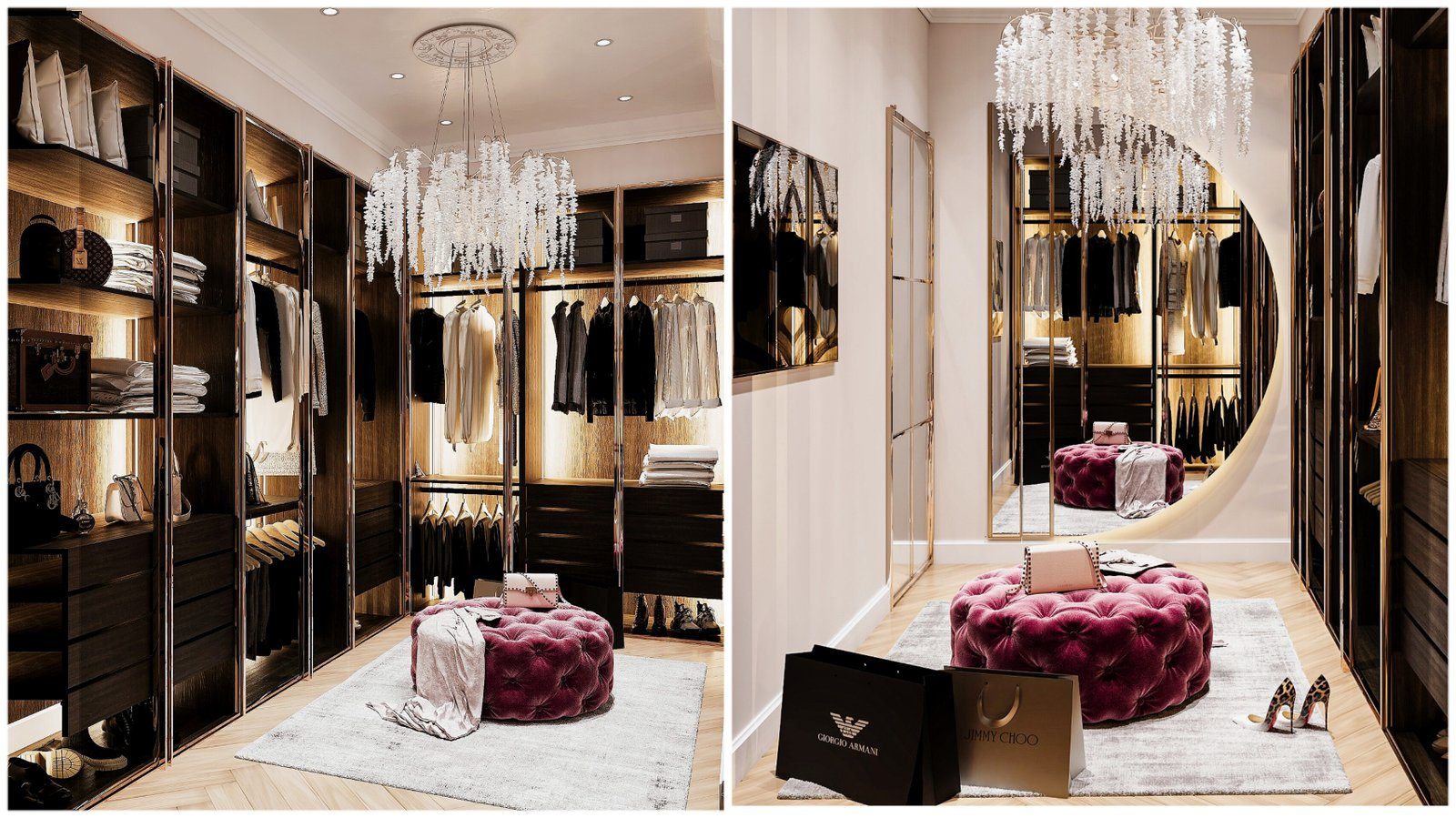
- Rail lighting: an LED strip built into the hanging rail or a profile below it lights hanging clothes from above.
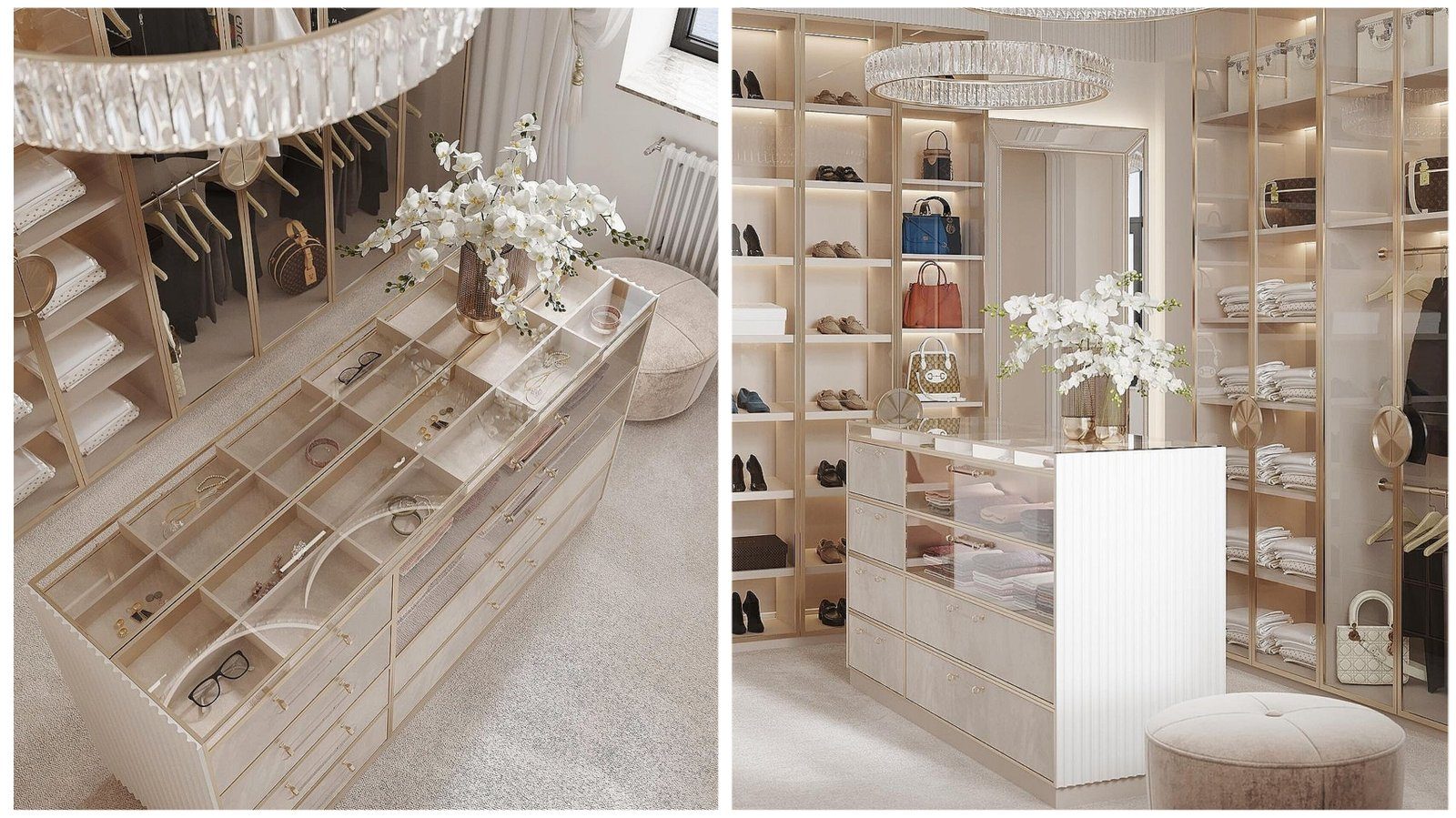
- Shelf-edge lighting: a slim profile tucked under the front lip of each shelf lights the level beneath with no glare at eye height.
- Vertical side lighting: profiles along the side panels light the full height evenly.
- Drawer lighting: a small light that comes on when a drawer opens is handy for accessories and underwear.
LED strips should always be installed in an aluminium profile with a diffuser. A bare strip shows as individual dots of light, dazzles and collects dust quickly. The profile also dissipates heat and extends LED life.
Sensors: door and motion
How convenient wardrobe lighting is depends on how it switches on. A manual switch is often left on, so automatic sensors are more practical.
For hinged doors, a sensor that switches the light on when the door opens is the simplest solution. For sliding doors, a motion sensor or an infrared sensor built into the profile is used. In a walk-in closet, a motion sensor turns the light on when you enter and keeps it on while you are in the room.
Tune the sensor's range and timer so the light stays on while you are standing among the shelves. Battery sensor lamps are easy to fit but need fresh batteries; for the long run, a mains-wired set-up is more dependable.
Colour temperature and rendering
Colour temperature changes how clothes look. Very warm, yellowish light makes navy and black look alike, while very cool, bluish light makes warm tones look washed out. Neutral white light is the most balanced choice for a wardrobe, as it is close to daylight.
The colour rendering index, which describes how closely light shows colours compared with natural light, also matters. High-CRI LEDs show fabric colours more accurately; cheap LED strips often score low and distort colours.
Power supply, cables and safety
LED systems run at low voltage and need a power supply. Its position should be planned in advance: somewhere ventilated but accessible, such as behind an access panel in the top section of the wardrobe. It must not be placed among clothes in a fully enclosed space where it can heat up.
Cables run through dedicated channels in the furniture or inside profiles, where they will not catch on clothing or obstruct drawers. A power point is needed near the wardrobe, which should be agreed with the electrician during renovation. Incandescent bulbs or hot halogen lights should not be used inside wardrobes, because fabrics are close to the heat source.
Decorative lighting in walk-in closets
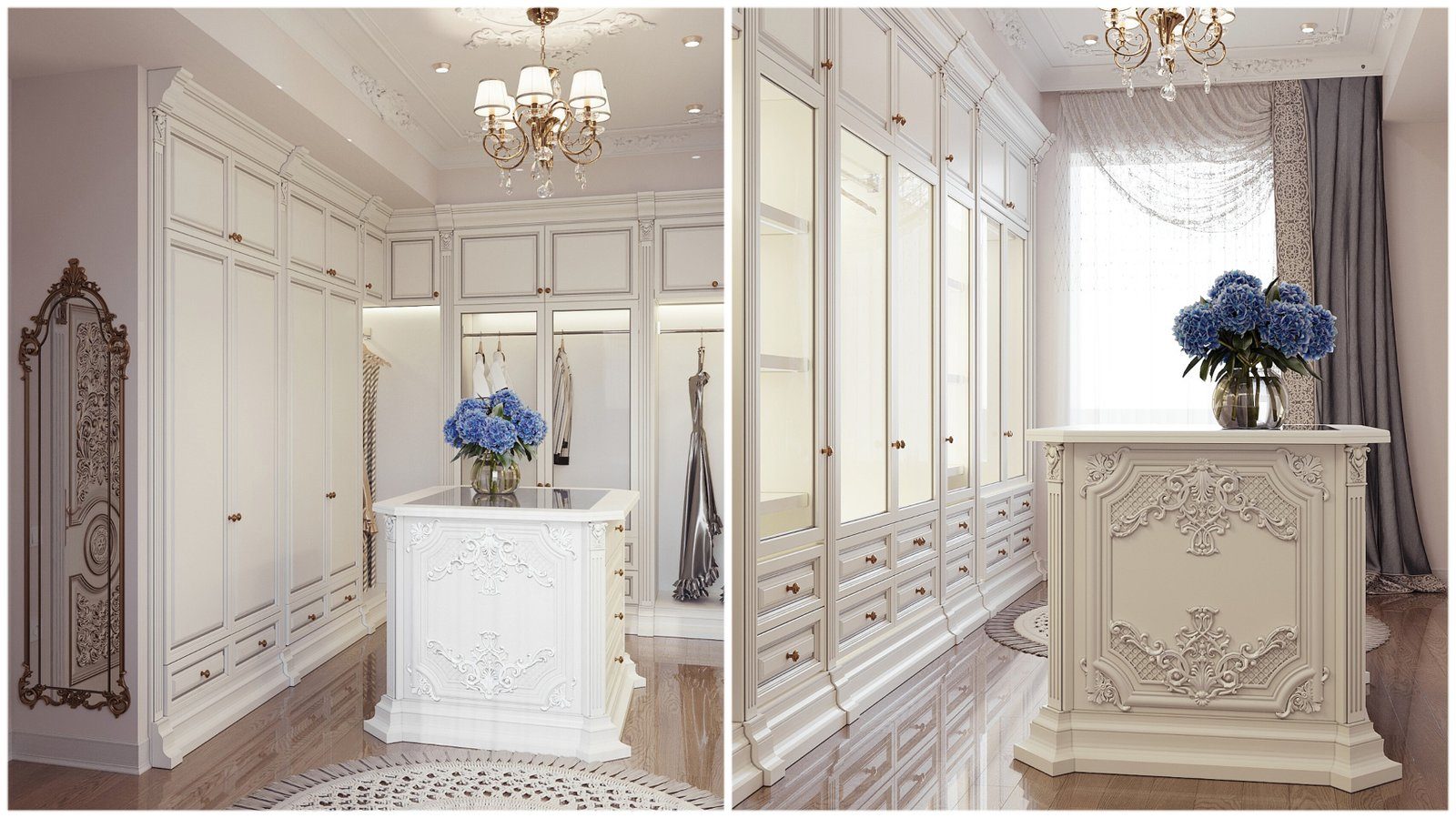
In a walk-in closet, decorative lighting can complement functional lighting: accent lights on open shelves for shoes and bags, even light around a mirror, and lighting inside the drawers of a central island. Mirror lighting should fall on the face and body from the front and sides to avoid shadows.
Zaferoglu Mebel makes wardrobe and walk-in closet furniture to individual designs. The position of light profiles, the type of sensor and the location of the power supply can be planned together with the furniture drawing.