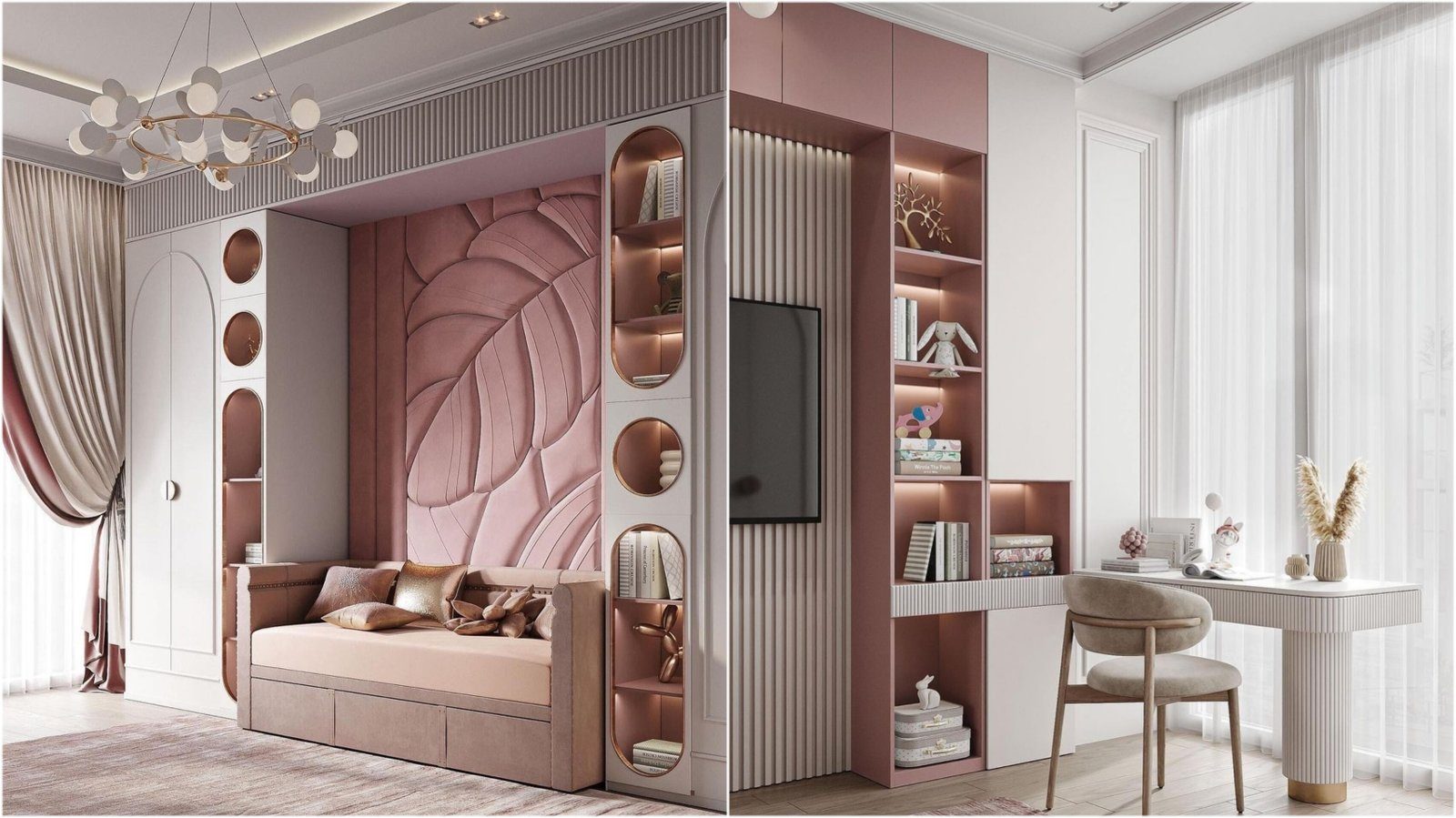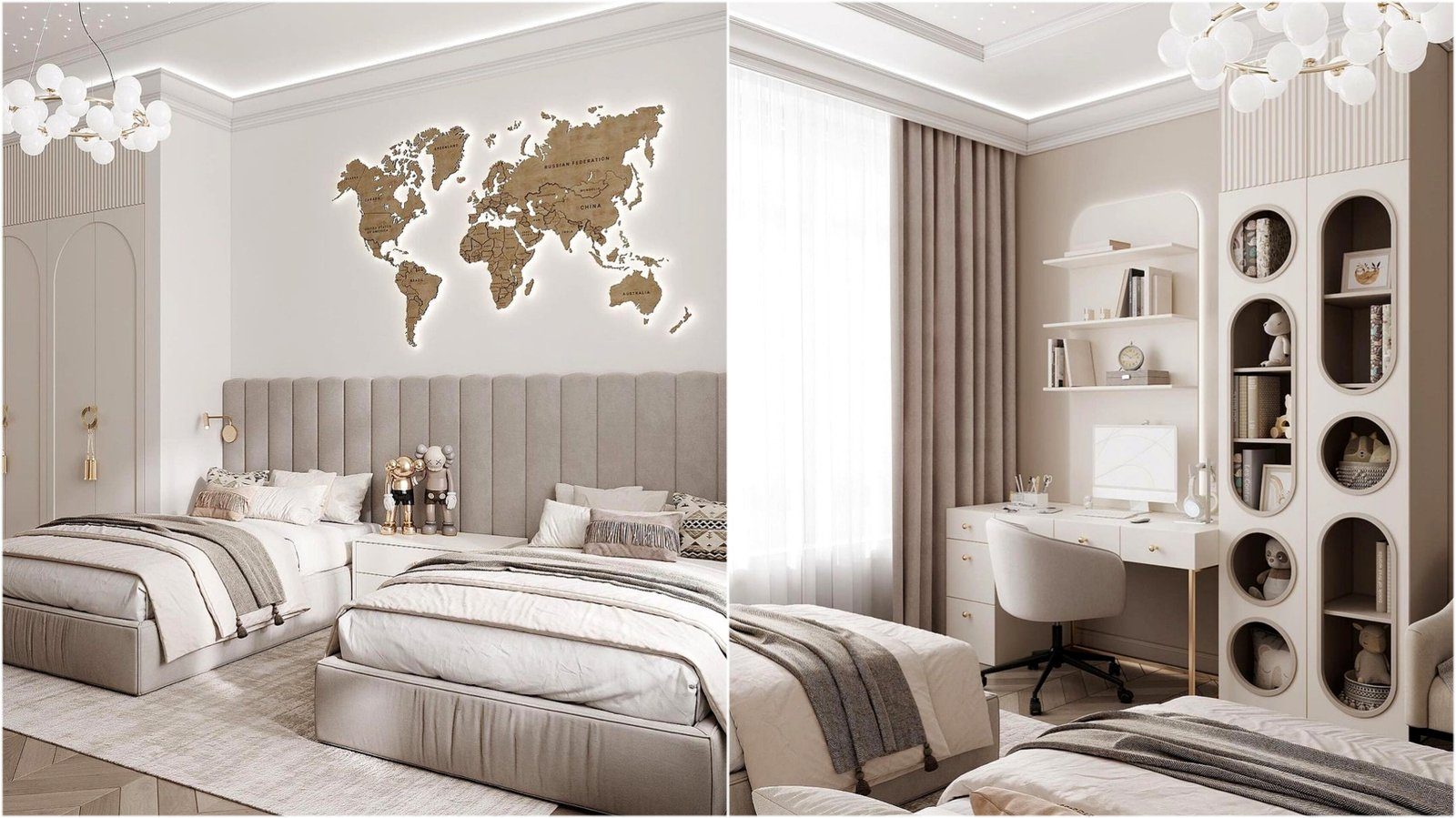

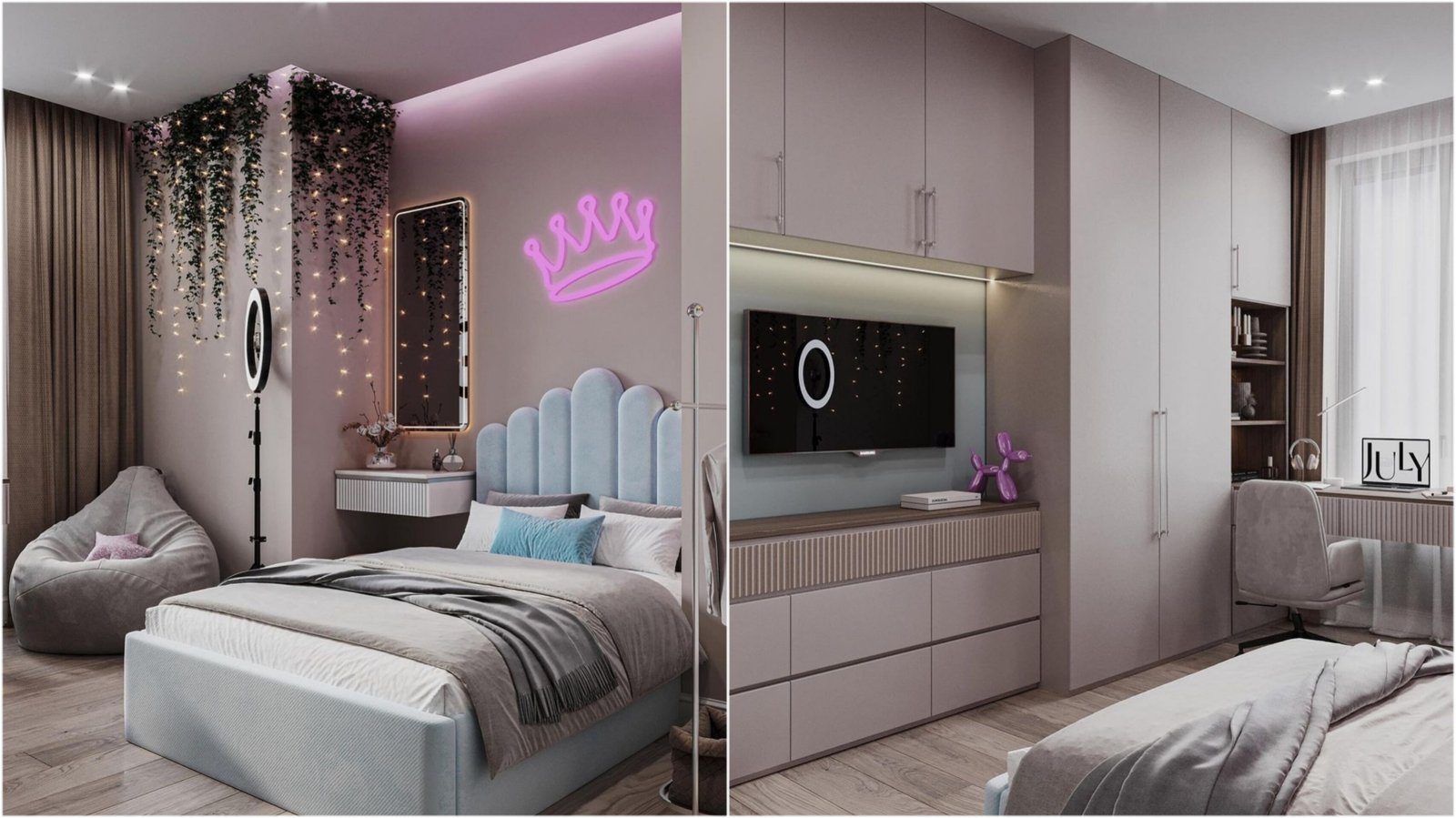
The children’s room is often the smallest in the flat, yet it has to be a bedroom, a playground, a study and a storeroom all at once. In a conventional layout — bed on one wall, wardrobe on another, desk by the window — only a few steps of floor are left in the middle for play. The idea behind saving space is simple: gather the furniture vertically and along the walls, and leave the floor to the child.
Platforms: bed and storage in one
A platform turns part of the room into a raised level. On top there can be a play zone, a desk or a mattress; inside, deep drawers. In some designs the bed rolls out from under the platform in the evening and slides back during the day, so the floor it would occupy is completely free.
When planning a platform, keep in mind:
- The pull-out bed needs enough height for a proper mattress; a thin one does not make for good sleep.
- Drawers will be filled with heavy toy boxes, so runners must be rated for the load.
- Steps up to the platform should be wide and non-slip, with no sharp corners at the edges.
- A mattress needs ventilation underneath; in a closed box it can trap moisture.
High beds and loft beds
In a loft bed the sleeping area is on top and a desk, wardrobe or play nook goes underneath. It gains more floor space than any other solution, but there is an age limit: an upper bed is not suitable for small children and is generally recommended from school age. A guard rail that rises well above the mattress, a securely fixed ladder and anchoring the bed to the wall are essential.
Check the ceiling as well: a child sitting up on an upper bunk needs clear headroom. For low rooms and younger children, a mid-height bed with drawers or a small cupboard beneath is a sensible middle ground.
Wall units: little depth, lots of volume
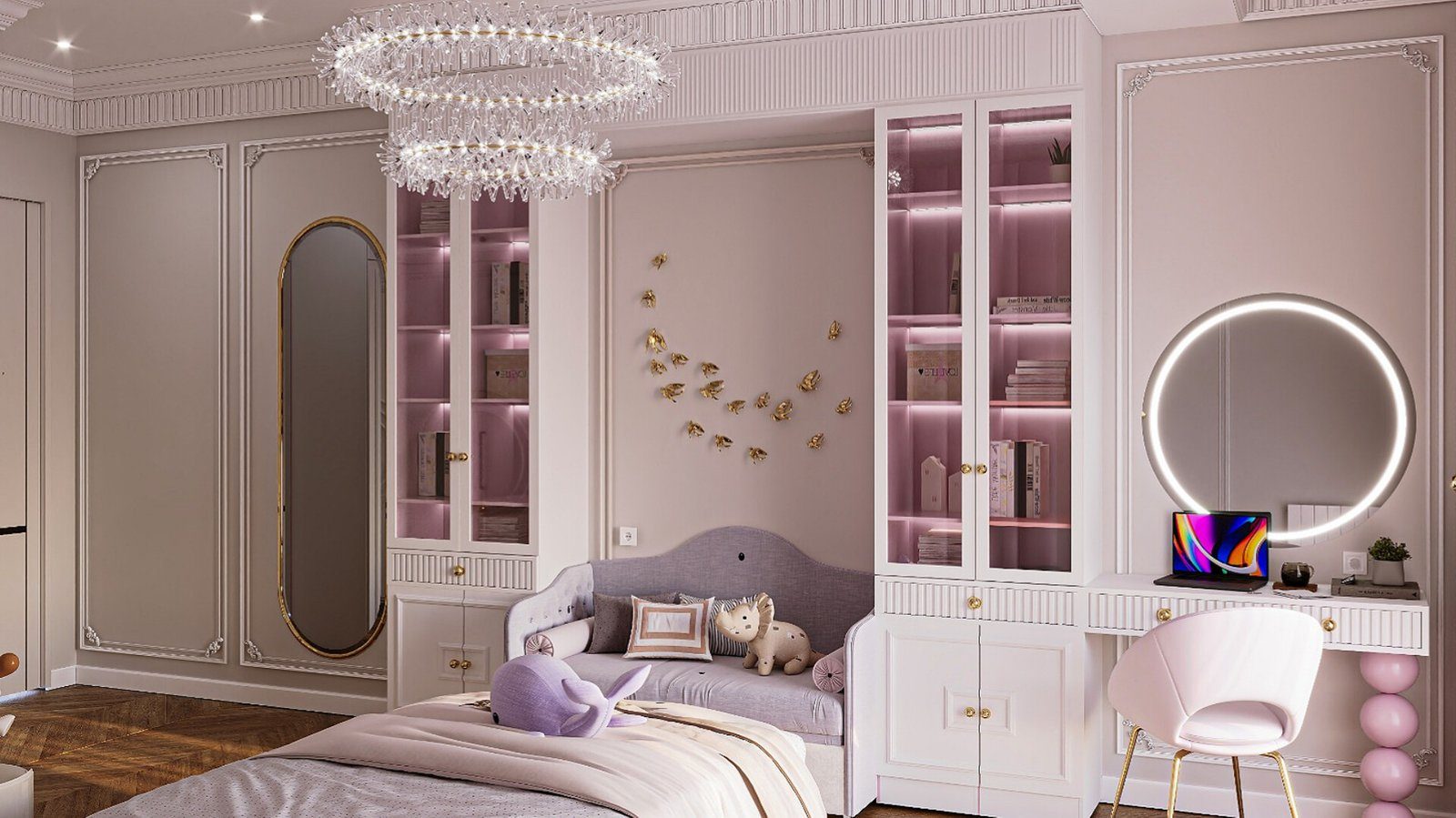
A floor-to-ceiling system along one wall replaces a separate wardrobe, shelves and cabinets. Closed cupboards and drawers sit at the bottom, open shelves within the child’s reach in the middle, and compartments for seasonal things at the top. Because everything shares one line of fronts, the room stays visually calm.
In a small room you can save on depth: 30–35 cm is enough for books and toys, and full depth is only needed for the hanging section. Shallow shelving around the bedhead or the window puts otherwise dead wall space to work.
Safety and everyday comfort
The closer the furniture, the more safety counts. Anchor tall cupboards and shelving units to the wall, because a lightweight carcass can topple if a child steps onto a pulled-out drawer. Soft-close hinges keep little fingers from being caught, and rounded corners plus recessed handles mean fewer bumps in tight gaps.
Finally, light and air. A platform or wall unit should not block the window or cover the radiator. Boxing a radiator in reduces the heat output and dries out the furniture.
The system should grow with the child
Furniture made for a small room has to cope with needs that change over several years. For a toddler the top of a platform can be an open play area covered with a rug; at school age the same platform gains a desk and a bookshelf. If the wall unit has rows of holes for adjustable shelves, the low compartments once used for toy boxes can later take textbooks and folders. Being able to add doors to some open shelves later also helps a teenager’s room look tidier.
Without that flexibility built in from the start, the lack of space returns a few years on and the furniture has to be replaced entirely.
Before you start planning
- Transfer the exact room dimensions and the positions of the window, door and radiator onto a plan.
- Note the child’s current age and likely needs three to five years ahead.
- Decide on the minimum floor area that must stay clear for play.
- Mark which items must be within the child’s reach.
Zaferoglu Mebel builds platforms, beds and wall units for children’s rooms to the room’s real dimensions; the furniture is delivered free of charge and installed and fixed to the wall by the company’s fitters.