
Buying ready-made furniture is simple: you choose, pay and it is delivered. With custom furniture, the result is the outcome of several weeks of joint work, and the decisions the client makes at each stage directly shape the finished piece. Knowing how the process runs helps you set realistic expectations and settle important points in good time. Below are the stages of a typical order in sequence.
1. First meeting and brief
The conversation usually starts with the space and the need: which room, what will be stored, how many people will use it, which style you like. At this stage you do not need a perfect sketch, but an honest description. For a kitchen, that means how often you cook, which appliances you have or plan to buy and how much crockery there is; for a wardrobe, how many long garments, shoes and suitcases.
Interior pictures you like, photos of your current furniture and a rough room plan speed things up a lot. It also helps to be open about the budget at this stage, since material and hardware choices are guided by it.
2. Measuring
Accurate dimensions are the main advantage of custom furniture, so this stage deserves care. The specialist records not only wall lengths but also heights, how straight the walls are and the angles of the corners, window and door openings, sockets, water and gas outlets, radiators, and level differences in floors and ceilings.
If renovation is still under way, the timing of measuring is a decision in itself. If the walls are not yet plastered or the floor is not laid, the final dimensions will change. In that case preliminary measurements are taken for the design, and precise ones are repeated after the finishing work.
3. Design and materials
The furniture's construction is developed from the measurements: how units are divided, where doors and drawers go and what goes inside. At this stage the carcass and front materials, colours, edge banding, handles and hardware are chosen. Seeing samples in person matters, because colours look different on a screen and in a catalogue.
When reviewing the design, specifically ask whether every door opens freely, whether drawers clear handles and neighbouring doors, and whether appliance dimensions fit. These are the easiest mistakes to fix on paper.
4. Approval
Once the design, materials, colours, hardware, delivery and installation terms are agreed, the order is approved. Changes become difficult after this point, because materials go off to be cut. So before approving, reread every document and check colour codes, dimensions and hardware names. Having verbal agreements reflected in writing prevents misunderstandings later.
5. Production
In production, boards are cut to size, edges are banded, holes are drilled for hardware and fronts are made. Painted fronts or those needing special finishing take extra time. Production time depends on the volume of furniture, material availability and the complexity of the work. It makes sense to ask about it when ordering and to plan the renovation schedule around it.
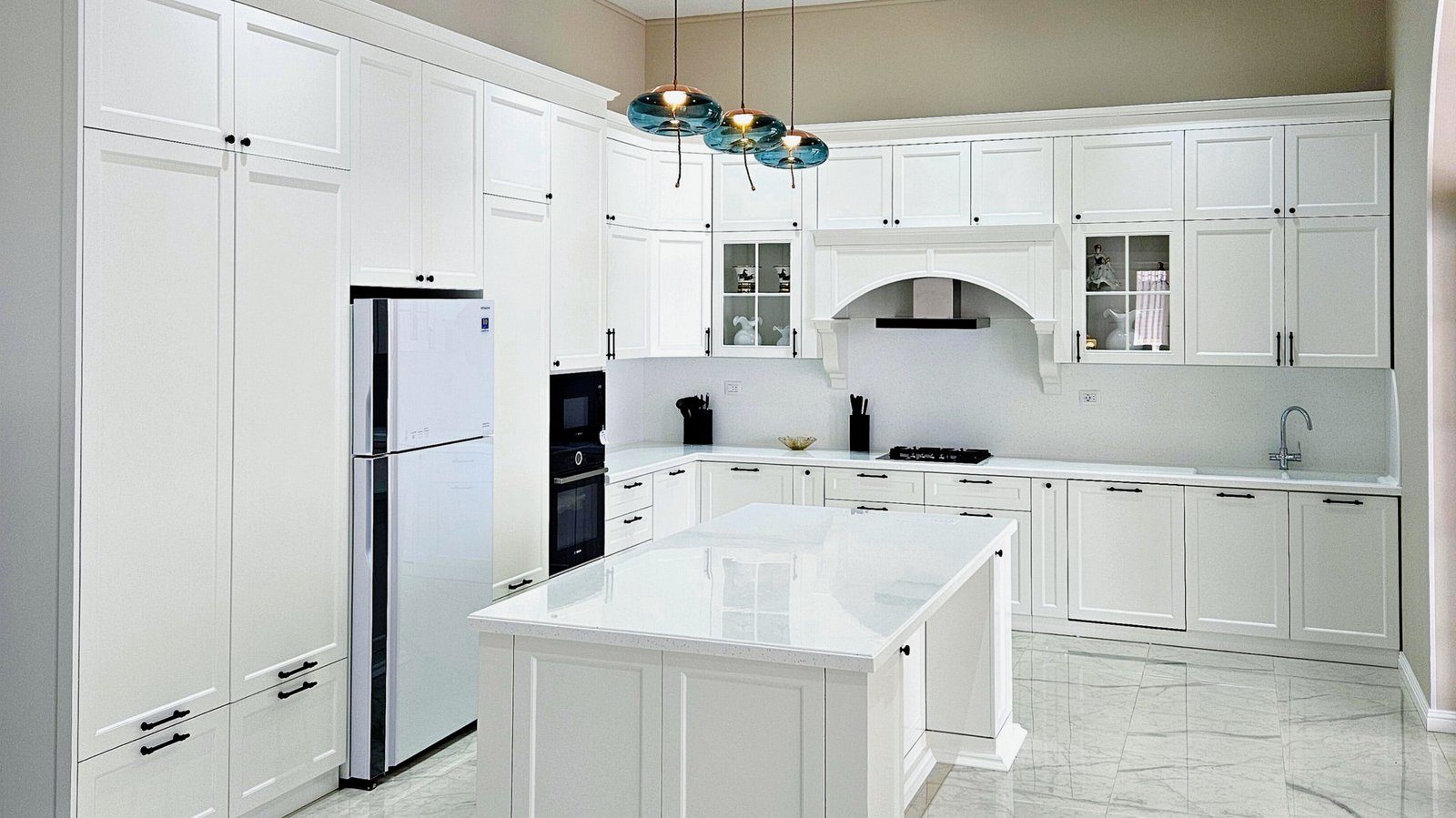
While production is under way, the client has little to do, but not nothing. If kitchen appliances have not been bought yet, this is the time to buy them or at least confirm the models, because at installation an integrated fridge or oven has to fit its opening. The sink, tap and hood models should also be ready on installation day. Any remaining decorating, such as wallpaper or a final coat of paint, should be finished before the furniture arrives. Painting the wall behind furniture that is already fitted is both awkward and risky for the furniture.
6. Delivery, installation and handover
Before installation the room should be ready: dusty work finished, flooring laid and the access route clear. For a kitchen, water and power outlets should be where the design shows them. During installation the furniture is fixed to the wall, doors and drawers are adjusted and appliance openings are checked.
Do not rush the handover. Open and close every door and drawer, look for scratches or damage and check that the gaps between fronts are even. Recording any defects straight away is in both your interest and the manufacturer's. It is also a good moment to ask about care instructions and adjustment options.
Zaferoglu Mebel produces orders in its own workshop near Baku and keeps in direct contact with each client, including when questions come up after handover. For a first meeting, you can contact the office at Babek Plaza.