
A common kitchen scenario goes like this: the furniture drawings are approved, production starts, and the appliances will be bought later, when there is a sale. On installation day it turns out that the chosen dishwasher is too tall for its space, the fridge door hits the side wall and there is no room left for a socket behind the oven. The furniture has already been cut, and fixing the mismatch means either new parts or a compromise.
Built-in sizes vary from model to model
Ovens, dishwashers, microwaves and fridges have commonly accepted widths, but recess dimensions depend on the manufacturer. Two built-in ovens of the same width can have different requirements for recess depth, ventilation cut-outs and socket position. Integrated dishwashers have an adjustable height range, and on some models the decor panel slides over the door, which strictly defines the height of the front.
Each built-in appliance ships with a fitting diagram showing the cavity width, height and depth, the gap needed at the back, the ventilation openings and where the power connects. Given that sheet, the cabinet maker can draw the housing exactly; without it, generic sizes are used and any mismatch becomes the customer's problem.
Ventilation and heat
An integrated fridge sits in a recess, so it can only release heat through the channels provided. These channels, usually in the plinth or at the top of the tall unit, must match the manufacturer's dimensions. This small-looking mistake makes the appliance use more energy and cycle more often.
The same applies to oven towers and the space beneath a hob: heat must not pass into the carcass or adjacent drawers. If a drawer is planned beneath a gas hob, the required clearance and protective divider must be known in advance.
Services: sockets, water and gas
During renovation, sockets and water outlets are often placed before the furniture is designed. If the appliances are unknown, the electrician guesses. The result is a socket directly behind the fridge that stops it sitting against the wall, or a dishwasher hose that does not reach the sink trap. When appliances are chosen first, the furniture design becomes an accurate map for the electrician and plumber too.
Door swings and everyday use
How much space does the fridge door take when open? Placed near a wall, does it open fully so the drawers can come out? If the oven door drops down, is there enough clearance to stand in front of it? These questions can only be answered with the dimensions of a specific model. In corner layouts in particular, fridge and dishwasher doors can clash with each other or with the corner cabinet front.
Fronts, handles and the overall look
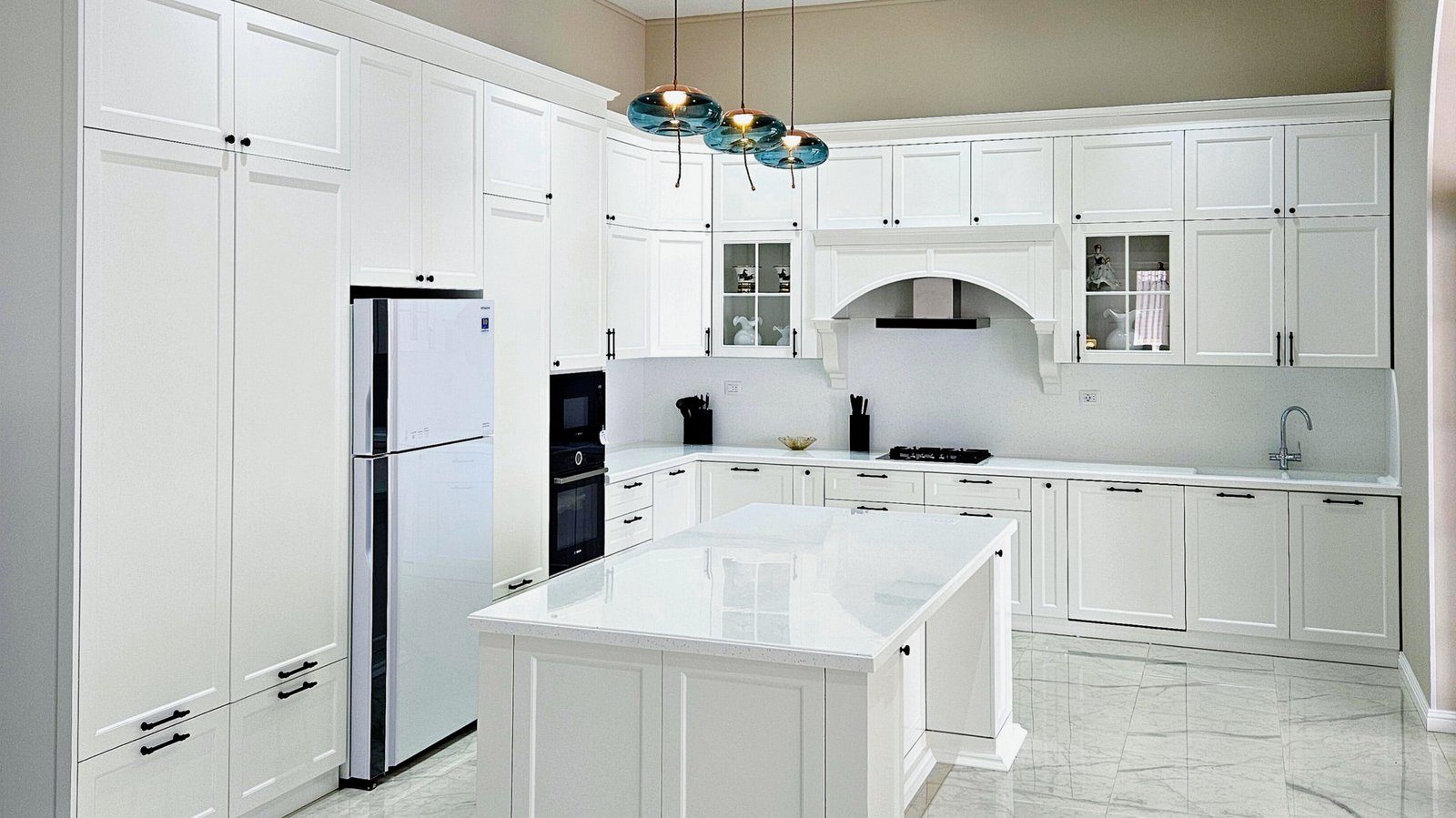
Appliances affect furniture visually as well as dimensionally. If the dishwasher and fridge are fully integrated, their fronts are made from the same material as the rest of the doors and the front divisions are aligned along the whole run. With a semi-integrated dishwasher the control panel stays visible and the front is shorter. When an oven and microwave are stacked in a tower, any mismatch in the colour or edge lines of their glass fascias will show in the most visible part of the kitchen.
If you are planning a handleless kitchen, how the appliance doors will open becomes a question of its own. The fridge and dishwasher may need a push-to-open mechanism, a special profile or a separate handle. This choice is also easier once the appliance is known, because some models limit the weight of the decor panel and the way the door can be opened.
What to note for the furniture maker when choosing appliances
- The model and installation diagram for each appliance (usually available as a PDF from the manufacturer).
- Whether each appliance is built-in or freestanding.
- Door opening direction and whether it can be reversed.
- Power rating and connection type (a hob may need a dedicated circuit).
- Hood type: wall-mounted, integrated or worktop downdraft; ducted outside or recirculating through filters.
You do not need to buy the appliances and store them. Choosing the exact models and giving their diagrams to the furniture maker is enough. If you later decide to change a model, just check that the new appliance has the same recess dimensions.
Zaferoğlu Mebel makes kitchen furniture to measure and installs it with its own fitters. When the appliance list is ready at the measuring stage, recesses, service points and fronts are drawn to suit those models.