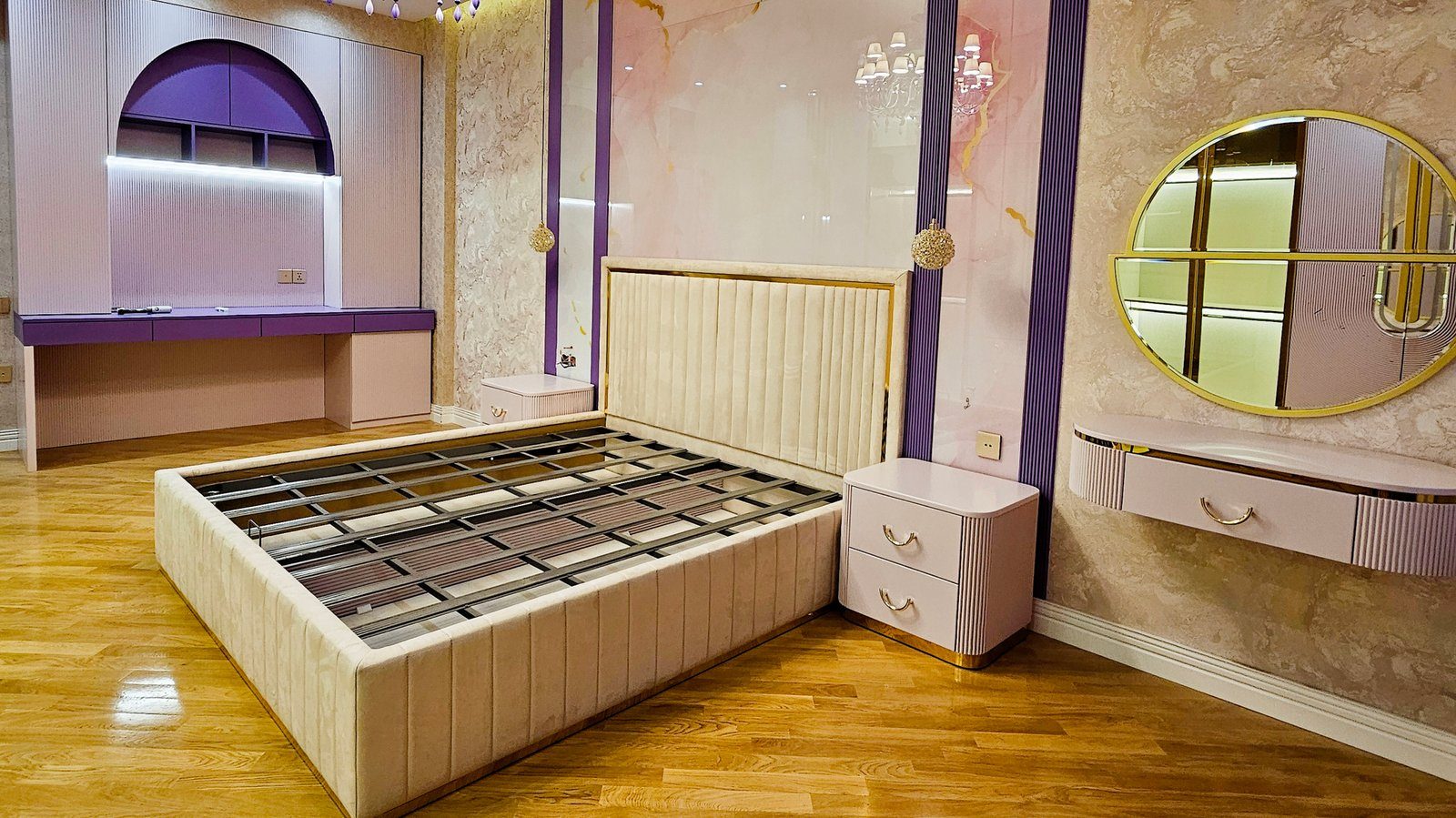

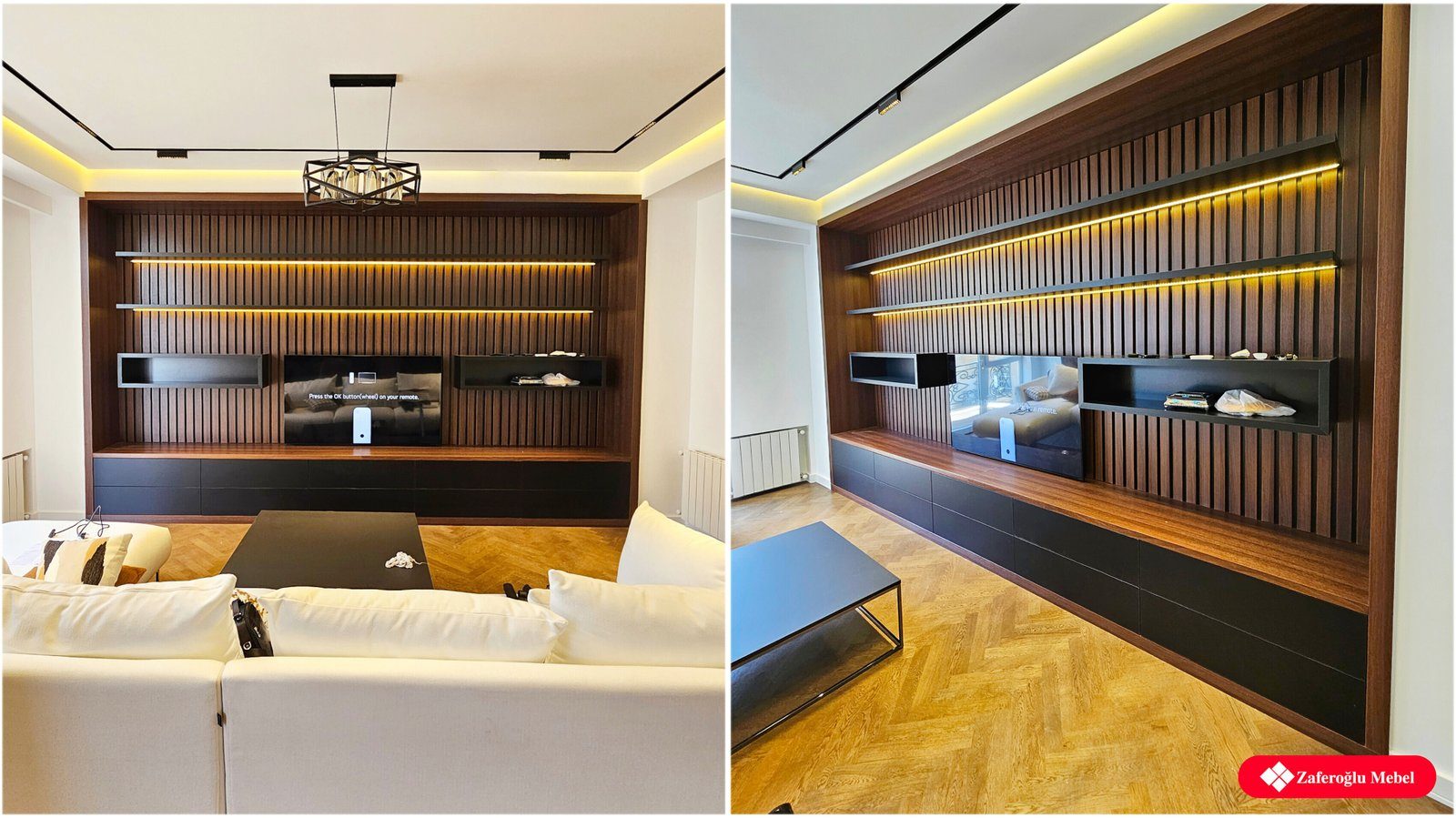
Even in the most careful household, furniture picks up marks over time: a key scratch on the TV unit, a front marked by a child's toy, an edge knocked by the vacuum cleaner. Such damage may be small, but you see it every day and it makes the whole piece look older. The good news is that once you correctly identify the surface, most minor damage can be made hard to notice at home with simple products. The bad news is that the wrong product can turn a small scratch into a large blemish.
First: what surface is it?
The repair method depends entirely on the material. The surfaces most often found in furniture are:
- Laminated board: a printed decor with a thin protective layer. Carcasses and many fronts are made from it.
- Painted MDF: fronts coated in enamel, matt or gloss.
- Acrylic and high-gloss plastic fronts: a mirror-like shine.
- Natural veneer or solid wood: real wood finished with lacquer or oil.
- Foil-wrapped MDF: foil vacuum-pressed over a routed front.
If you are not sure of the material, the order documents or the manufacturer are the most reliable source. Assess the depth of the damage too: if a fingernail catches, the scratch is deep; if not, it is superficial.
Laminated surfaces
The decor layer of laminate is very thin and must not be polished, because polishing removes the decor completely. Instead:
- For light surface scratches, use a repair marker matching the decor colour. Draw it into the scratch and wipe off the excess at once with a dry cloth.
- For deep scratches and small chips, use soft repair wax. Press it into the cavity with a finger or plastic spatula and smooth it flush with the surface.
- For chips in edge banding, hard wax melted with heat gives a more durable result.
On wood-decor laminate, imitating the grain line with two markers in close tones makes the repair almost invisible. On plain white or light grey laminate the result is usually more noticeable.
Painted MDF and foil fronts
On a painted front the best result comes from touch-up paint mixed to the front's own colour code. Noting the colour code and sheen level when ordering pays off on the day you need it. A small chip is filled with a fine brush in several thin coats, letting each dry before the next.
Never rub a scratch on a matt painted surface: this leaves a shiny patch. On gloss paint, very light scratches can be reduced with a fine automotive polishing compound, but testing on a hidden area first is essential.
If the foil on a foil-wrapped front has been cut or has lifted at the edge, repair will not fix it. Re-gluing lifted foil is a temporary measure; replacing the front is more reliable.
Acrylic and high-gloss plastic
Glossy acrylic fronts are prone to fine, web-like scratches, especially when wiped with the wrong cloth. For these surfaces:
- Fine scratches are removed with a polishing paste made for plastics and a soft microfibre cloth, using circular movements.
- The protective film should be removed right after handover, but it protects the surface during installation.
- Do not use a dry cloth for daily cleaning: dust particles scratch the gloss. A damp microfibre cloth is safer.
Veneer and solid wood
On lacquered veneer, light scratches are often only in the lacquer and do not reach the wood. In such cases coloured furniture repair waxes or lacquer touch-up markers work well. On an oiled surface, re-oiling the scratched area with the same oil is often enough.
Because veneer is thin, sanding is risky: a few strokes can go through the wood layer to the board underneath. On solid wood, a deep scratch can be smoothed with fine abrasive paper and the finish renewed.
When not to repair at home
- A front or carcass has swollen from water. Swollen board does not return to its original shape even once dry.
- Edge banding has come away over a large area.
- A chip is at the corner of a front or at a hinge position and affects the fixing.
- There is discoloration, staining or peeling finish over a wide area.
In these cases, having the individual part — front, top or shelf — remade in the same decor is often the simplest and neatest solution. Keeping the furniture's decor code and front dimensions makes this easier.
Zaferoglu Mebel's furniture carries a warranty of between one and five years. If a front is badly damaged, the order details show whether a replacement in the same decor can be made.