
Whoever walks into a bedroom looks at the bed wall first. An ordinary headboard covers only a strip of it, leaving bare plaster on either side and lamp flexes on show. A full-width panel behind the bed deals with all of this at once: it takes the wear from pillows and shoulders, anchors the room visually and hides wiring for lights and sockets.
How a panel differs from a headboard
A headboard is part of the bed and limited to its width. A wall panel is fixed to the wall and can be wider than the bed — sometimes the full length of the wall — and sometimes as tall as the ceiling. This brings several advantages:
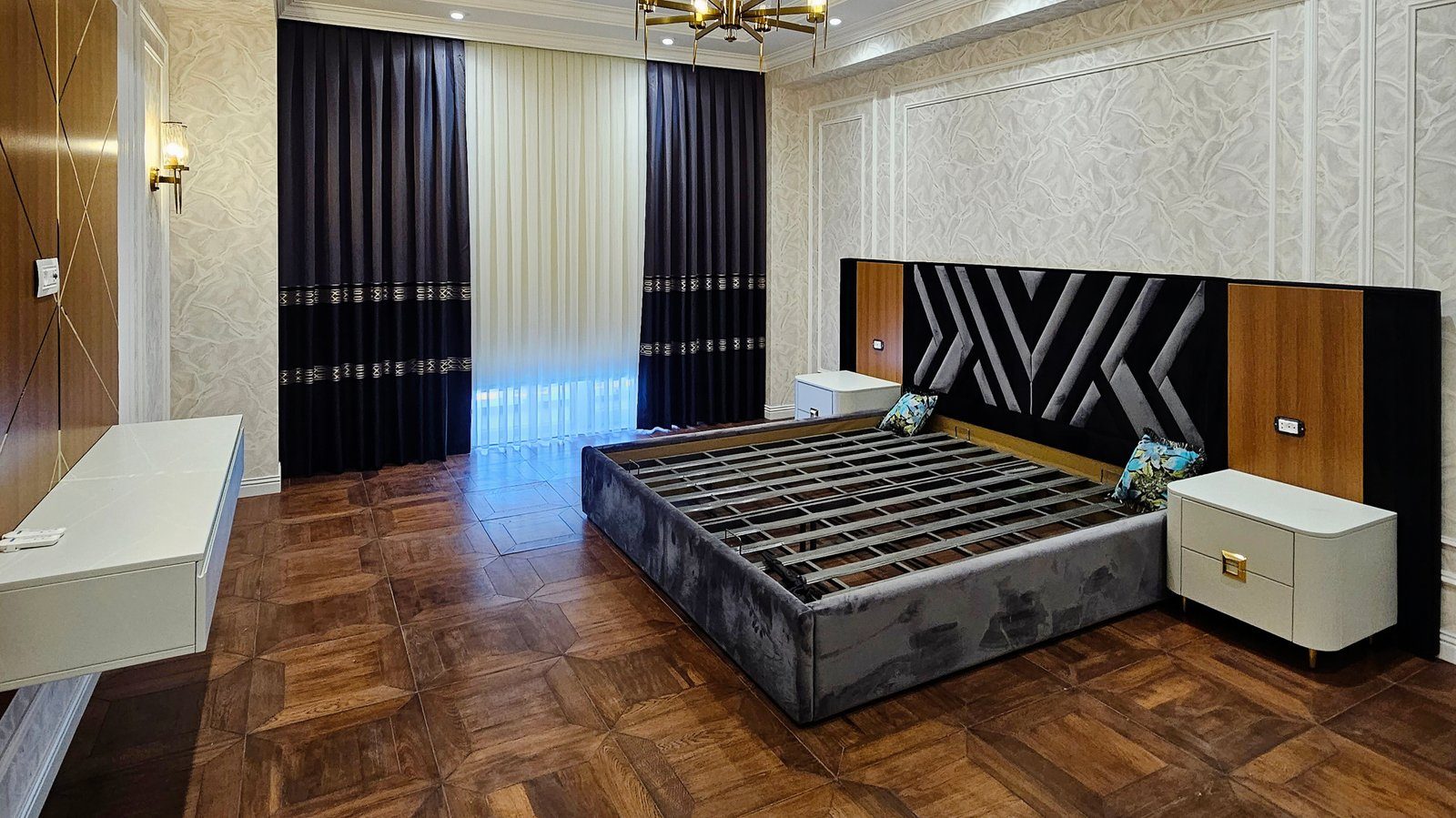
- Bedside tables can hang from the panel or sit against it, so headboard, tables and lighting form one composition.
- The wall is protected from leaning, pillows rubbing and movement of the bed.
- Space is created behind the panel for cables and lighting.
- Even if the bed is replaced later, the panel remains as an architectural element of the room.
Upholstered panels: comfort and acoustics
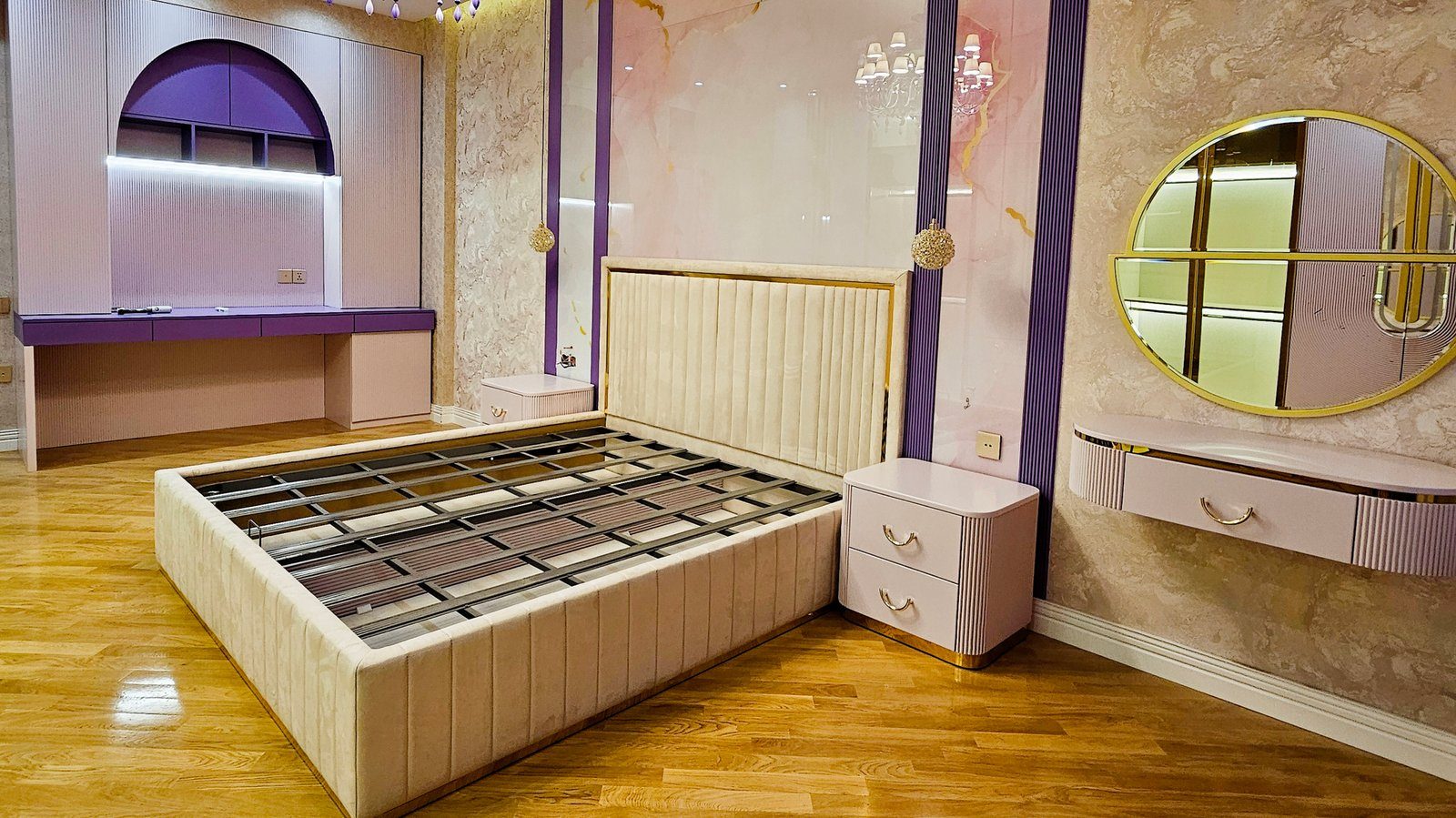
An upholstered panel lets you lean back comfortably while sitting up to read and brings a warm, hotel-like feel to the room. It is assembled from separate modules — rectangles, vertical channels or square blocks. Modular construction creates visual rhythm and means that if one section is damaged, only that section needs replacing.
Pay attention to the upholstery:
- Velour and velvet give deep colour and a soft look, but the pile can crush where heads rest.
- Tightly woven fabric is more durable and shows stains less.
- Faux leather wipes clean easily but feels cooler, and low-quality types crack over time.
An upholstered panel also has an acoustic benefit: fabric covering a hard wall reduces echo in the room. This is especially noticeable in bedrooms with large windows and little furniture.
Wood and veneer panels: calm texture
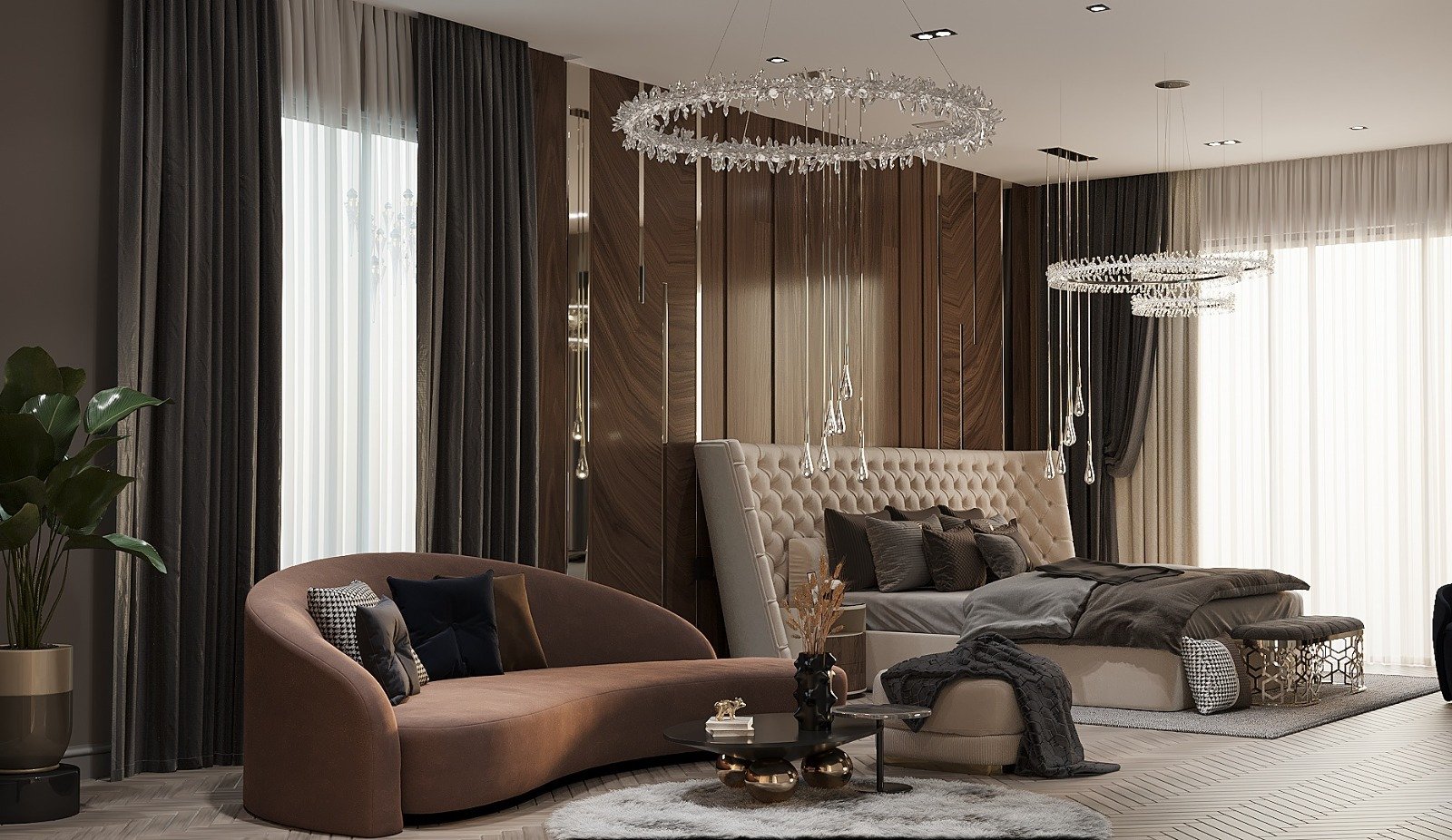
Wood-textured panels — veneered MDF, laminated board or slats (vertical battens) — create a more modern, natural look. Vertical slats make the ceiling appear higher, while horizontal lines make a narrow wall look wider.
A wood panel is not as comfortable to lean on as an upholstered one, so combining it with a soft headboard on the bed is one of the most practical solutions: wood panel behind, a low upholstered headboard in front. Matching the wood panel to the floor or wardrobe fronts makes the room look unified.
With slatted panels, the gaps between slats collect dust, so a dark backing behind the slats and regular vacuuming should be planned.
Size and proportion
When the panel is much wider than the bed — spanning both bedside tables, for example — the composition looks more unified. A panel the same width as the bed reads as an enlarged headboard.
The right height depends on the ceiling. A full-height panel makes a room look tall and grand, but can feel heavy in a small room. A mid-height panel, reaching roughly halfway up the wall, is calmer and leaves space above for a picture or mirror. Aligning the top of the panel with the height of window and door frames creates a continuous line around the room.
Integrating lights, sockets and bedside tables
The most useful part of a panel design is technical integration. Decide during planning:
- At what height will reading lights sit on the panel, and will their switches be reachable from the bed?
- Will sockets and USB outlets be built into the panel above the bedside tables?
- Will there be concealed LED lighting at the top or bottom edge of the panel? It provides a soft background light at night.
- Will the bedside tables stand on the floor or hang from the panel?
These decisions must be made before electrical work begins, because the cable outlets must match the panel layout.
Short checklist before choosing
- Will the panel be upholstered, wood or a combination?
- Is it wide enough to include the bedside tables?
- Does the height suit the ceiling and window line?
- Have light and socket positions been planned?
- Will the fabric or surface stand up to daily contact?
If the headboard panel, bed and bedside tables are ordered together from Zaferoglu Mebel, lamp and socket positions can be lined up with the furniture layout from the start.