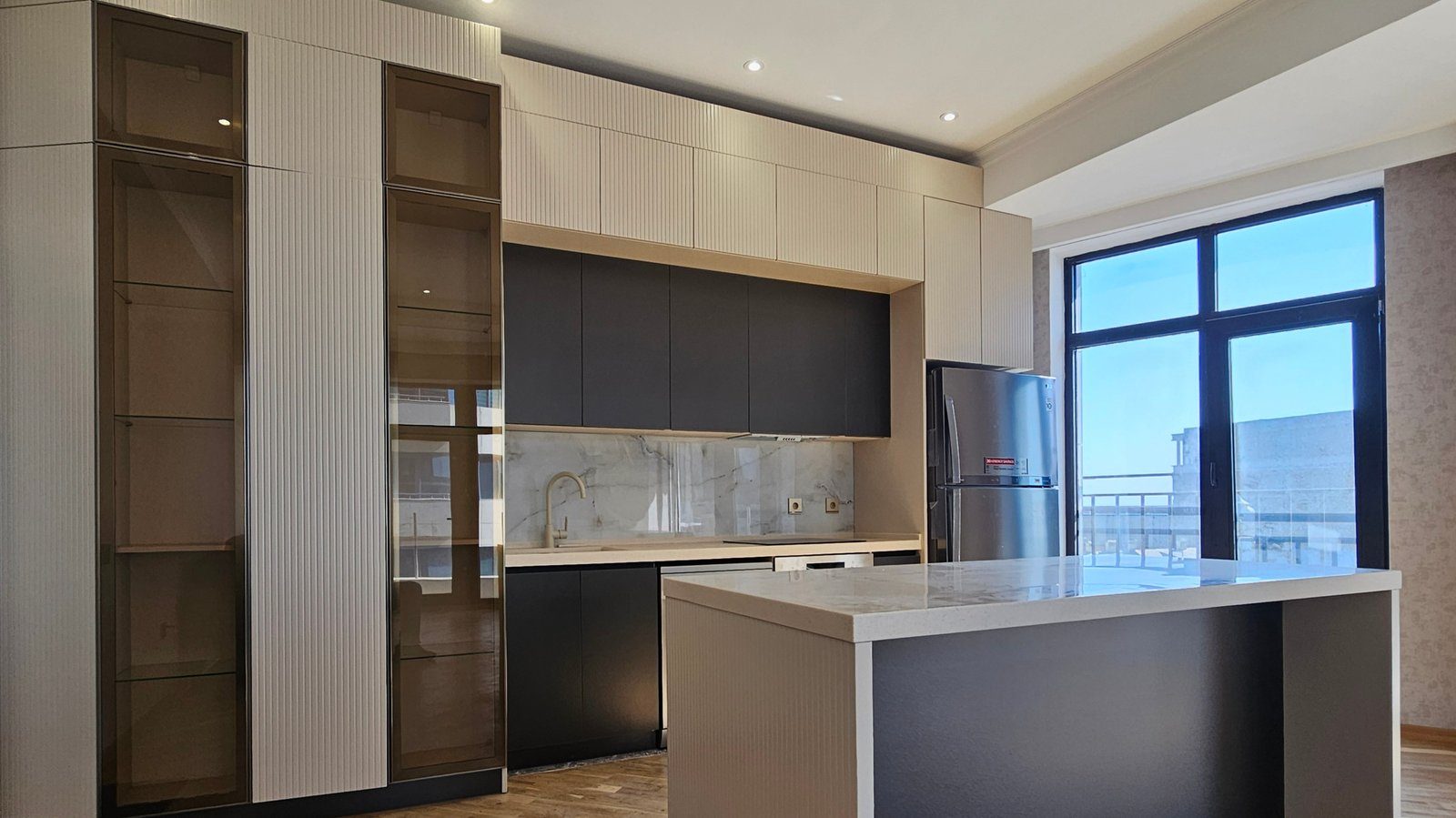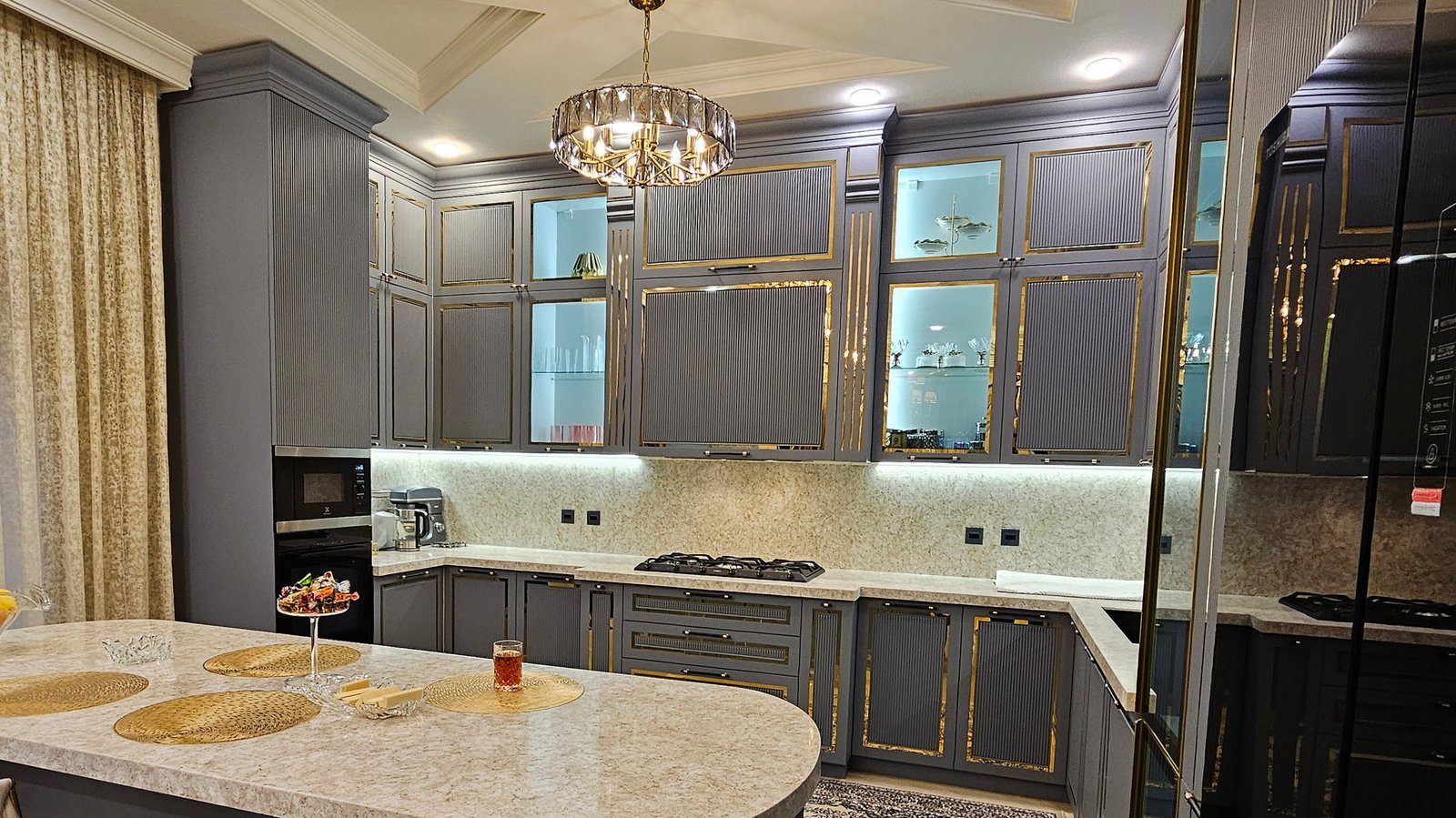

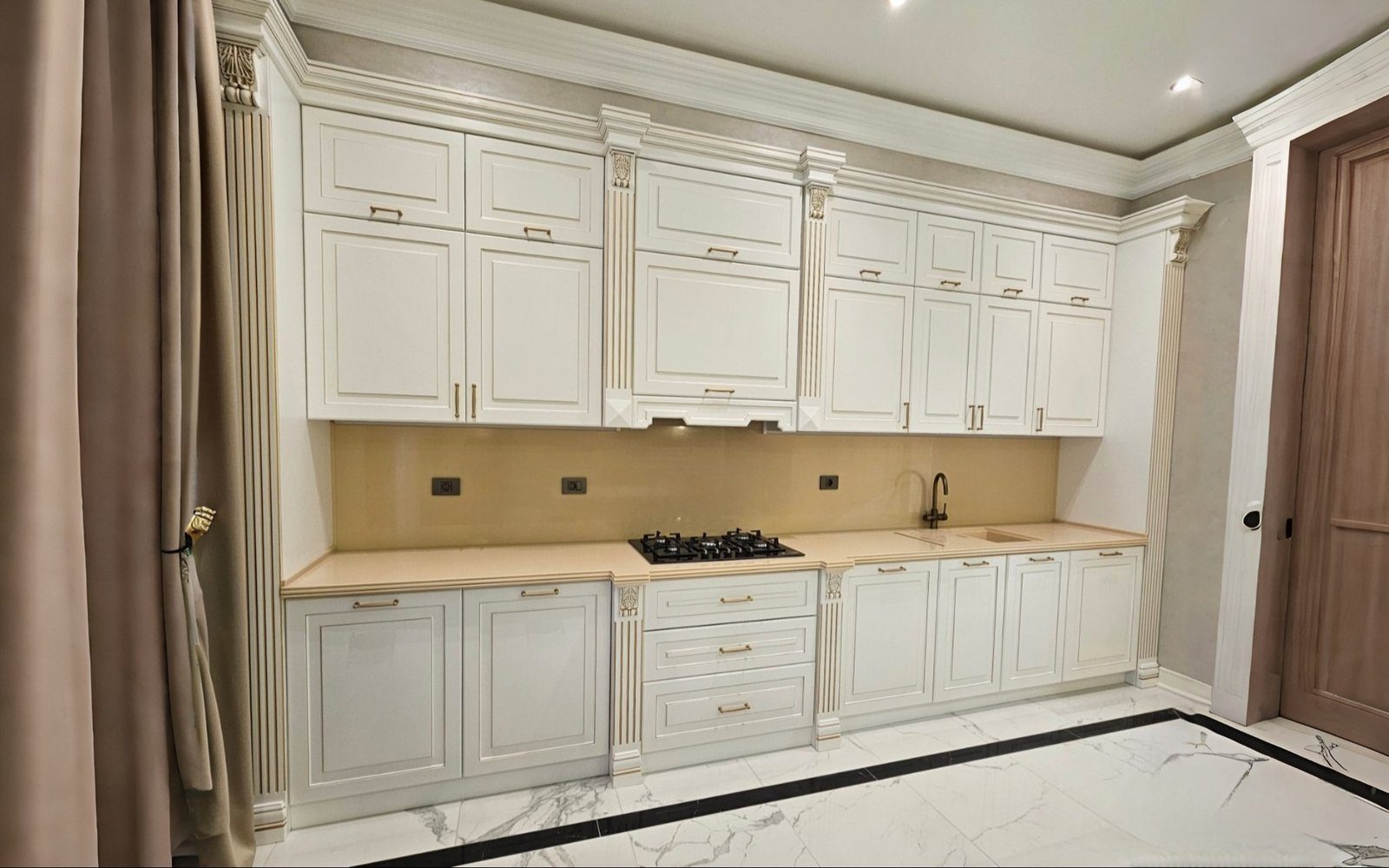
Anyone looking at a kitchen design sooner or later reaches this question: should the base units have doors or drawers? A few years ago most base units were door cabinets with a shelf, and drawers were used only for cutlery. The spread of full-extension runners has changed that. But "drawers everywhere" is not a universal answer either. The right choice depends on what each unit will hold.
The main advantage of drawers: you can see the back
In a door cabinet, reaching a pan at the back of the shelf means bending down, taking out the items at the front and putting them back again. A fully extended drawer shows everything inside from above. That makes a big difference in deep base cabinets: fewer forgotten items at the back, and no kneeling to hunt for dishes.
Drawers also lend themselves better to internal organisation. Dividers for pots, lids, pans and spice jars keep everything in place, whereas in a shelved cabinet things end up stacked on top of each other.
The strengths of doors
A door cabinet is not an outdated solution. It has several real advantages:
- Tall or oddly sized items — a large stockpot, a mixer bowl, baking trays — fit more easily behind a door, because the shelf height can be adjusted.
- In the sink unit, the trap and water pipes prevent a drawer from using its full depth. A door is used here, or a special drawer with a U-shaped cut-out.
- For rarely used items a door cabinet is enough; the access advantage of a drawer is hardly felt.
- Door units have simpler hardware, which affects the overall cost.
There is a visual point too: wide doors side by side create a calm, unified front. Lots of drawer fronts give a busier look with horizontal lines. Either can work, depending on the style.
A practical split by zone
Following the way people work in a kitchen, the role of base units can be divided roughly like this:
- Under and beside the hob: deep drawers for pots, pans and lids, so everything needed while cooking comes out in one movement.
- In the prep area: a shallow top drawer for cutlery and utensils, with medium and deep drawers below for dishes and storage containers.
- Under the sink: a door or a drawer with a cut-out for the trap; the waste bin system often goes here too.
- Next to the dishwasher: a deep drawer with plate dividers, so dishes go straight from the dishwasher into place.
- In the corner unit: a door with a carousel or pull-out corner system, because an ordinary drawer cannot reach the corner depth.
Hardware and load
How comfortable a drawer is depends directly on the quality of its runners. A deep drawer filled with pots and plates carries a significant load, so choose full-extension, load-rated, soft-close runners. Weak runners make no difference in the first months, but sagging and heavy movement soon follow. In systems from manufacturers such as Blum, the drawer sides, runners and adjustment mechanism are designed to work together.
In wide drawers, especially units approaching a metre, a strong base material and a design that spreads the load to the sides are important to stop the bottom bowing under heavy loads. These dimensions should be discussed with the manufacturer based on the actual load.
There is also a middle way between doors and drawers: internal drawers hidden behind a door. From outside the kitchen shows a calm front of large doors, while inside full-extension drawers keep things organised. This suits people who do not want to break the rhythm of the fronts, but it has a drawback: reaching an item takes two movements — open the door, then pull the drawer. Internal drawers therefore make more sense for pantry stock or rarely used dishes than for the busiest everyday zone.
Cost and decision
A drawer unit usually costs more than a door unit, because each drawer needs its own pair of runners, sides and front. If the budget is limited, a sensible compromise is to concentrate drawers in the most-used zones — cooking and prep — and keep rarely used end units with doors.
A simple test helps decide: for one day, note which cabinets you open in your current kitchen and how often. Cabinets opened frequently, where you bend and search, are candidates for drawers; those opened once or twice a month can keep doors.
Zaferoglu Mebel builds kitchen drawer systems with Blum hardware; how many base units become drawers and how many keep doors can be decided at the measuring visit from the amount of cookware you own and the way you cook.