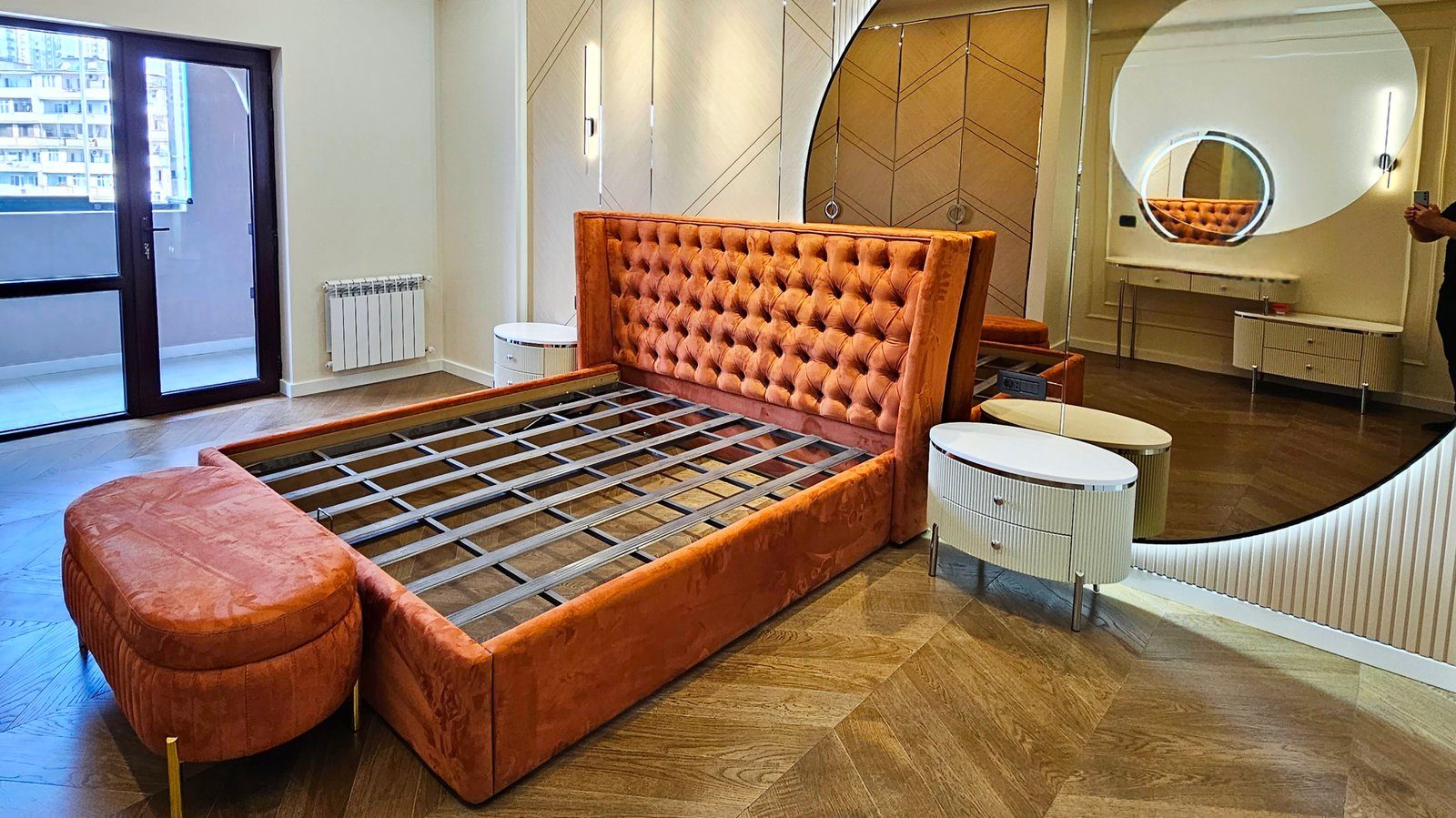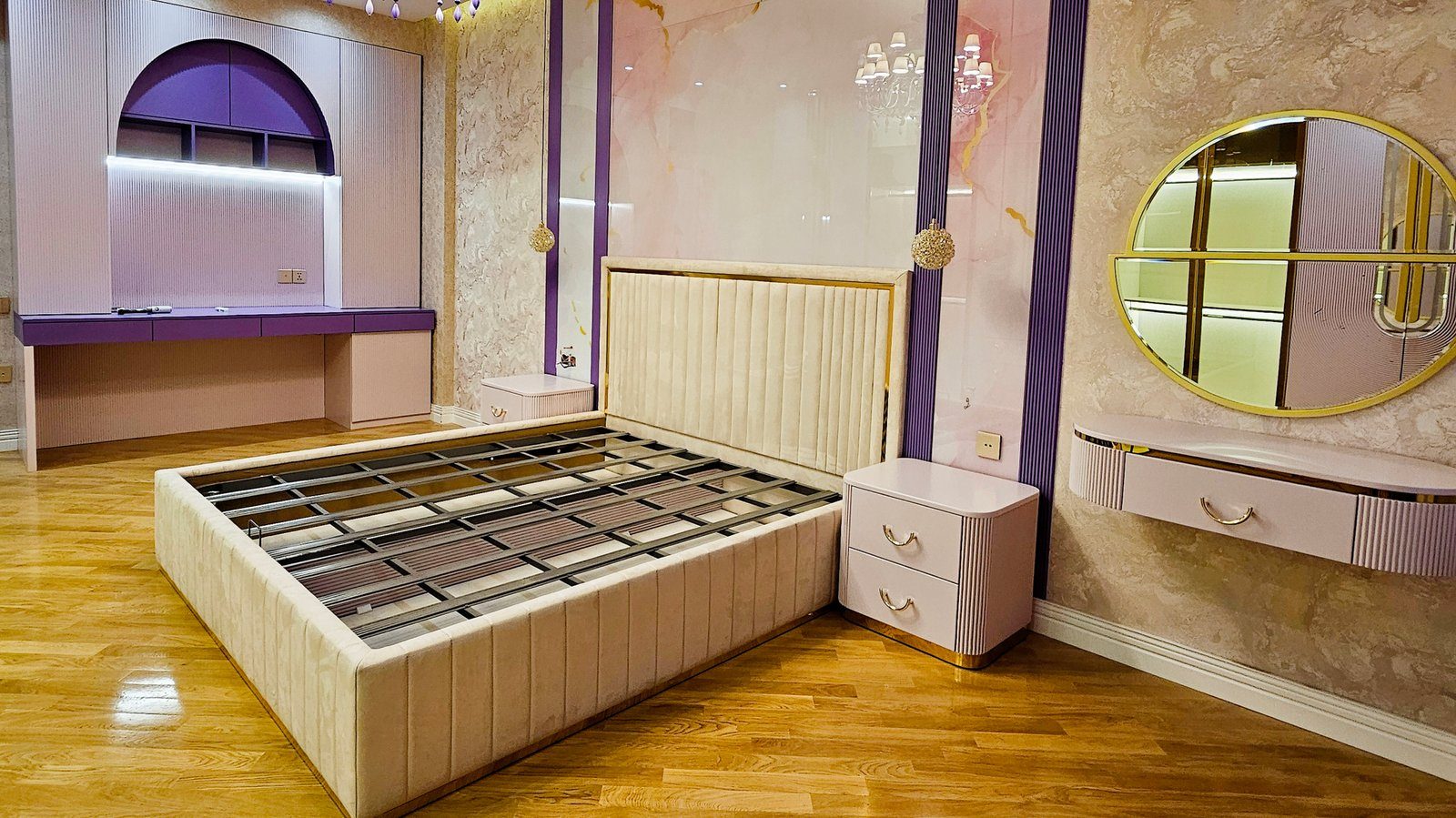

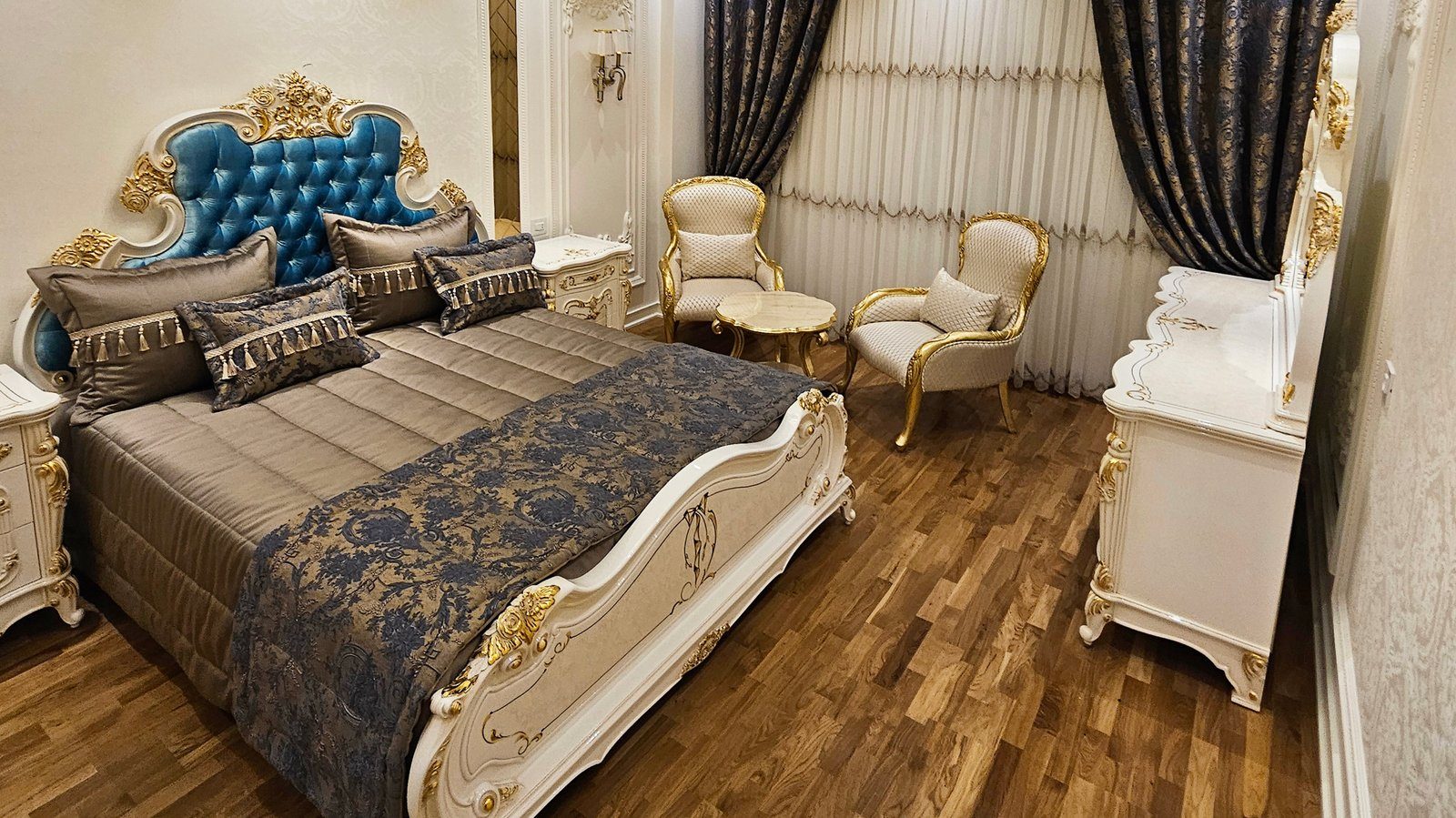
A dressing table is often the last item planned for a bedroom, placed against whatever wall is left after the bed, wardrobe and bedside tables. The result is shadows on the face when applying make-up, no socket for the hairdryer or straightener, and cosmetics piling up on the top. Yet a dressing table is a small workstation used every day, and its success rests on a few simple decisions: where it stands, where the light comes from, what the mirror is like and where things are stored.
Placement: window and circulation
Natural daylight is the best light for a face because it does not distort colours, so placing a dressing table beside or facing a window is ideal. Light falling on the face from the front or side works best. Sitting with your back to the window is a mistake: your face is in shadow in the mirror, and the bright window behind is dazzling.
The bedroom's circulation matters too. When the chair is pushed back, it should not block the wardrobe doors or the route to the bed. In a small room, a narrow console-style table or a fold-out dressing area built into part of the wardrobe can solve this.
Artificial light around the mirror
You cannot always count on daylight: dark winter mornings, getting ready in the evening, windows in the wrong place. The main rule for artificial light is to light the face evenly. One overhead fitting throws shadows downwards under the eyes and chin. Lights on both sides of the mirror at about face height, or an LED frame round the mirror, give far better results.
Colour temperature matters as well. Very cool light makes skin look pale; very warm light makes it look yellowish. Neutral light is more reliable for make-up. LEDs with a high colour rendering index show colours more accurately, and dimmable brightness allows a gentler setting in the evening.
Mirror size and height
Mirror size depends on how the table is used. For make-up only, a medium mirror showing face and shoulders while seated is enough. For hairstyling, a wider and taller mirror is more comfortable, since the arms are raised to see the back of the head. A magnifying mirror on the table helps with fine detail.
The bottom edge of the mirror should sit a little above the table top so items do not knock against it. Viewing is most comfortable when the centre of the mirror is close to seated eye level. A wall-mounted mirror is steadier than a freestanding one and takes up no table space.
The table's own size affects comfort as well. On a very narrow top, a make-up bag, brush set and mirror will not fit at once, while on a very deep one you have to lean forward to get close to the mirror. Height is usually similar to an ordinary writing desk, with the seat matched to it. In some homes the dressing table doubles as a small laptop desk; then the top is made a little wider, sockets are added and the mirror is planned as a wall-hung or lidded unit so it does not get in the way.
Storage: drawers and dividers
Cosmetics, brushes, jewellery and hair tools come in all sizes, so storage in a dressing table does not work without dividers. Inserts that split a shallow top drawer into compartments keep small items tidy. A deeper drawer or cabinet suits bottles and perfumes, and small soft-lined compartments suit jewellery.
If there is a dedicated section for hot tools like a hairdryer and straightener, choose an open holder or metal basket so they are not shut away before cooling. The table top should resist cosmetics and alcohol-based liquids; laminate or a glass top is practical.
Electrics and comfort details
Electrical points should be decided in advance:
- A power supply and switch for mirror lighting.
- Sockets at table-top level for a hairdryer, straightener and chargers.
- A cable channel or grommet to hide cables behind the table.
- Knee space so the chair or pouf slides fully under the table.
Seat height should match the table height, leaving room for legs to rest freely.
A dressing table from Zaferoglu Mebel can be ordered as part of a set with the bed, bedside tables and wardrobe, or as a standalone piece added to an existing bedroom.