
A week or two after ordering furniture, many families spot a different front colour, decide to move the desk in the children's room or want one more drawer in the wardrobe. That is entirely normal: once people see a design on paper, they start living in it in their heads and new needs come to mind. The question is not whether a change is possible, but at which stage and with what consequences.
The stages of made-to-order furniture
To understand what a change costs, it helps to picture the process. The usual sequence is: measuring, drawing up the design, client approval, ordering boards and hardware, cutting panels and applying edge banding, finishing the fronts, then assembly, packing and installation on site. Each step builds on the one before, so going back is not a single step but repeating several.
Before the design is approved: almost anything
Until the drawings are signed off, changes are easiest. The number of units, shelf positions, door opening direction, colours and handles can all be revisited. Not rushing at this stage prevents most later problems. For rooms whose use changes quickly, such as a child's bedroom, it is especially useful to keep the design at home for a few days and check it against everyday routines.
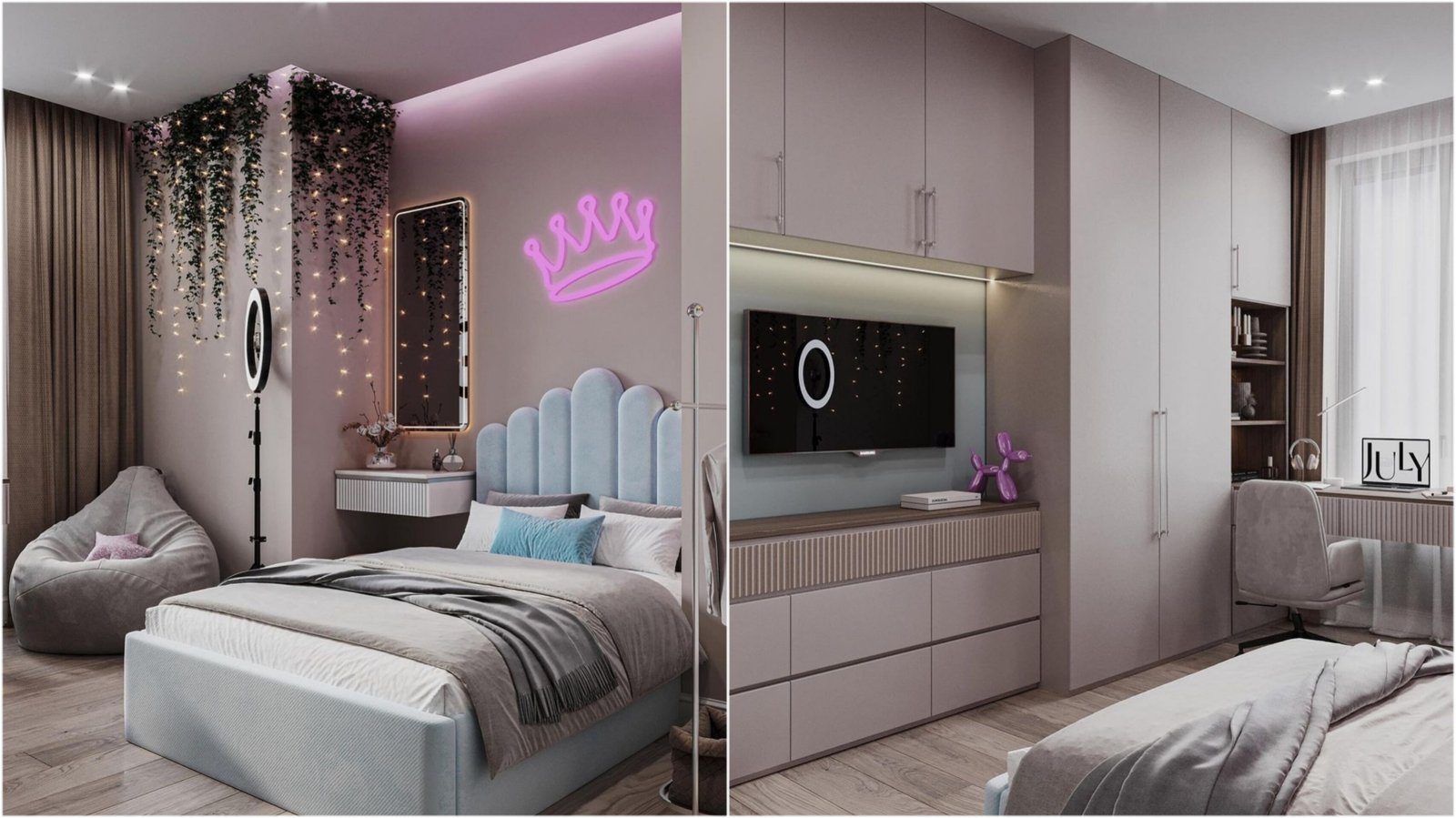
The details most often missed on a drawing are whether doors hit each other or the bed when opened, whether drawers clear the radiator and window sill, and whether sockets and switches end up hidden behind furniture. In a child's room it is also worth checking that upper shelves are within the child's reach and where the desk sits relative to the window. Asking these questions before approval removes most of the changes that become expensive later.
After materials are ordered: choices get harder to change
Once boards, front materials and hardware are on order, changing a colour or decor depends on whether that material can be returned or reused. A standard decor board may go into another project, while fronts painted in a custom colour or unusual hardware often cannot. Internal layout changes, such as swapping a shelf for a drawer, are still often possible because cutting has not started.
Time is another factor. When a new colour or hardware is chosen, the material has to be reordered and delivered, so the handover date often moves too. When asking for a change, ask not only whether it is possible but how it affects the schedule.
After cutting and finishing: only limited adjustments
When panels have been cut to size and edged, a size change effectively means making those parts again. Making a panel smaller is sometimes possible but the edge has to be redone; making it bigger is not. Changes that are usually realistic at this point include:
- a different handle model, if the holes have not yet been drilled;
- adding a separate, self-contained unit such as an extra shelf or cabinet;
- adding internal accessories such as baskets or dividers.
During and after installation
Once the furniture is on site, a change is treated as a small separate order. Adding a shelf, replacing hinges with soft-close ones or adding lighting is often possible. Moving a unit to another spot depends on sockets, pipes and the condition of the wall.
On installation day it can be tempting to ask the fitter to cut a finished panel or drill a new hole on the spot. But a cut made on site is not the same quality as a workshop cut sealed with edge banding, and such changes can also affect the warranty. Even a change that seems small is better agreed with the manager first.
How to reduce the need for changes
- Before approving the design, check each unit against a written list of what will go inside.
- Choose colours from real samples, not from a photo on a small screen.
- In a child's room, think a few years ahead: desk height, bed size.
- Confirm every change on an updated drawing rather than verbally.
Zaferoglu Mebel makes each order to its own drawings and measurements in its workshop. The surest way to find out whether a change is still possible is to ask the manager, who can check how far your order has progressed.