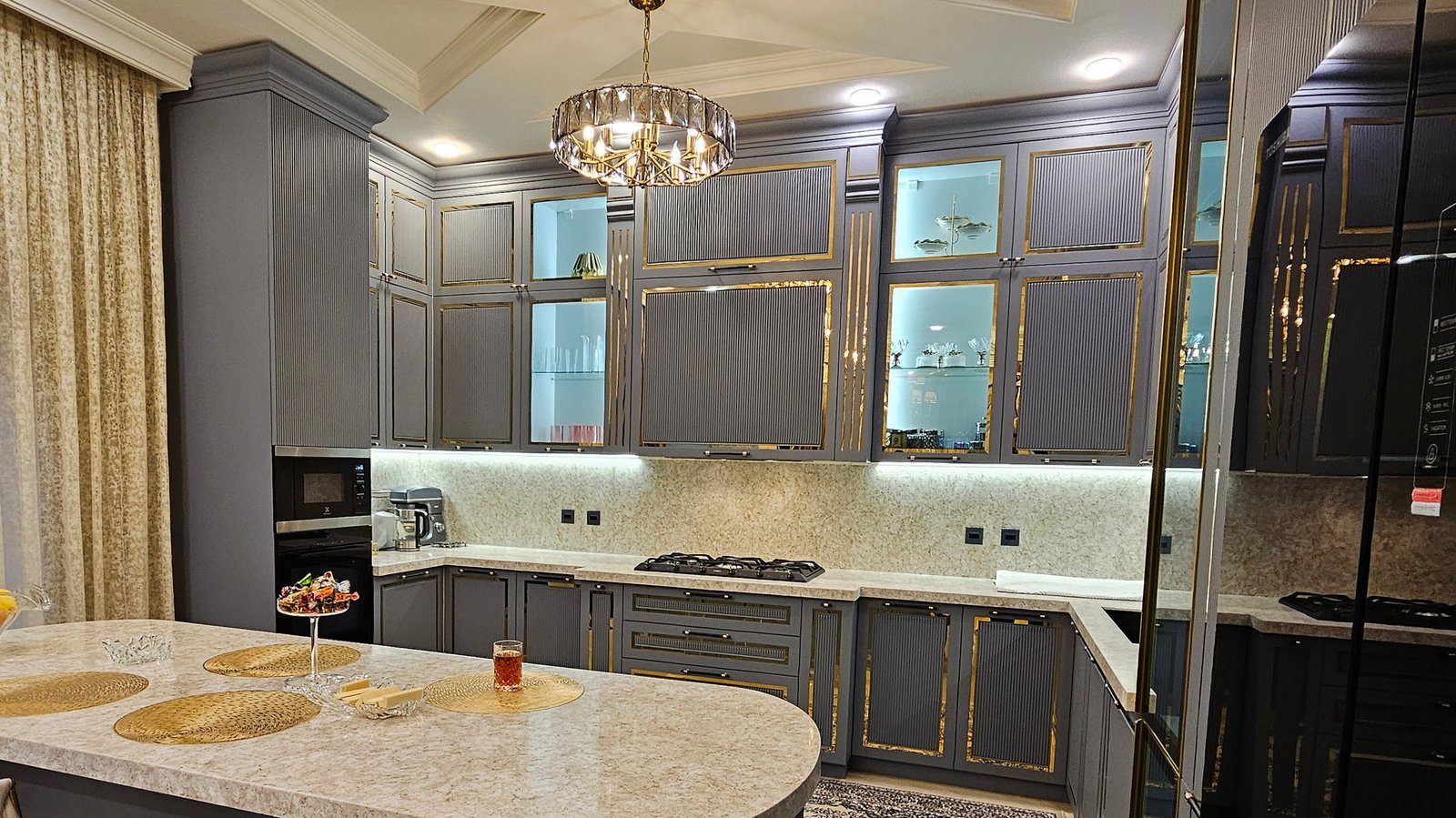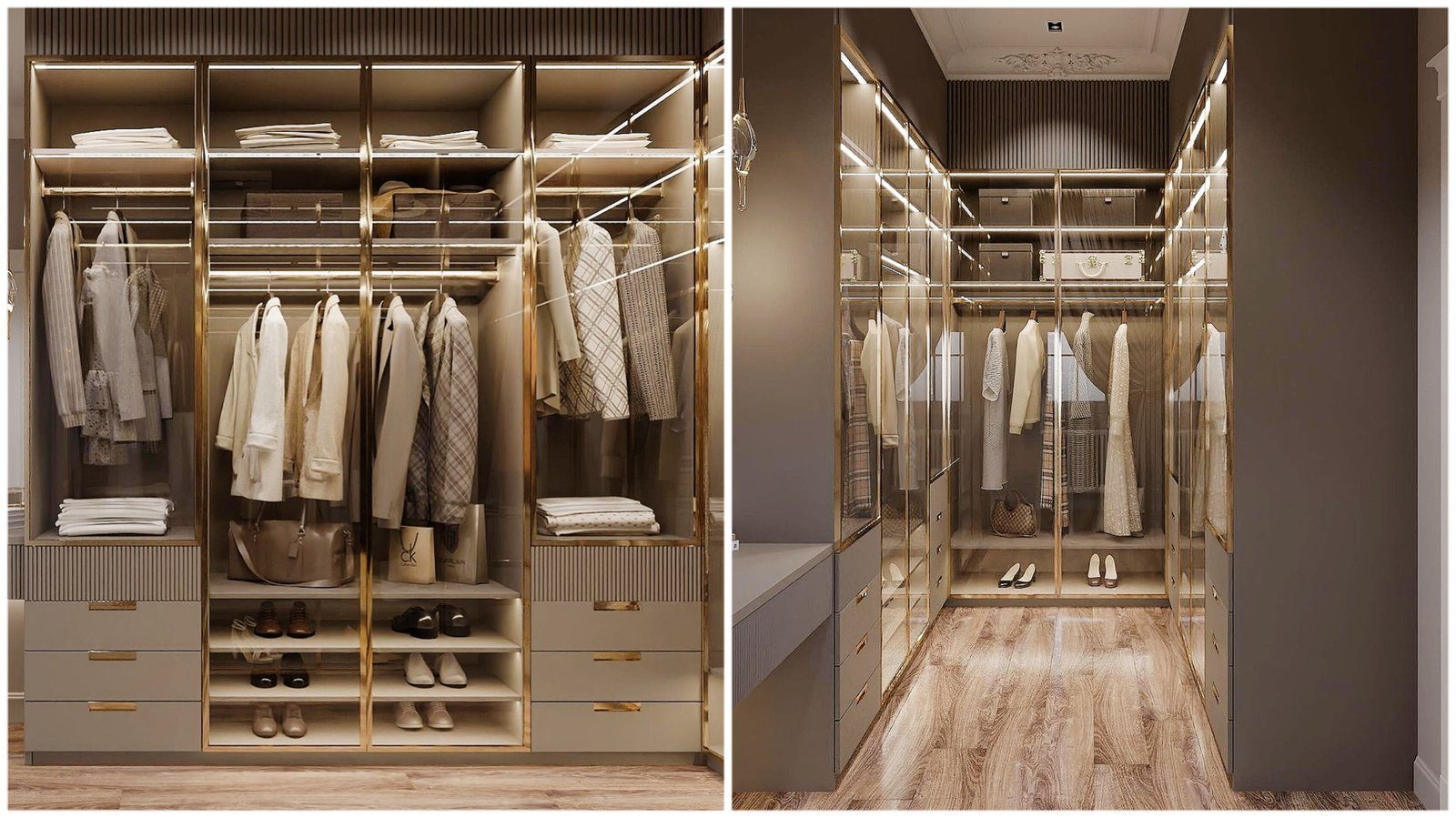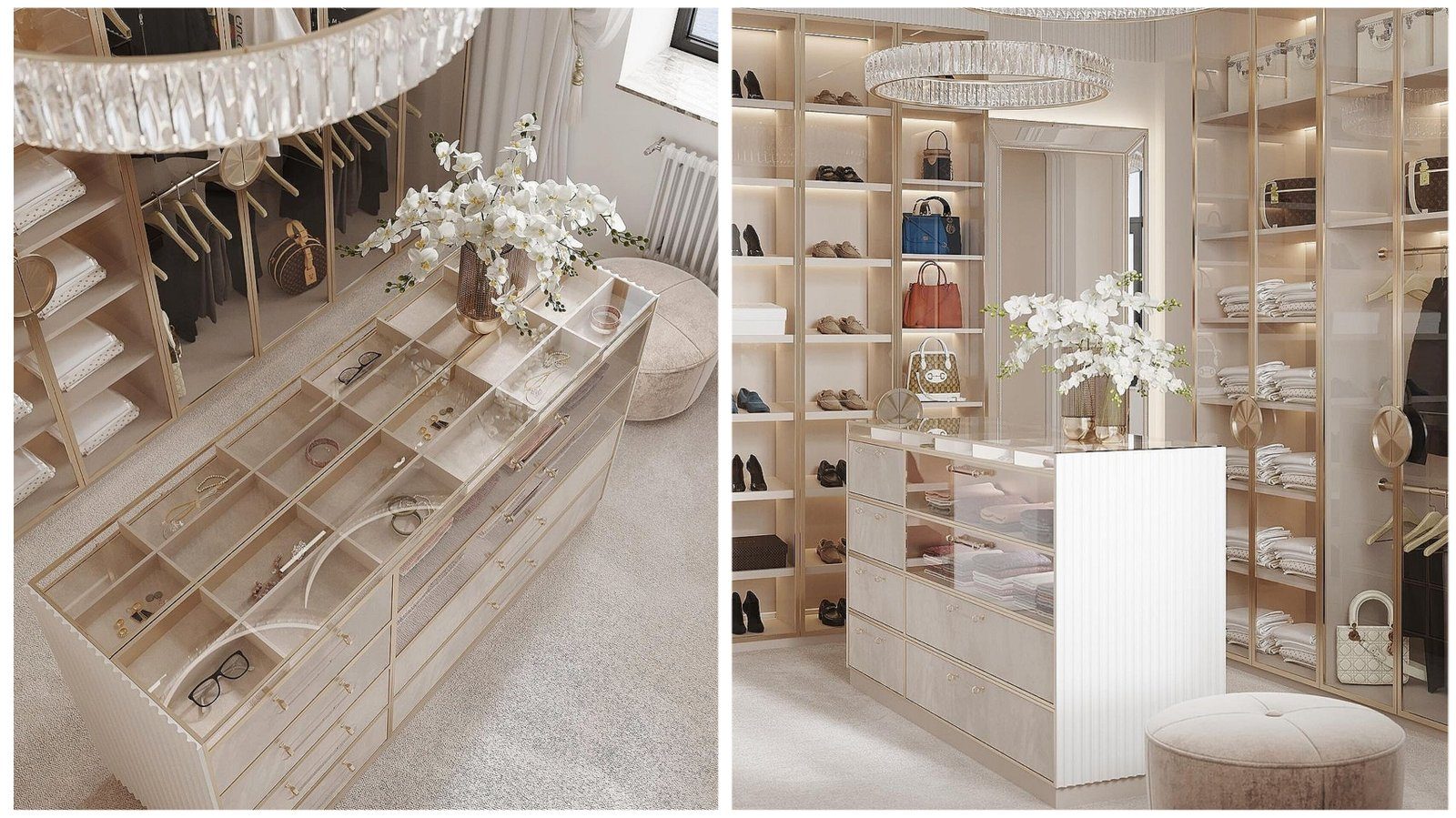

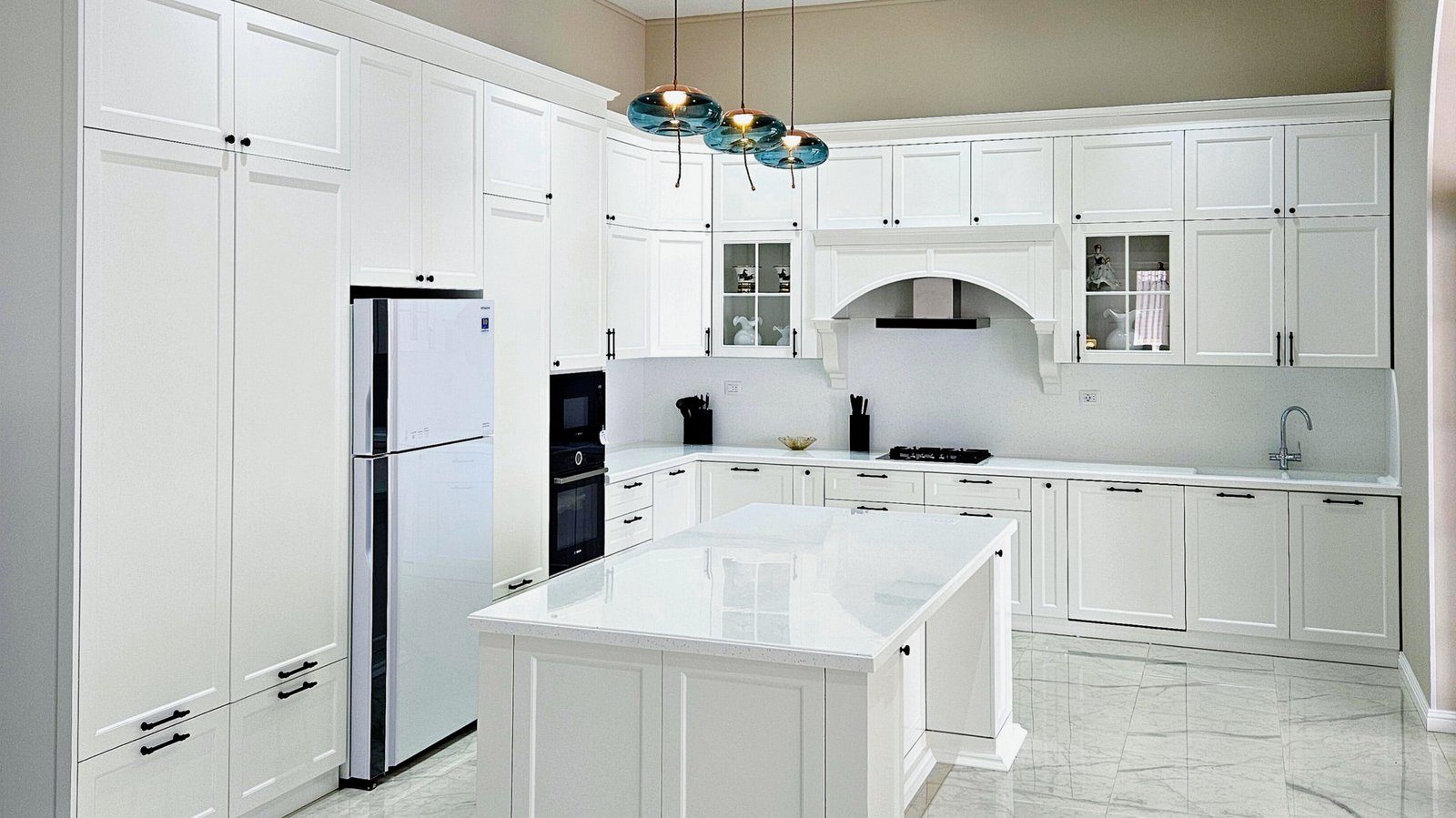
A glass-fronted display cabinet, sideboard or bar unit looks simple at first: a sheet of glass, two hinges and a handle. In daily use, though, these doors behave differently from an ordinary chipboard front. You cannot drive a screw into glass, the weight rises quickly as the door gets bigger, and if the door hits the carcass when closing, the impact goes straight into the glass. Choosing the right hardware is a matter of both appearance and safety.
Framed or frameless: two different approaches
Glass doors are built in two main ways. In the first, the glass sits inside an aluminium or MDF frame. The hinge is then fixed to the frame rather than the glass, often with a system close to standard furniture hinges. Hardware makers offer special hinge cups and adapters for aluminium profiles.
In the second approach the whole door is glass, with no frame. It looks lighter and more contemporary, but the entire load is carried by the hardware attached to the glass. These doors use hinges that clamp the glass, or systems that fit into holes drilled through it.
Hinge types for frameless glass
Clamp hinges grip the glass between two plates, with rubber or plastic inserts so that metal never touches the glass directly. Some models require a hole in the glass; others rely on clamping alone. With a system that needs drilling, you have to know this before the glass is cut and toughened, because toughened glass cannot be drilled afterwards.
Pivot hinges that turn at the top and bottom of the door are also common. They leave no visible cup on the door edge and give display cabinets a clean line. They do require a sufficiently strong top and bottom panel in the carcass, since that is where the load goes.
The number of hinges depends on the height and weight of the door. Exceeding the maximum load in the manufacturer's table leads to a door that sags over time or glass that slips in its clamp.
The weight of the glass is directly proportional to its area and thickness. Keep the width and double the height, and the weight roughly doubles too. Two hinges that are fine on a low sideboard door may therefore not be enough on a tall display cabinet door. The opening angle matters as well: if the door swings into a side wall, a window reveal or the next piece of furniture, the glass takes the knock again. In such places a hinge or stop that limits the opening angle is used.
Why soft closing matters more on glass
On an ordinary front a hard close is just noise; on glass it is a repeated impact. That is why soft closing is particularly advisable for glass doors. Some hinges have a built-in damper, while in other cases a separate damper is fixed to the carcass. Small self-adhesive rubber bumpers also stop the glass hitting the carcass directly, a cheap but useful detail.
Handles: drilled, bonded or none
There are three main ways to give a glass door a handle:
- Handles fixed through a drilled hole. The strongest option, but the hole position must be specified exactly when the glass is ordered.
- Clamped or bonded handles. No drilling needed and fine for light doors; on a heavy door they may not withstand constant pulling over the years.
- No handle. A push-to-open mechanism or a profile handle in the carcass. Fingerprints on the glass will mean more frequent cleaning.
On framed doors the handle is usually fixed to the frame, which widens the choice.
The glass itself and safety
However good the hardware, the type of glass plays the main role. Furniture doors normally use toughened or laminated glass. If toughened glass breaks, it shatters into small granules rather than sharp shards; laminated glass stays in one piece thanks to the interlayer film. In homes with children, or for doors set low down, the difference matters.
Before ordering, check:
- Is the door framed or all glass?
- Are the door's size and weight within the limits of the chosen hinge?
- If holes are needed for hinges or handles, have their positions been confirmed before the glass is cut?
- Is there soft closing, or at least rubber bumpers?
- Is the glass toughened or laminated?
For a display cabinet or sideboard with glass doors, Zaferoglu Mebel, which uses Blum hardware, can fix the door size, glass type and hinges together so fewer changes are needed later.