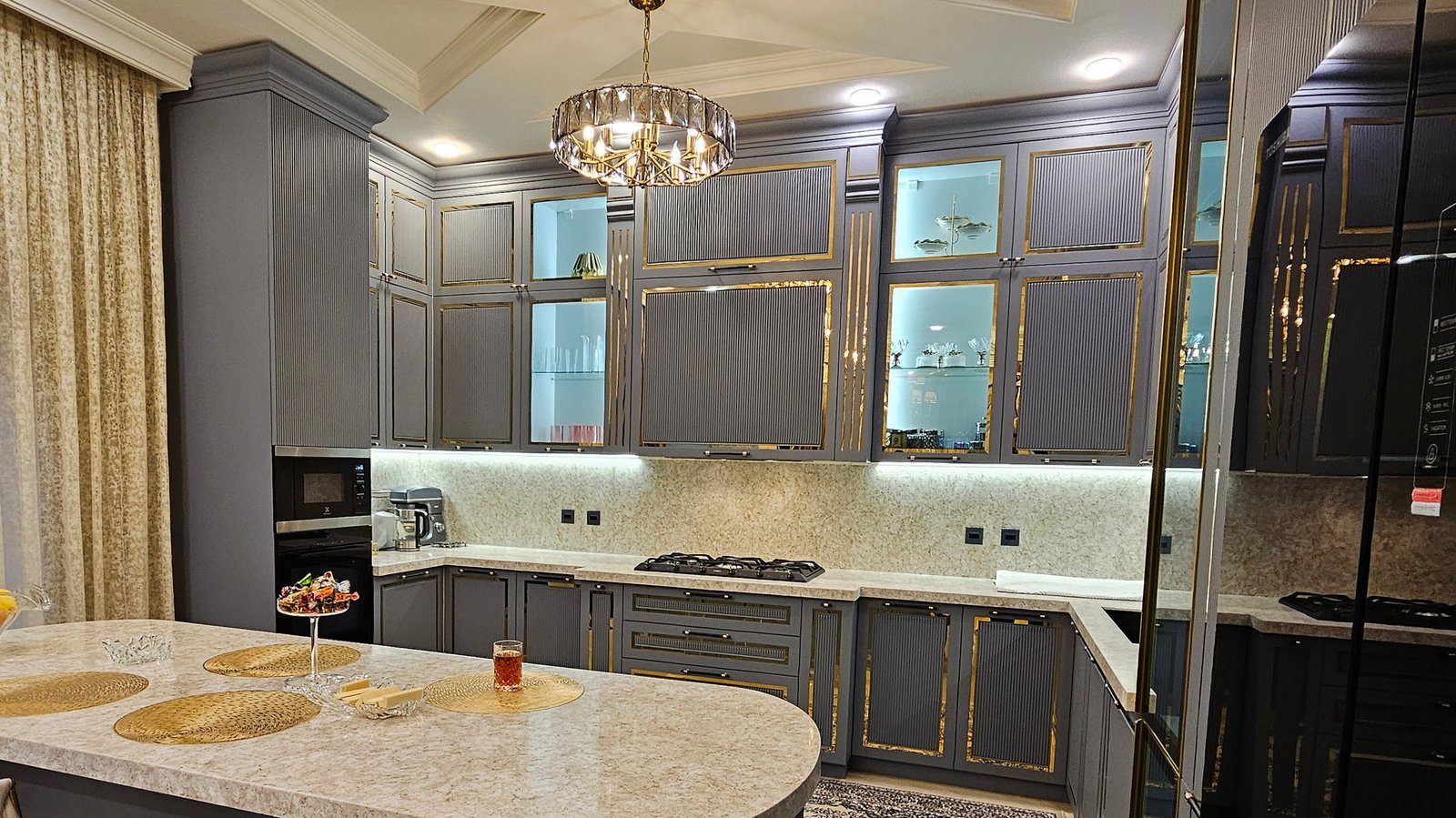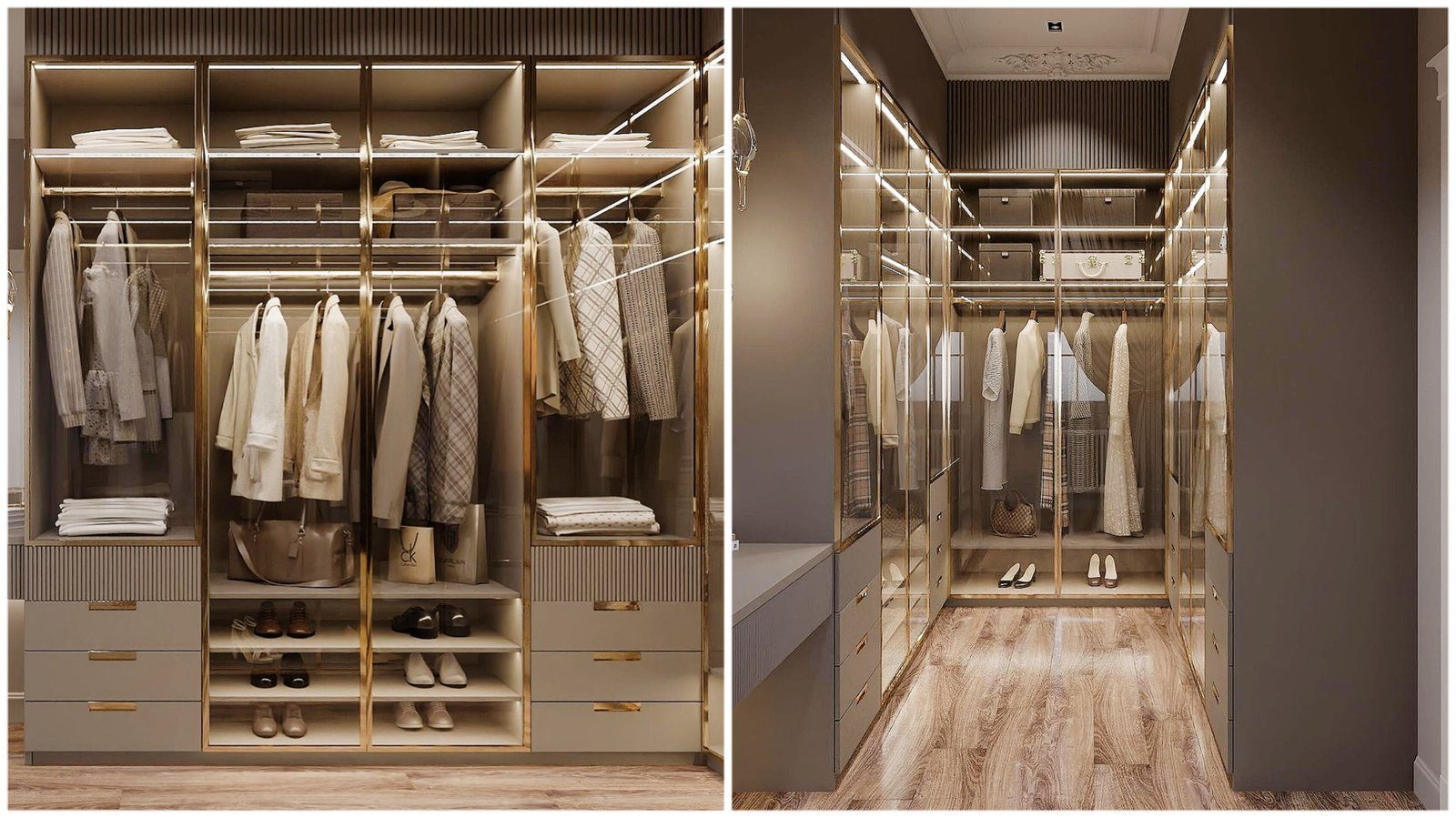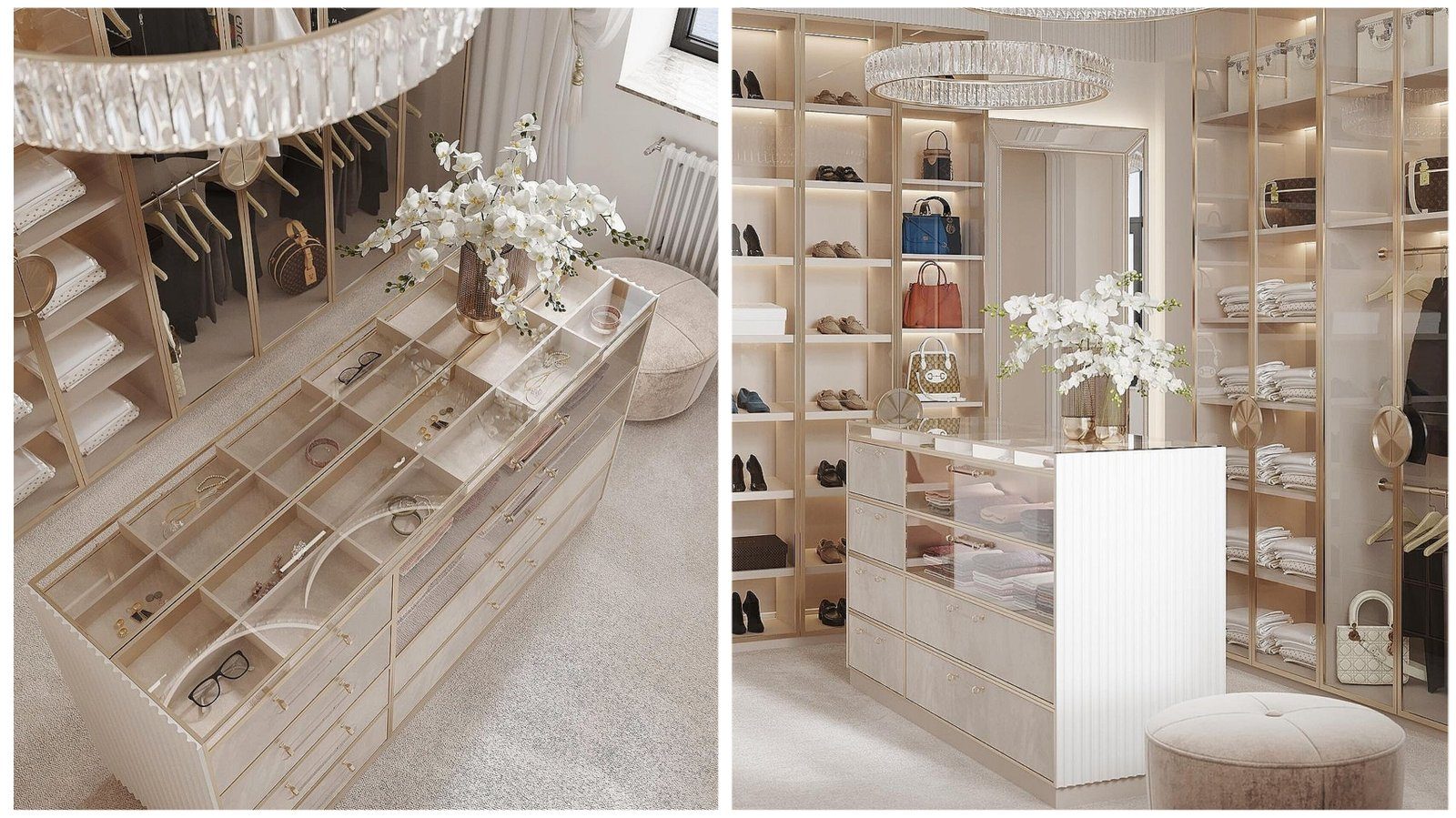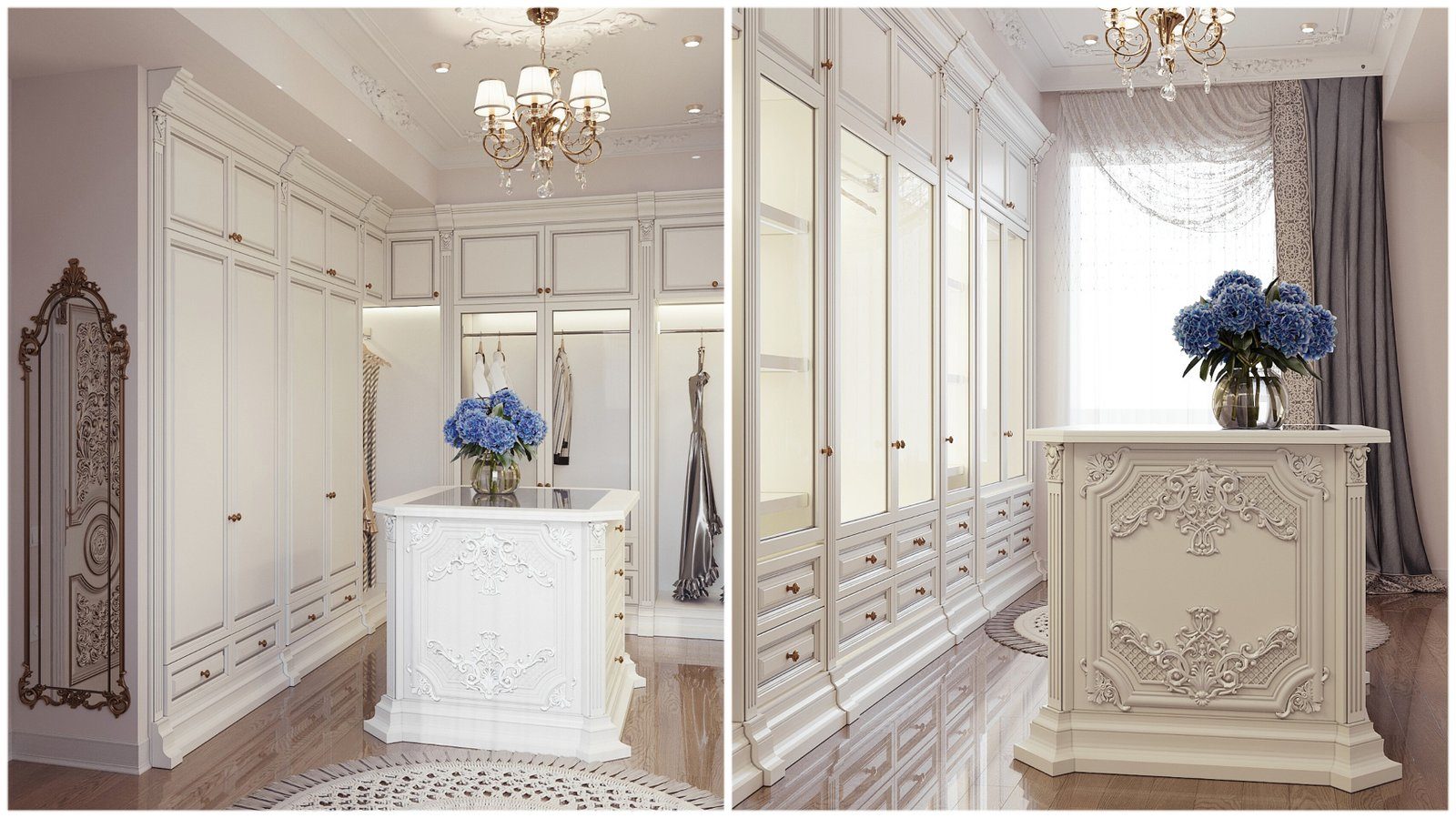

In a kitchen or wardrobe project, handles are often the last detail chosen. Yet handles are how we touch furniture dozens of times a day. A handle that is too small pinches the fingers, one in the wrong place makes a heavy drawer hard to pull, and one out of proportion with the front makes even expensive furniture look unfinished. Choosing handles is a sequence of decisions: shape, size, material and placement.
Handle shapes
Furniture handles fall mainly into a few groups:
- Knobs: fixed at one point, suited to classic styles and small fronts.
- Bar or D handles: elongated handles fixed at two points, the most common shape in modern furniture.
- Profile handles: a slim aluminium strip along the top or side of the door that almost disappears.
- Recessed handles: set into the front without protruding, convenient for sliding doors and narrow passages.
- Routed grips: a groove or cut along the edge of the front, requiring no separate part.
The choice depends on style and use. In a narrow passage, a protruding handle can catch clothing; in a children's room, a sharp-cornered metal handle is a knock hazard.
Centre-to-centre spacing
The key dimension of a two-point handle is its centre-to-centre spacing, the distance between the two screw holes. In the furniture industry these sizes are usually based on the 32 mm system, with 96, 128, 160 and 192 mm and larger variants widely used. When replacing an old handle, choosing the same spacing avoids drilling new holes in the front.
A handle's overall length is slightly greater than its hole spacing, as the ends extend beyond the screws. Distinguish between the two when ordering, or the handle may look different from what you expected.
Length relative to front size
Handle length should be in proportion to the front's width. A practical rule is short handles on narrow fronts and longer handles on wide drawers. On a very wide drawer, a short handle looks lost, and if the drawer is pulled off-centre it can move crookedly. In such cases, one long handle or two short ones are used.
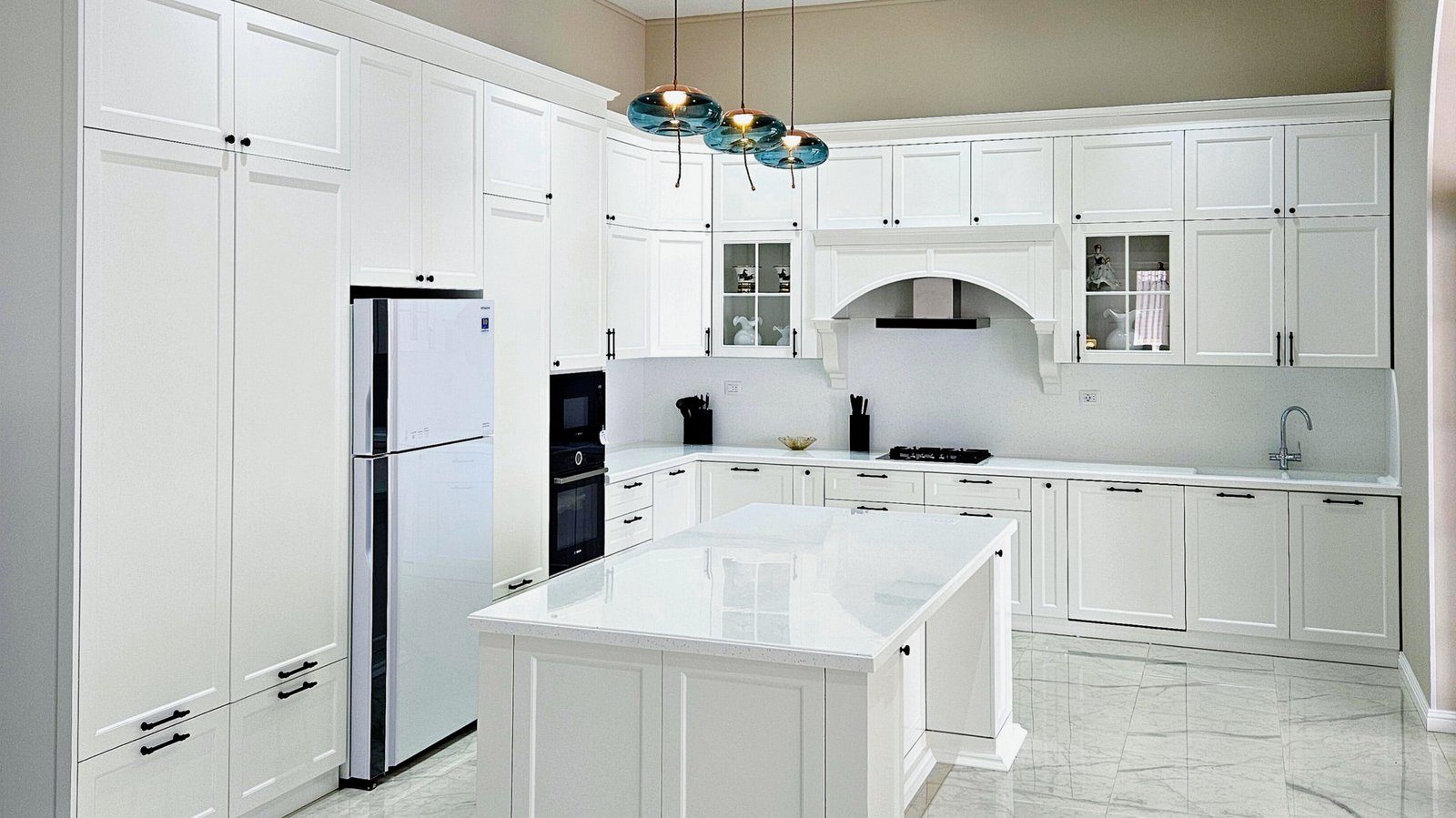
Using the same length throughout a kitchen gives a unified, calm look. Different lengths can be a deliberate design choice to emphasise a hierarchy of drawer sizes.
Placement on doors and drawers
On doors, the handle goes on the opening side, opposite the hinges. On base cabinet doors it is usually near the top corner, and on wall cabinets near the bottom corner, so the hand reaches it easily. On tall doors, the handle is placed at hand height, sometimes as a long vertical bar.
On drawers, the handle is usually centred and horizontal. On heavy drawers, central placement spreads the load evenly. The distance from the top edge of the front should be the same along the whole row so the line reads straight. In some designs, drawer handles line up close to the top edge.
Handle-free systems
Handle-free fronts are popular in minimalist interiors. There are several approaches: push-to-open mechanisms, a concealed profile between fronts, or a routed grip along the front's edge. Push-to-open looks clean, but fronts collect more fingerprints and children can open them by accident. A concealed profile is reliable but creates a visible strip between fronts.
When choosing a handle-free system, check separately that the mechanism suits heavy drawers and the fronts of integrated appliances such as a dishwasher.
Material, finish and ergonomics
Handles are made of metal, aluminium, wood, leather and plastic. Polished chrome shows fingerprints quickly, while matt and brushed finishes are more practical. Matt black and bronze-toned handles have become widely used. In kitchens, a handle should not be slippery when held with greasy hands and should be easy to clean.
An ergonomic check is simple: can you grip the handle comfortably with four fingers, is there enough space between handle and front for your fingers, and are the corners free of sharp edges? If possible, hold a sample before ordering.
Zaferoglu Mebel uses Blum hardware in kitchen and wardrobe furniture. The handle model and position can be checked together on the drawing once front sizes are set.