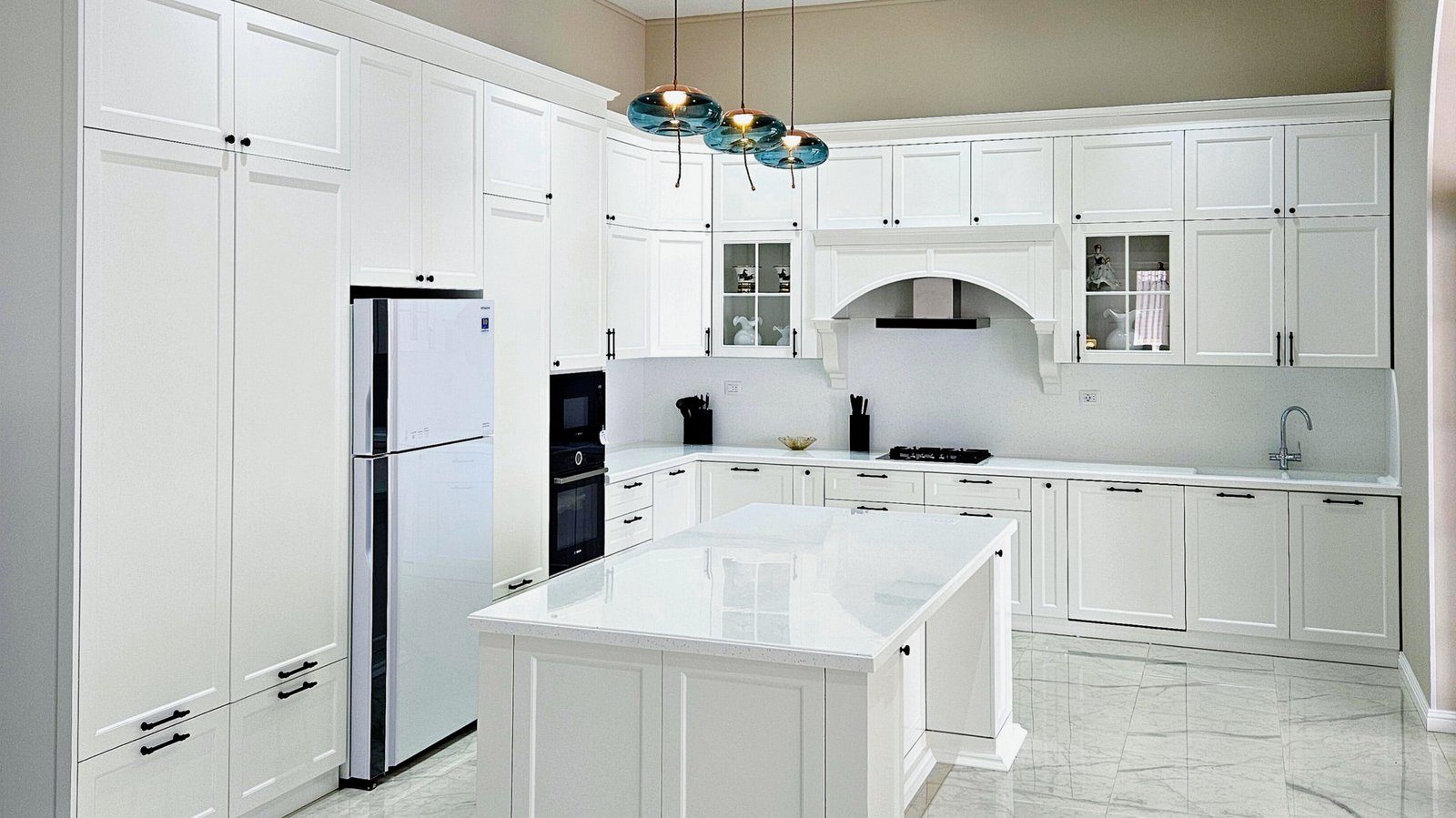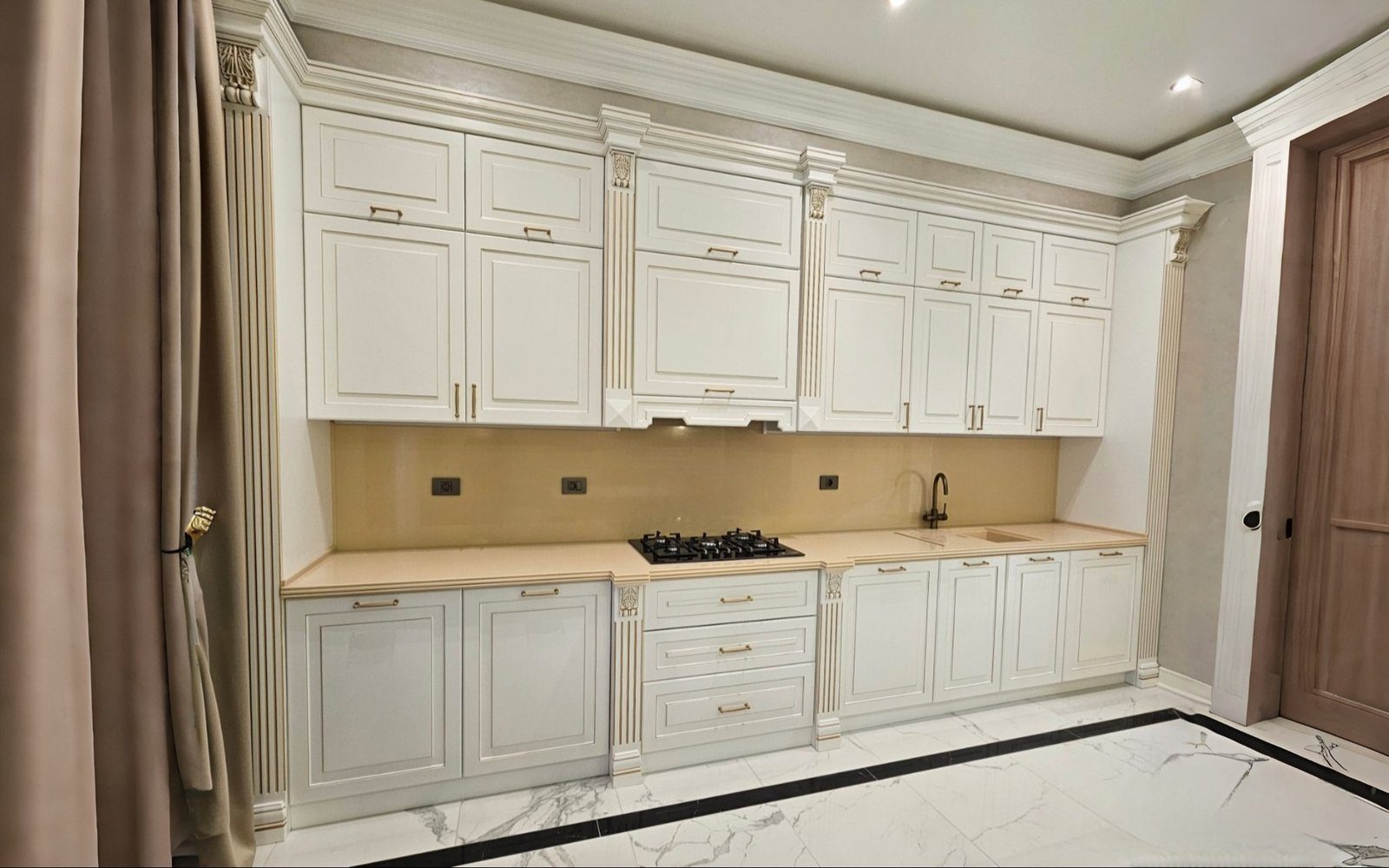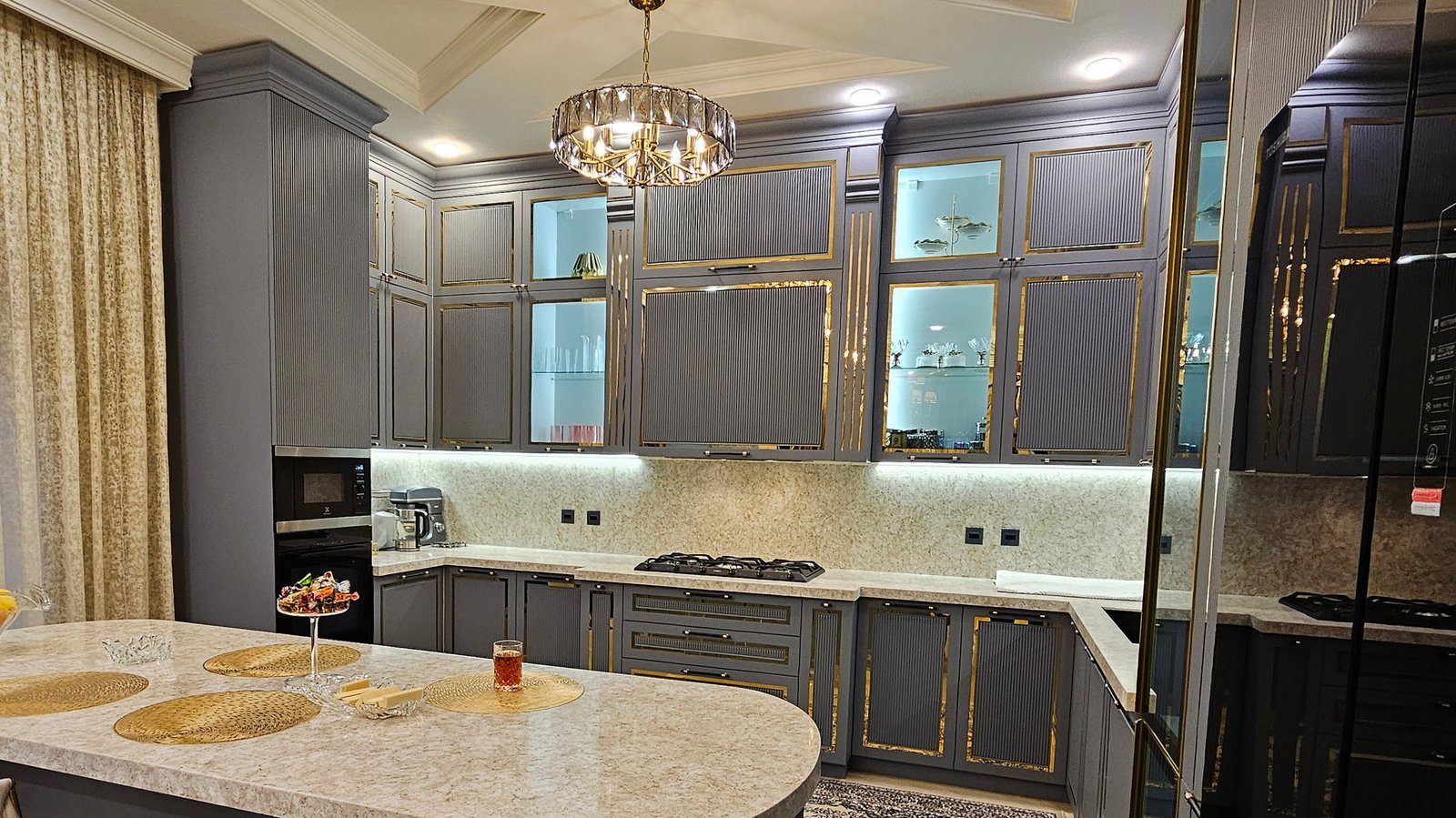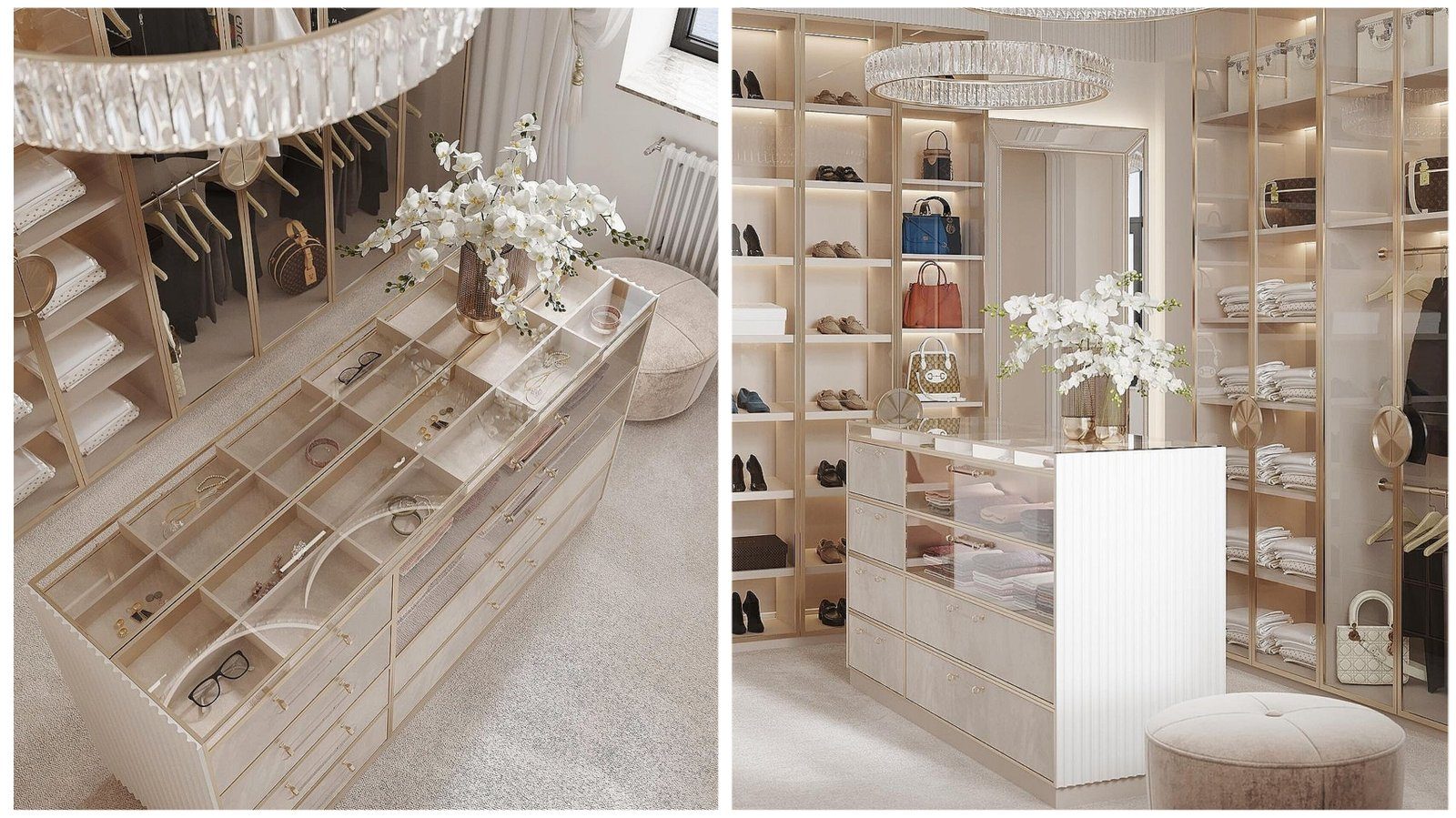

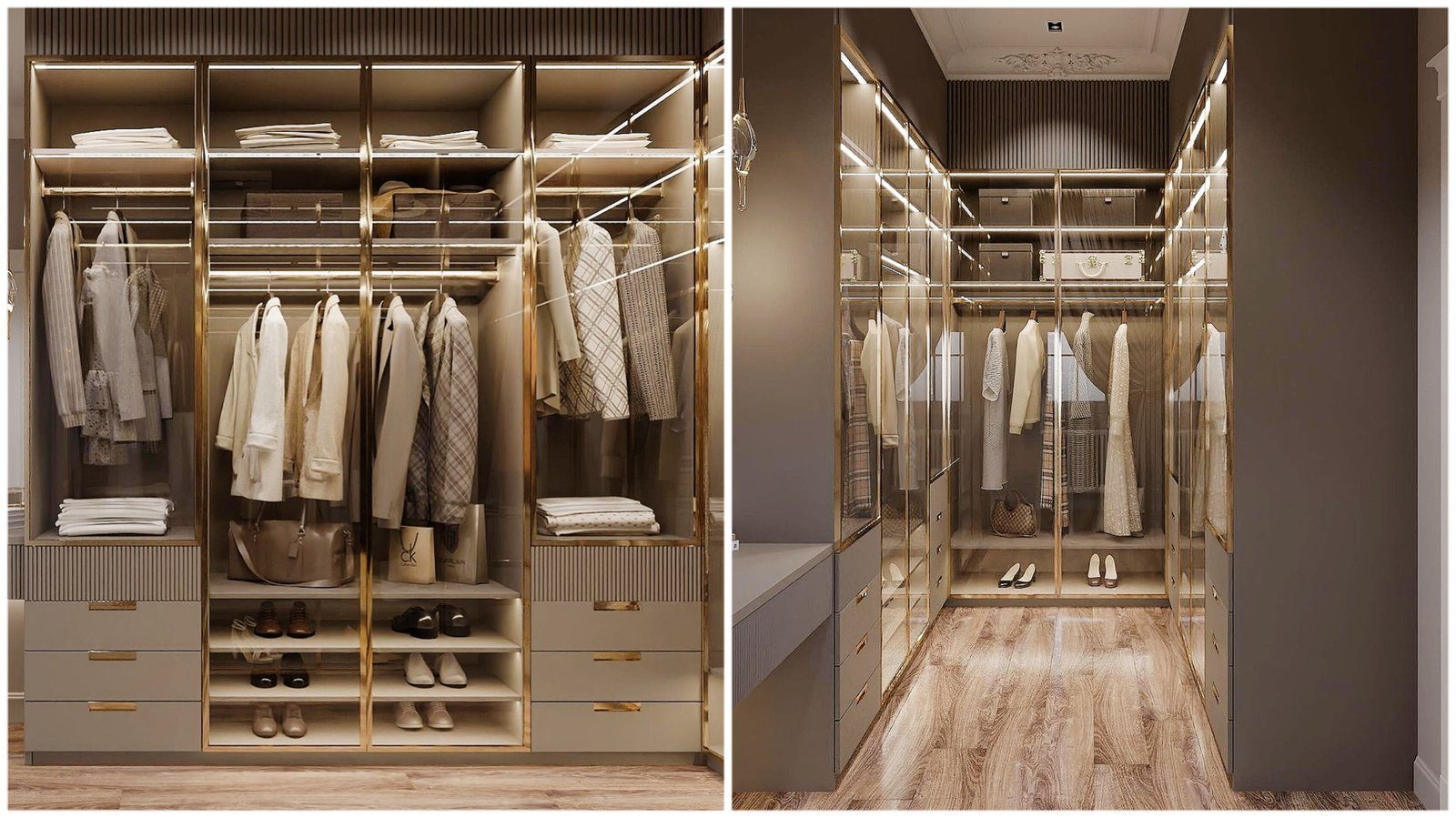
A floor-to-ceiling wardrobe has been installed, the doors hang straight and everything is fine. A few months later, the bottom corner of one door starts rubbing against its neighbour, the gap at the top widens and the door makes a noise when it closes. The hinges are adjusted, but the problem soon returns. In such cases the cause is usually not hinge quality but the number and position of hinges. For tall, heavy doors, hinge count should not be left to chance.
What affects a hinge
A hinged door transfers its weight through the hinges to the side panel of the carcass. When the door is open, the load increases further, because the door acts as a lever and pulls hardest on the top hinge. Four factors affect how many hinges are needed:
- Door height: the longer the door, the greater the lever effect and the tendency to bow.
- Door weight: depends on material and thickness.
- Door width: a wide door places more weight further from the hinges.
- Frequency of use: a door opened many times a day puts more strain on its hinges.
A rough guide by height
Hardware manufacturers publish tables of recommended hinge numbers by door height and weight. For a standard board door of average weight, a commonly cited rough guide is: two hinges up to about 90 cm high, three from 90 to 160 cm, four from 160 to 200 cm and five from 200 to 240 cm. For heavy or wide doors, the number increases.
These figures are only a starting point. For a specific hinge model, check the manufacturer's own table, because the design and material of a hinge change the load it can carry.
Heavy materials: glass, mirror, solid wood
Two doors of the same size can differ greatly in weight. A painted front on thick MDF, a framed glass door, a mirror-faced door or a solid wood door is considerably heavier than a standard laminated board door. For such doors:
- The hinge count is increased beyond the height table.
- Stronger hinge models designed for heavy doors are chosen.
- Aluminium-framed and glass doors use special hinges suited to the profile or glass.
- The carcass side panel must be thick and strong enough for the fixings to hold the load.
For very heavy and tall doors, a sliding door system is sometimes a more reliable choice than hinges, because the load is spread along a top or bottom track.
Hinge positions
Where hinges go matters as much as how many there are. The top and bottom hinges are placed near the ends of the door, but far enough in that the edge banding and board edge are not weakened. Intermediate hinges are spaced evenly. If a shelf or hanging rail inside the wardrobe falls where a hinge should go, the hinge is moved slightly, since a hinge and a shelf cannot occupy the same point.
Because the top of the door carries the most load, in some cases hinges are placed closer together towards the top.
Adjustment and dampers
Modern hinges adjust in three directions: sideways, depth and height. After installation it is important to adjust all hinges consistently. Tightening one hinge while leaving the others loose concentrates the load at one point and leads to sagging quickly.
Soft-close hinges with dampers stop a heavy door slamming. A tall door may not need dampers on every hinge: a few damped hinges may be enough to achieve the desired closing speed.
When sagging starts
- Check whether the hinge screws have loosened.
- Readjust all hinges in the same sequence.
- If the problem returns, check whether the number of hinges suits the door size.
- If the screw holes in the side panel are damaged, consult a fitter.
Asking about the number of hinges at the ordering stage also prevents later costs. An extra hinge can be added after installation, but new holes then have to be drilled in both the door and the side panel. On coloured or high-gloss doors, traces of earlier holes are hard to hide completely. It is better to decide the count in advance, with some margin.
Zaferoğlu Mebel fits hardware from brands such as Blum in wardrobes and kitchens. On tall or heavy doors, the hinge count and model are set in the design from the door's size and material, following the hinge maker's tables.