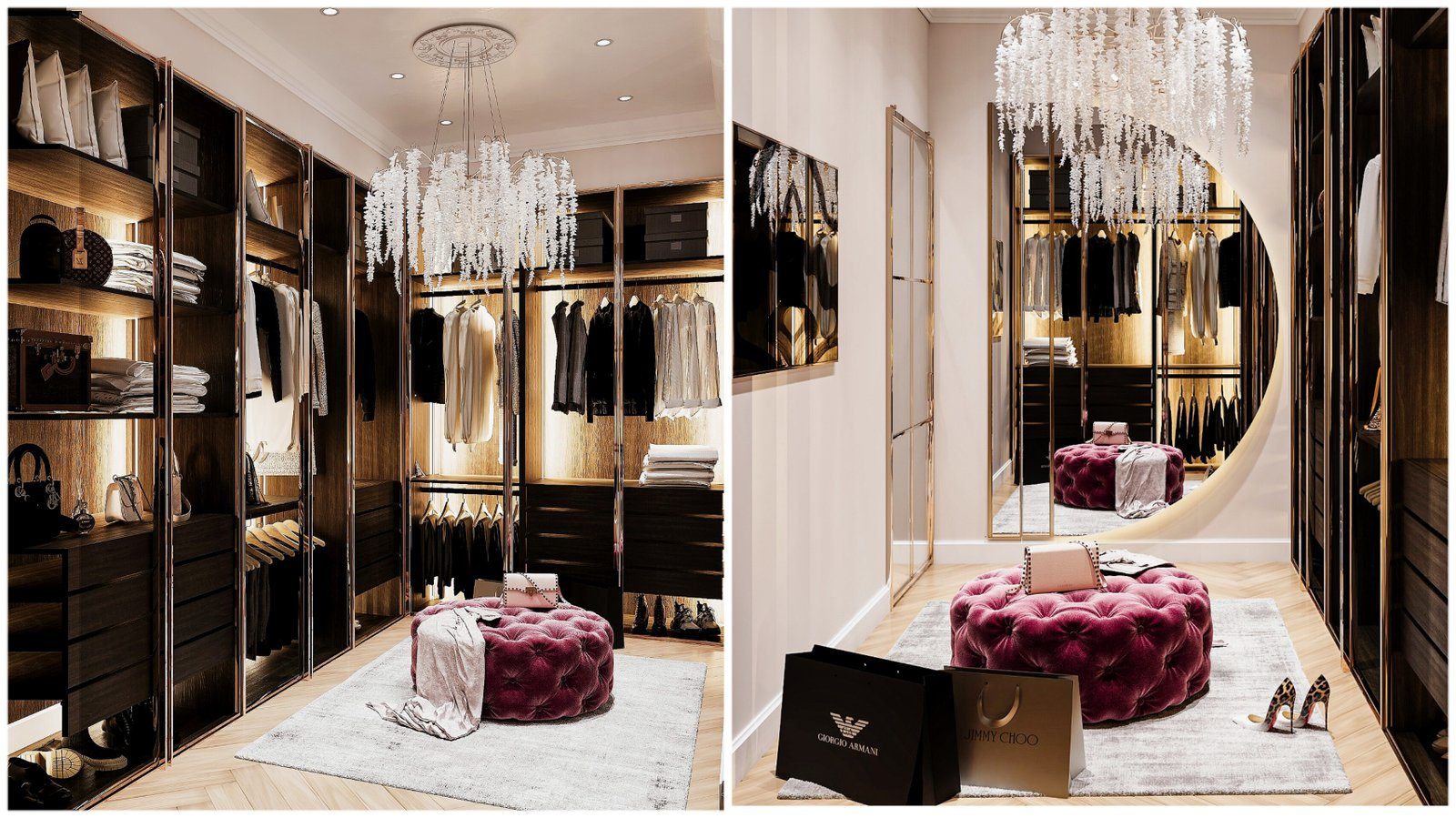

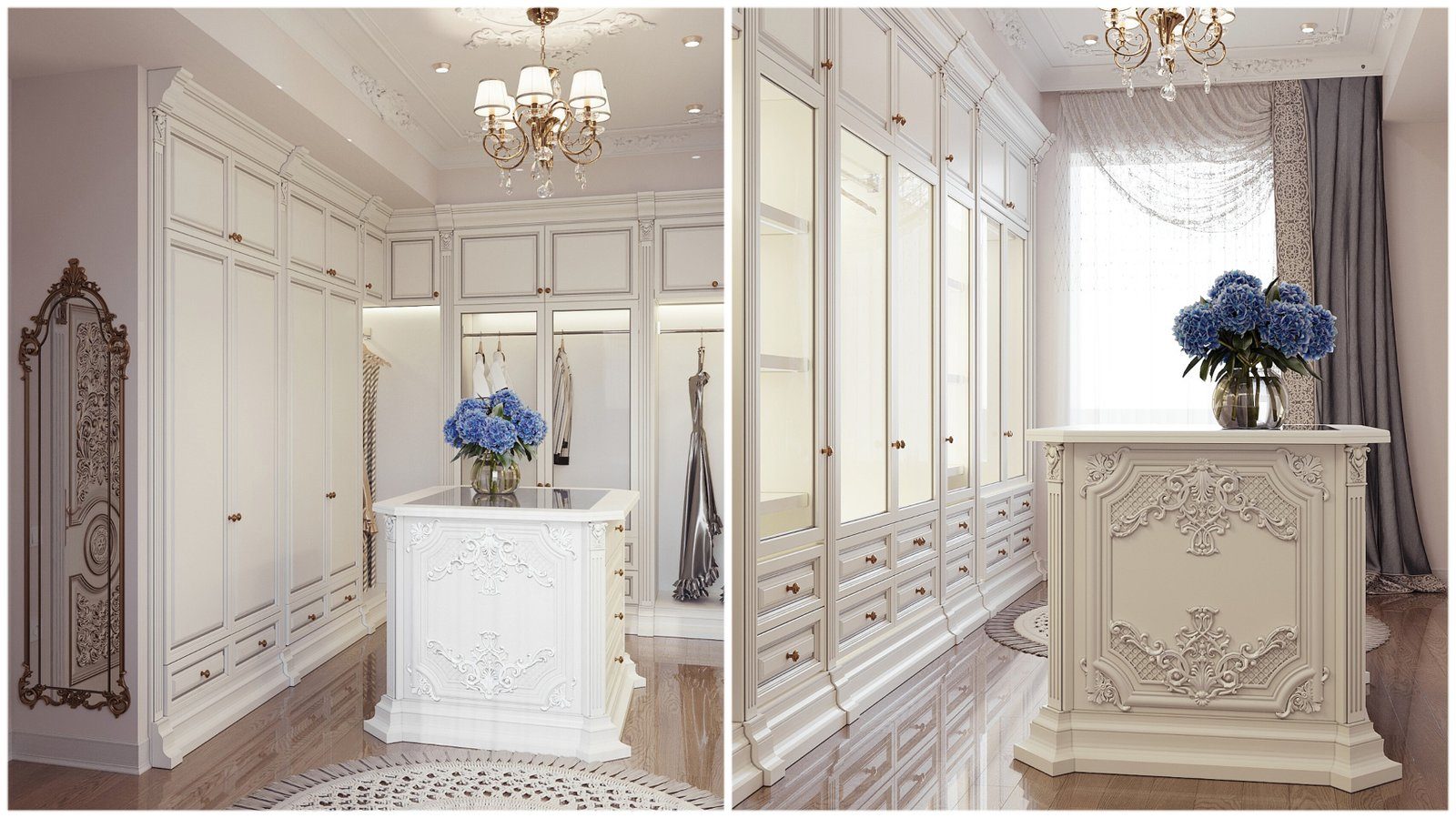
A floor-to-ceiling wardrobe is the most space-efficient solution, with one condition: the upper part must actually be used. In many homes the top compartments are opened once a year and whatever is stored there is forgotten. The reason is simple: fetching a chair, climbing up and lifting a box down is a hassle. Furniture mechanisms shorten that distance and make the high zone usable even for everyday clothes.
Dividing the wardrobe into height zones
Before choosing a mechanism, it helps to split the wardrobe's height into three zones. The lower zone, from floor to knee height, suits shoes and heavy items. The middle zone, roughly between knee and head height, is the most comfortable to use and should hold everyday clothes. The upper zone is above arm's reach and is usually set aside for seasonal items.
The trouble is that in some wardrobes the middle zone is not enough. Long dresses, coats and everyday shirts all need hanging space at once. This is where mechanisms that bring the upper zone down prove their worth.
How a pull-down rail works
A pull-down rail, or wardrobe lift, is fitted between the two side panels of a section. When you pull its handle, it brings the hanging rail forward and down. After use you simply push it back up: a damper softens the movement and the rail returns to its place.
Three specifications matter when choosing one:
- Width: the mechanism adjusts within a set width range, and the inside width of the section must fall within it.
- Load: each model has a maximum load stated by the manufacturer. A model meant for light shirts may not work properly when loaded with heavy winter coats.
- Drop: how far the rail comes down and what section depth that requires.
There must be clear space beneath and in front of the lift for clothes to move. If a shelf or second rail below is too close, descending garments catch on what is underneath.
Other mechanisms
A pull-down rail is only for hanging clothes. If the upper zone holds boxes, bags and folded items, other solutions are needed.
- Drop-down basket or shelf: a basket that swings down and forward, similar to systems in kitchen wall cabinets, suits folded items.
- Pull-out boxes: boxes with handles on the top shelf that can be lifted out whole save searching deep into the shelf.
- Wardrobe ladder: some systems include a ladder that runs on a rail or folds away inside the wardrobe.
- Separate upper doors: when the top section has its own doors, it can be reached without opening the doors below.
When you do not need a mechanism
Not every tall wardrobe needs a mechanism. If the upper section is only for seasonal items swapped twice a year, a plain shelf and well-labelled boxes are more practical. Mechanisms take up part of the wardrobe's internal volume and add cost. They make sense when everyday items would otherwise sit up high, for example when part of the middle zone in a narrow wardrobe is given over to children's clothes, or when someone in the household struggles to reach high shelves.
Points to watch during installation
A pull-down rail is fixed to the side panels, and the whole load goes through those points when it is pulled. The side panels must be sturdy and the fixings placed where the manufacturer specifies. In a wardrobe with sliding doors, the forward movement of the mechanism must not clash with the door track; the section depth and which side stays open are calculated in advance.
The handle of the mechanism should be at a comfortable height. For anyone who cannot reach the handle when it is up, a special pole handle is used.
A checklist before ordering
- What will be stored in the upper zone: hanging clothes, folded items, boxes, suitcases?
- How often are these items needed?
- Roughly how heavy are the hanging clothes: light shirts or heavy coats?
- Do the section's width and depth fit the chosen mechanism's range?
- Does the door type allow the mechanism to move freely?
Zaferoğlu Mebel works with brands such as Blum, RaumPlus and Aristo in its wardrobe systems. The interior fittings of a wardrobe, including mechanisms for the upper zone, can be designed around your measurements and the items you plan to store.