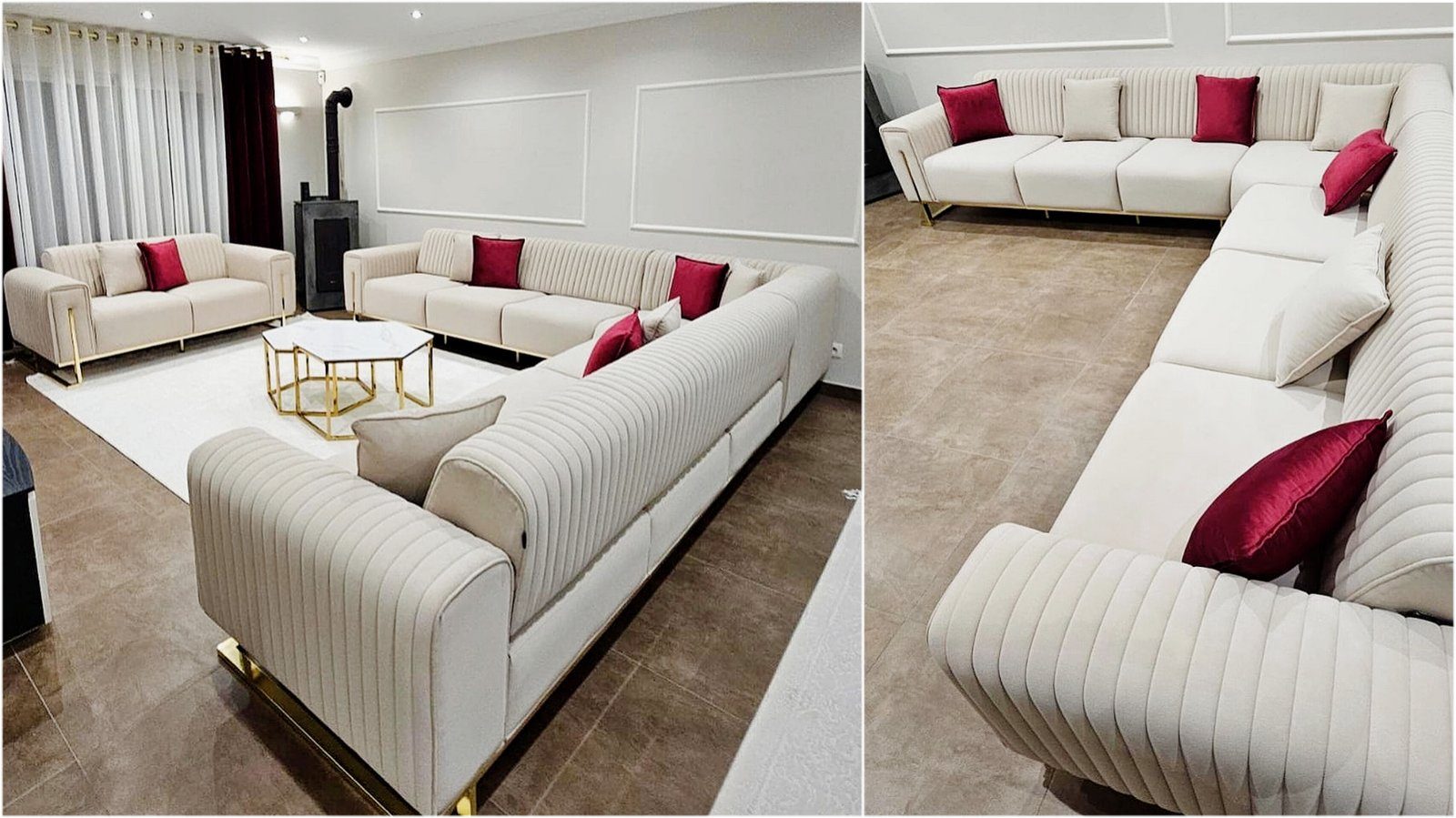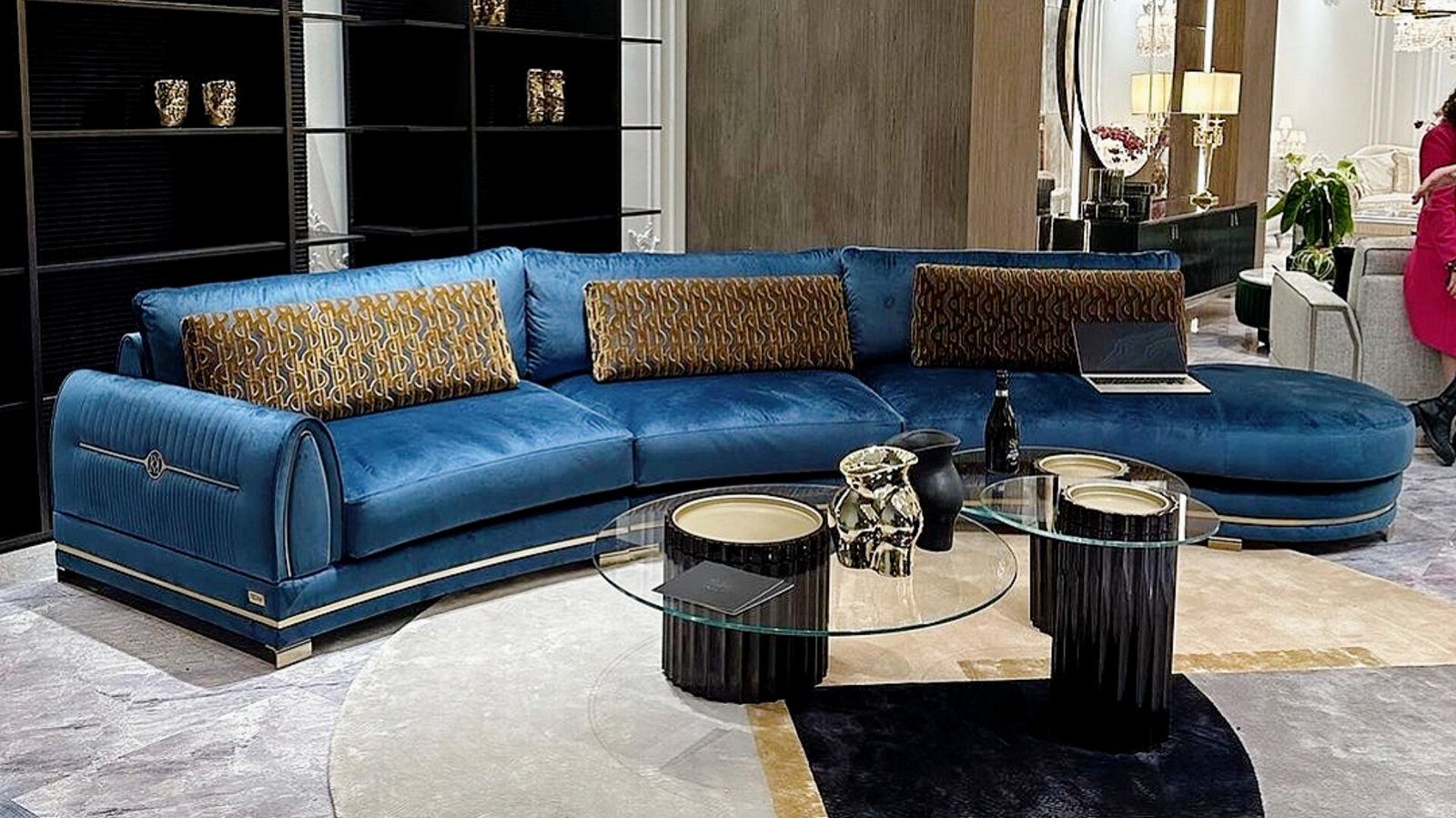

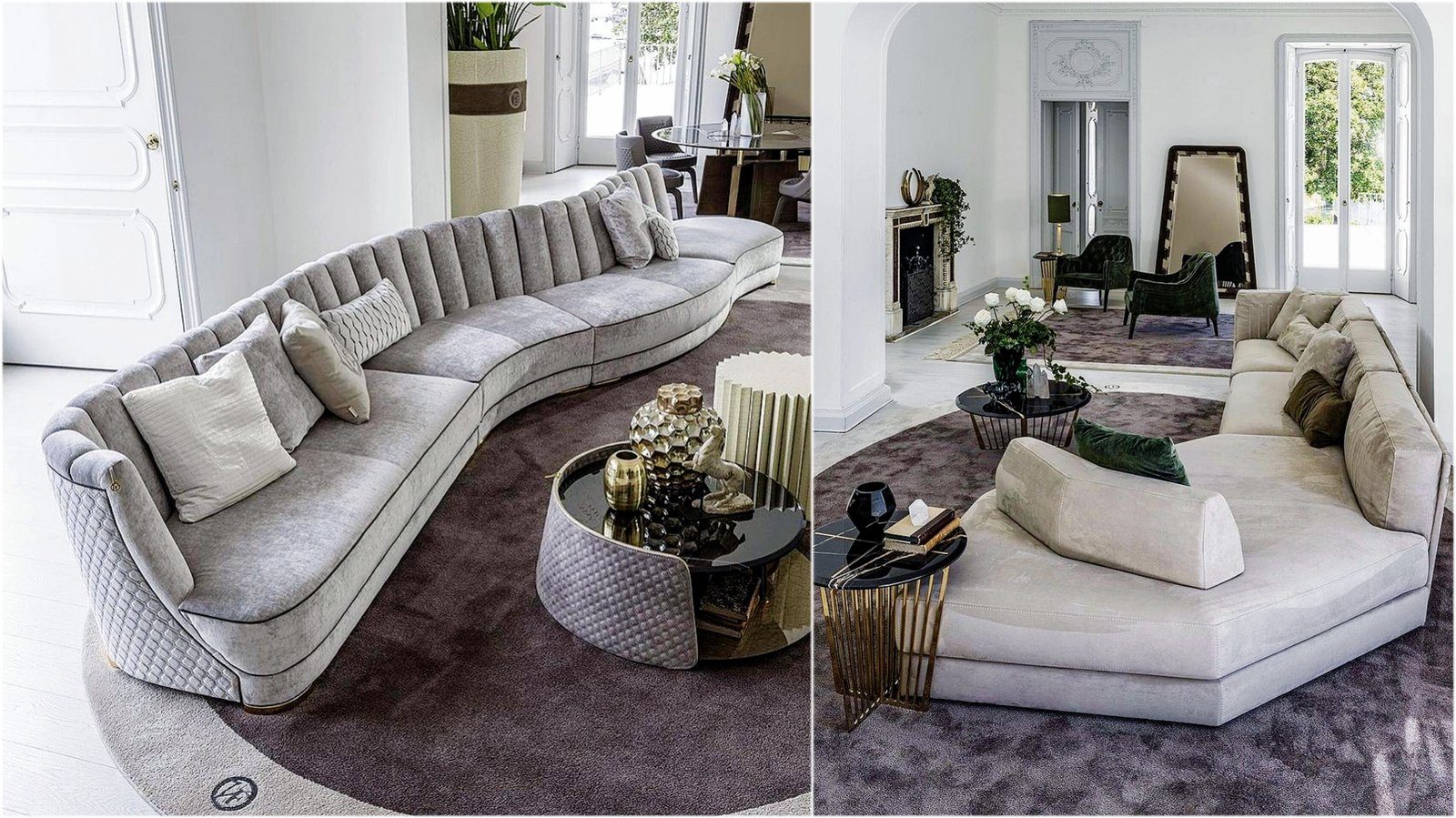
A conventional sofa is made as a single piece: its shape, size and corner side are fixed the day you buy it. A modular sofa is made of separate blocks, such as an armchair section, an armless middle unit, a corner, a chaise and sometimes an ottoman. The blocks clip together and can be rearranged at any time. The question is who really needs that flexibility and what is traded for it.
The main advantages
The first advantage is that the layout can change. A system set up as a corner sofa today can become a straight sofa, two separate sofas or an island arrangement when the room is rearranged or you move house. Switching the corner from right to left later is usually possible too, whereas on a one-piece corner sofa that choice is permanent.
The second is moving. Getting a large corner sofa through a narrow staircase or lift is often a struggle. Modular blocks travel separately, which makes a real difference in multi-storey buildings.
Third, if something is damaged, one module is repaired or re-covered rather than the whole sofa. In homes with children or pets that is a practical benefit.
The connection: where to judge quality
The weakest point of a modular sofa is the joint between blocks. Sitting down and getting up pushes the blocks apart; if the connection is poor, gaps open and cushions slide. Good systems fix the blocks with metal clips, connector plates or a mechanism fastened underneath, and the sofa does not creep across the floor.
When choosing, join two modules and sit on them, stand up and push the blocks by hand. If a gap opens in the showroom, it will open at home. On a slippery floor, plan non-slip pads under the feet as well.
When a conventional sofa is better
A modular sofa is not the best choice in every situation:
- If the sofa will be opened into a bed every night, a one-piece sofa with a proper mechanism is usually more comfortable; sleeping options in modular systems are limited.
- In a small room with a fixed layout, flexibility brings little practical benefit, while the joints need extra attention.
- Separate blocks may not be as rigid as the back and side frame of a one-piece sofa, and with very soft seating the edges of blocks can be felt.
Planning a modular sofa
When ordering a modular sofa, think beyond today's room to how it might be used later. A few questions clarify the layout: will a TV or a second sofa face it? How many people sit in the room at once? Is a chaise module needed for stretching out?
Pay attention to the fabric too. All modules should be covered from the same batch, because a module added later may come out in a slightly different shade. Removable covers suit a modular system very well, since each block's cover can be washed or cleaned separately.
Seat, depth and cushions
In a modular sofa every block should be comfortable both on its own and together with the others. Seat depth plays a special role: a deep seat suits people who like to tuck their legs up or lie down, but a shorter person leaning back will not reach the floor and needs an extra back cushion. A shallower seat supports upright sitting and works better for receiving guests and conversation.
Fixed or loose back cushions are another choice. Loose cushions can be rearranged when the layout changes and let you adjust the depth, but they need straightening every day. In a corner module, the point where two backs meet is often the least comfortable place to sit; a cushion or the right corner shape can soften it.
Short checklist
- How are the blocks fixed together, and do they separate when you sit?
- Can the corner and chaise modules be switched left to right?
- Will each module fit through the doors and lift on its own?
- Are the covers removable and cleanable separately?
- Will it be possible to order an extra module in the same fabric later?
Zaferoglu Mebel makes upholstered furniture to order, including sofa and armchair sets. Building a modular system around the size of your room and the way you actually use it helps choose the right number and shape of blocks from the outset.