
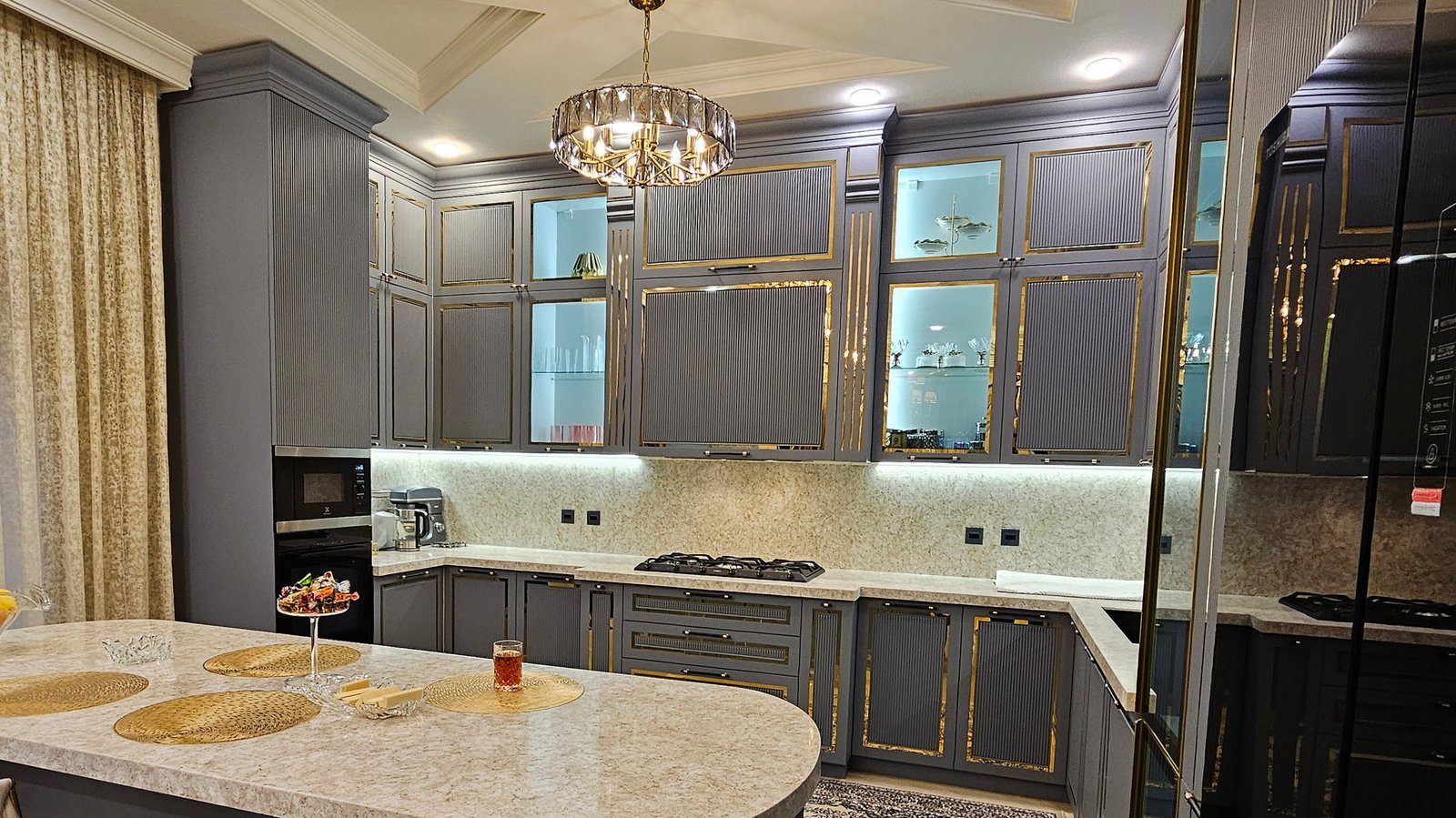
When a kitchen is ordered, the choice of fronts is often driven by colour and sheen. Yet the same glossy white door can be made in acrylic, paint or HPL, and those three will look completely different five years on. Fronts are the part of the kitchen that is touched, wiped, steamed and heated most. So the finish should be chosen not only for looks but for how it copes with daily use.
Laminate (chipboard) fronts
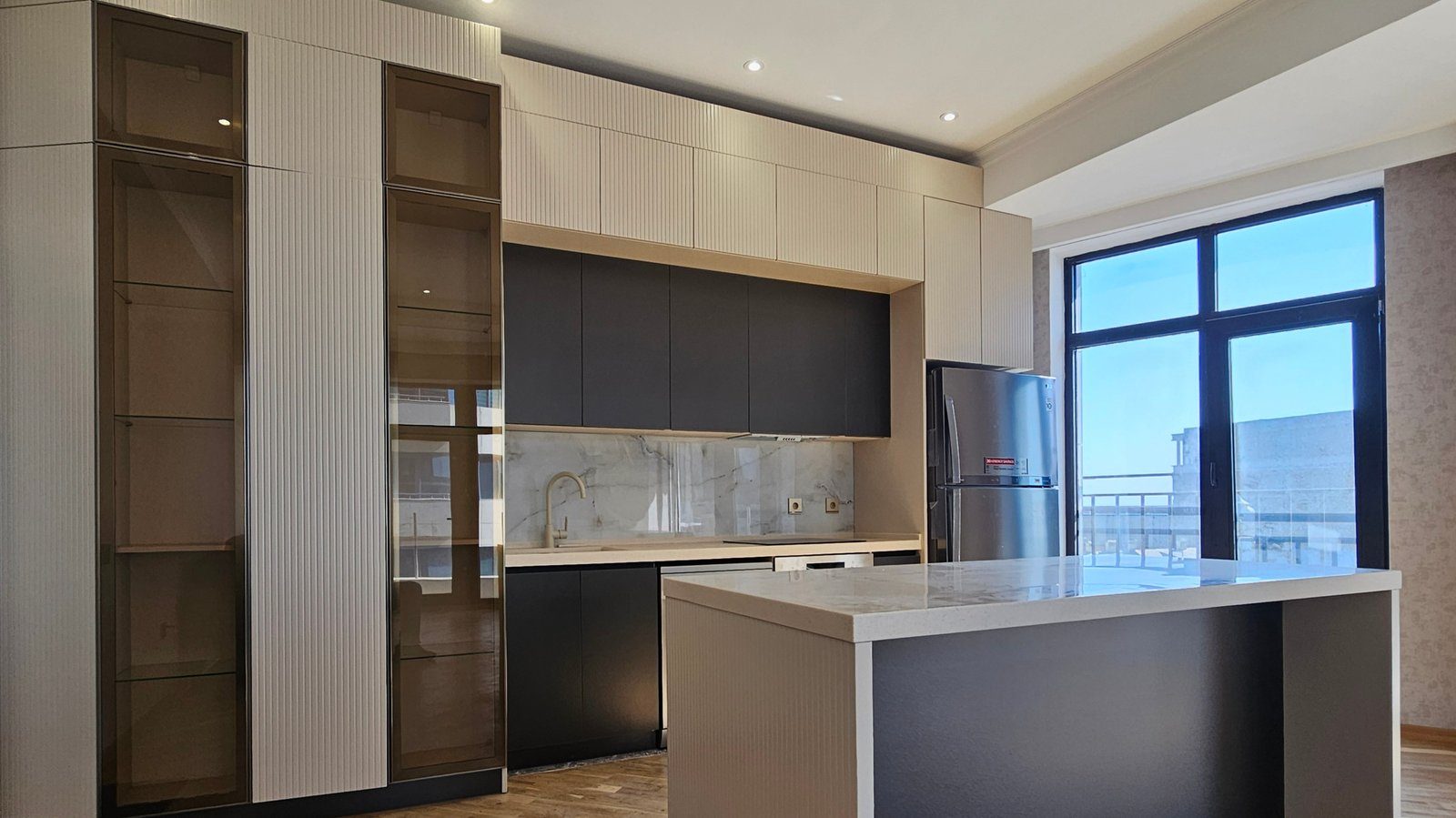
Laminate fronts are cut from the same material as the carcass, laminated chipboard, and their edges are sealed with banding. The range of decors is very wide: woodgrains, plain colours, concrete and stone effects. The surface resists scratches and household stains reasonably well and is easy to clean.
The limitation is shape: the front can only be flat, with no routed pattern or curve. Edge banding visible on all four sides is also unwelcome in some designs. Even so, for modern kitchens with simple lines laminate fronts are a rational, practical choice, especially in woodgrain decors.
HPL fronts
Here high-pressure decorative laminate is bonded to an MDF or particleboard core. HPL is thicker and harder than standard melamine laminate, so it handles knocks, scratches and heat better. Matt and gloss versions are available. Edges are finished either with matching banding or with a contrasting aluminium profile.
The weak point of HPL fronts is, again, the edge: if the banding is damaged, the core underneath is exposed to moisture. On gloss HPL scratches and fingerprints show quickly. Still, for a kitchen in heavy use, HPL fronts offer a good balance of durability.
Acrylic fronts
On an acrylic front the face of an MDF core is covered with a layer of acrylic plastic. Its main advantage is a deep, glass-like gloss and rich colour that is hard to achieve with other materials. Because the acrylic layer has a certain thickness, light surface scratches can sometimes be softened by polishing. Matt acrylic versions also exist.
Gloss acrylic shows every fingerprint, speck of dust and micro-scratch, so it must be cleaned only with a soft cloth. Over time, especially around handles that are wiped often, the surface gathers fine scratches and the gloss fades a little. There is a shape limitation too: acrylic is for flat fronts and does not suit routed patterns.
Painted MDF fronts
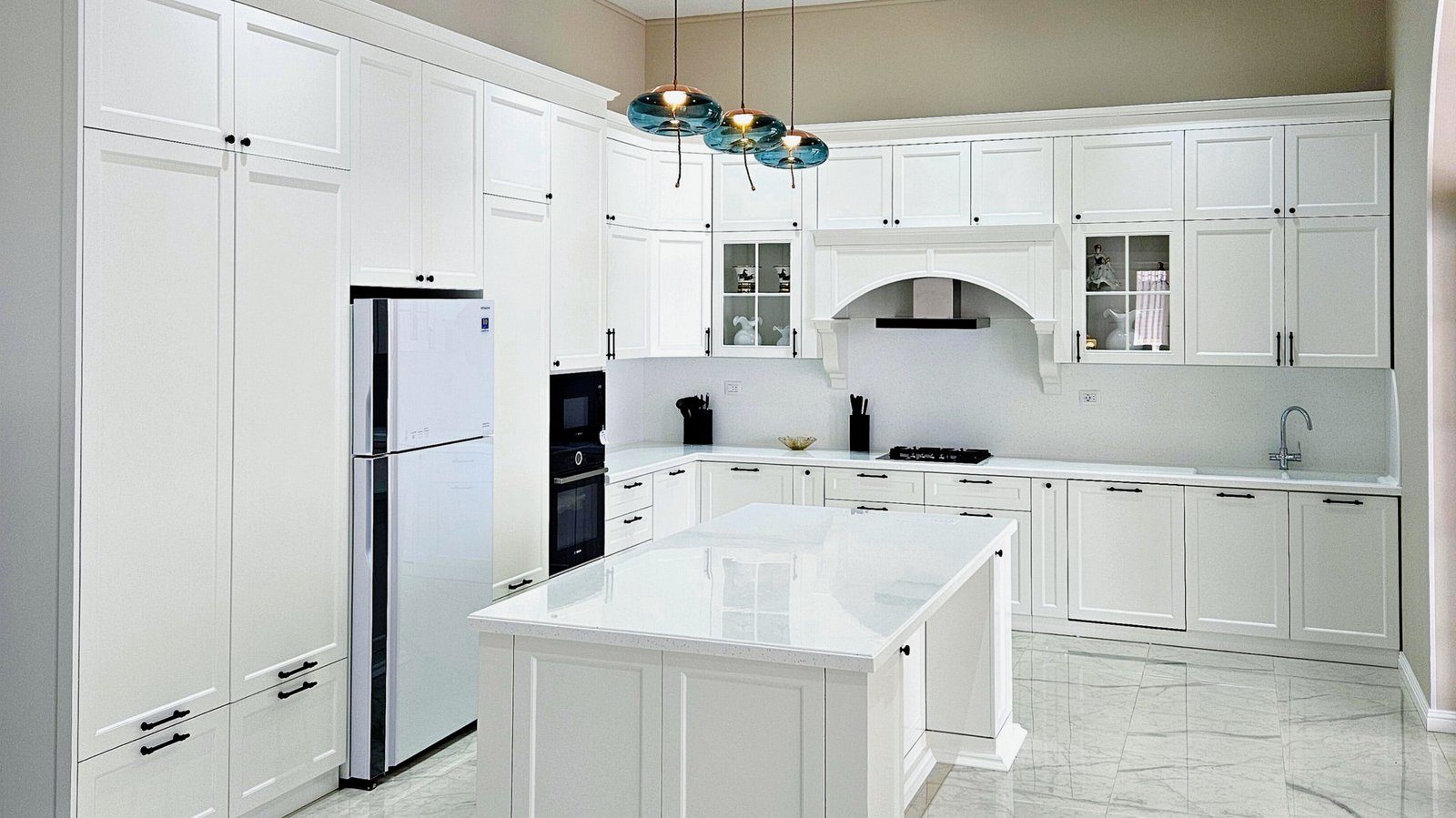
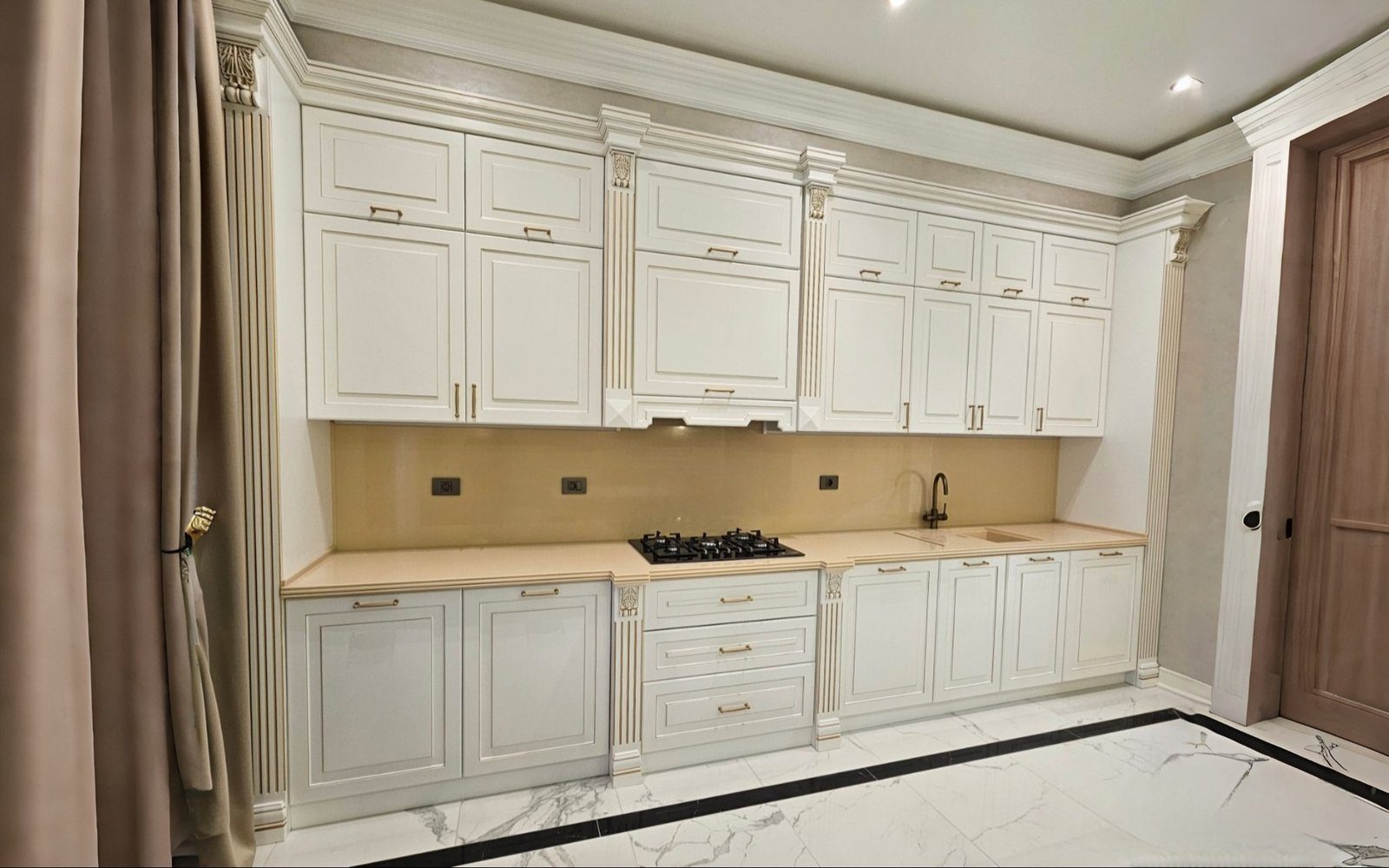
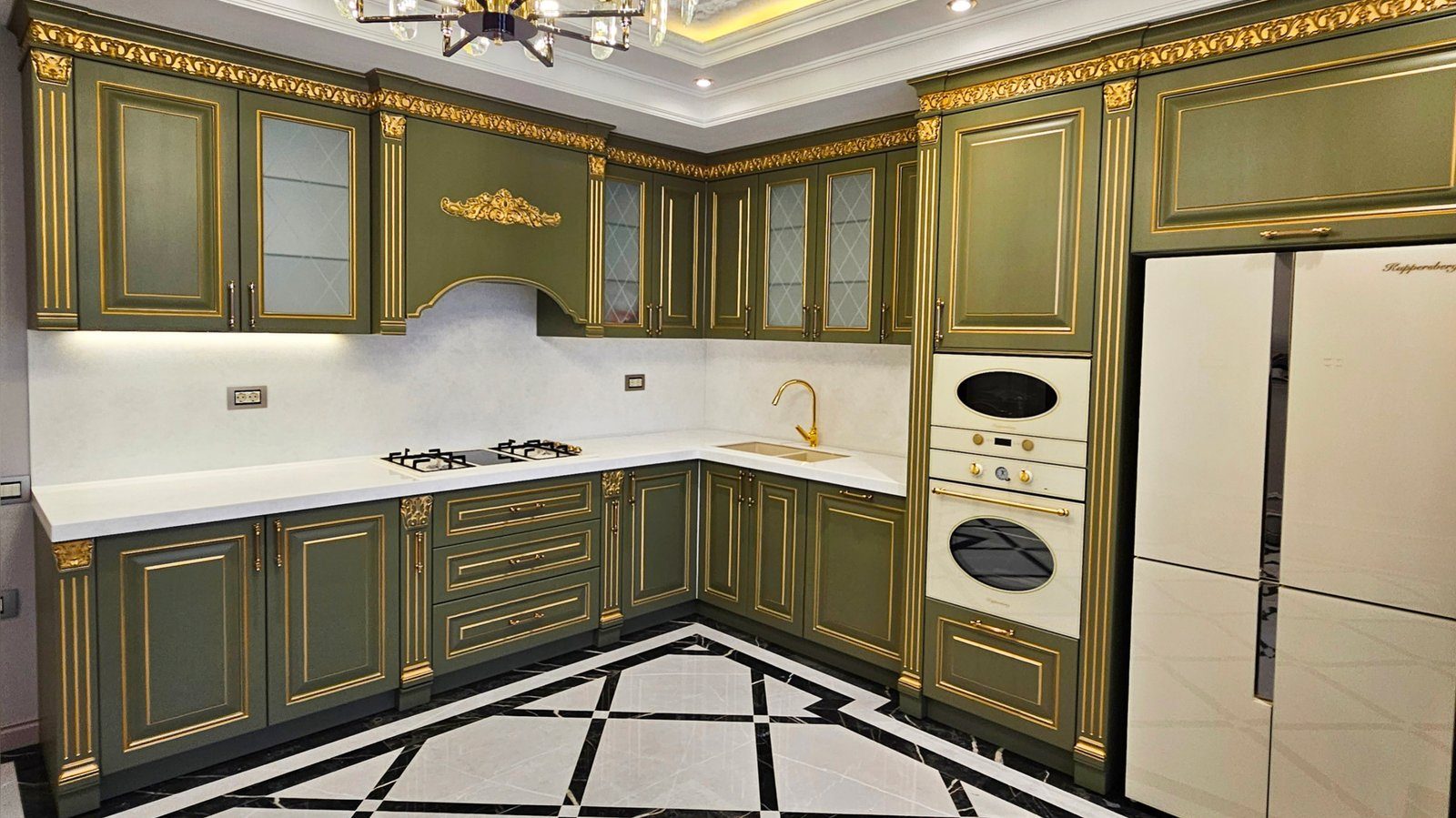
Painted fronts are cut from MDF, routed, primed and coated with several layers of paint. This is the most flexible option in terms of form: framed neoclassical doors, curved fronts, integrated handle grooves and any colour code are possible. There is no edge banding; the whole door is coated in one finish, which gives a seamless, clean look.
The downside is mechanical durability. A knock or a heavy object can chip the paint, especially on edges and corners. Light colours may shift slightly over time. The advantage is that a damaged spot can be repaired by a specialist, and a whole front can be repainted if necessary. Matt paint hides fingerprints, while gloss paint needs more care. Production also takes longer than for other types, since each coat needs time to dry.
Which front for which kitchen
To simplify the choice, look at how the kitchen is used and at its style together:
- A family kitchen with lots of cooking and children: HPL or textured laminate with a matt surface.
- A modern, minimalist, glossy look: acrylic or gloss HPL, provided you are ready for the upkeep.
- Classic, neoclassical or shaped fronts: paint is the only option.
- A mixed approach: durable HPL or laminate for base units, paint or acrylic above. Lower doors get more contact with feet, baskets and the vacuum cleaner.
Combining two front types in one kitchen can work well both practically and visually, but the match of colour and sheen must be checked on samples. The same colour code can look different on different materials.
Check before you choose
- Hold the sample and look at it in the kitchen's own light.
- See how fingerprints show on the surface.
- Ask how the edges are finished: banding, profile or paint.
- Find out whether and how a damaged door can be repaired.
- Ask about heat protection for fronts next to hot appliances, especially the oven.
For kitchen fronts from Zaferoglu Mebel, the surest method is to lay acrylic, painted, HPL and laminate samples next to each other and judge them against how your household really uses the kitchen.