
In a normal office every employee has their own desk, chair and drawer unit. In a coworking space the same desk may be used by a designer in the morning, an accountant in the afternoon and a student in the evening. That difference places entirely different demands on the furniture: it must be shared rather than personal, quick to rearrange, able to stand intensive daily use and still be comfortable.
A layout divided into zones
A good coworking space is not one big hall but several zones for different ways of working. Typically they include:
- open shared desks for drop-in users;
- fixed desks for people renting by the month;
- small booths for phone calls and online meetings;
- a meeting room or a discussion corner separated by a partition;
- a kitchen and lounge area for informal contact.
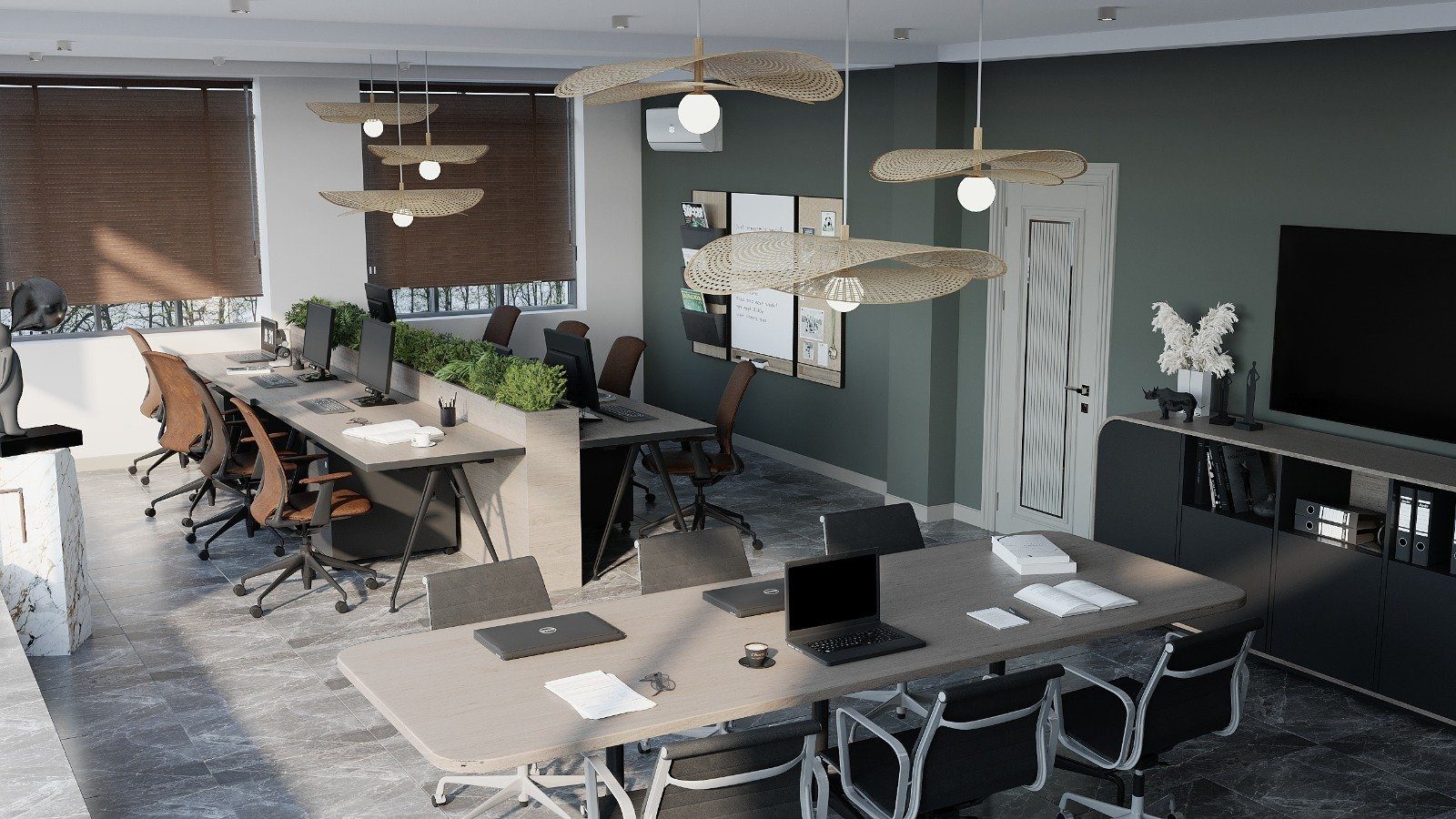
Each zone needs different furniture. The open zone is dominated by long shared tables, fixed desks come with lockable pedestals, and the lounge uses upholstered seating and high bar tables.
The balance between zones depends on who uses the space. If most members are freelancers and students, more room goes to open desks. If small teams rent by the month, clusters of fixed desks close together and a team discussion corner are in higher demand. So before ordering furniture it helps to estimate who will come in the first months and to keep some spare area in the plan for later changes.
Shared desks: size and power
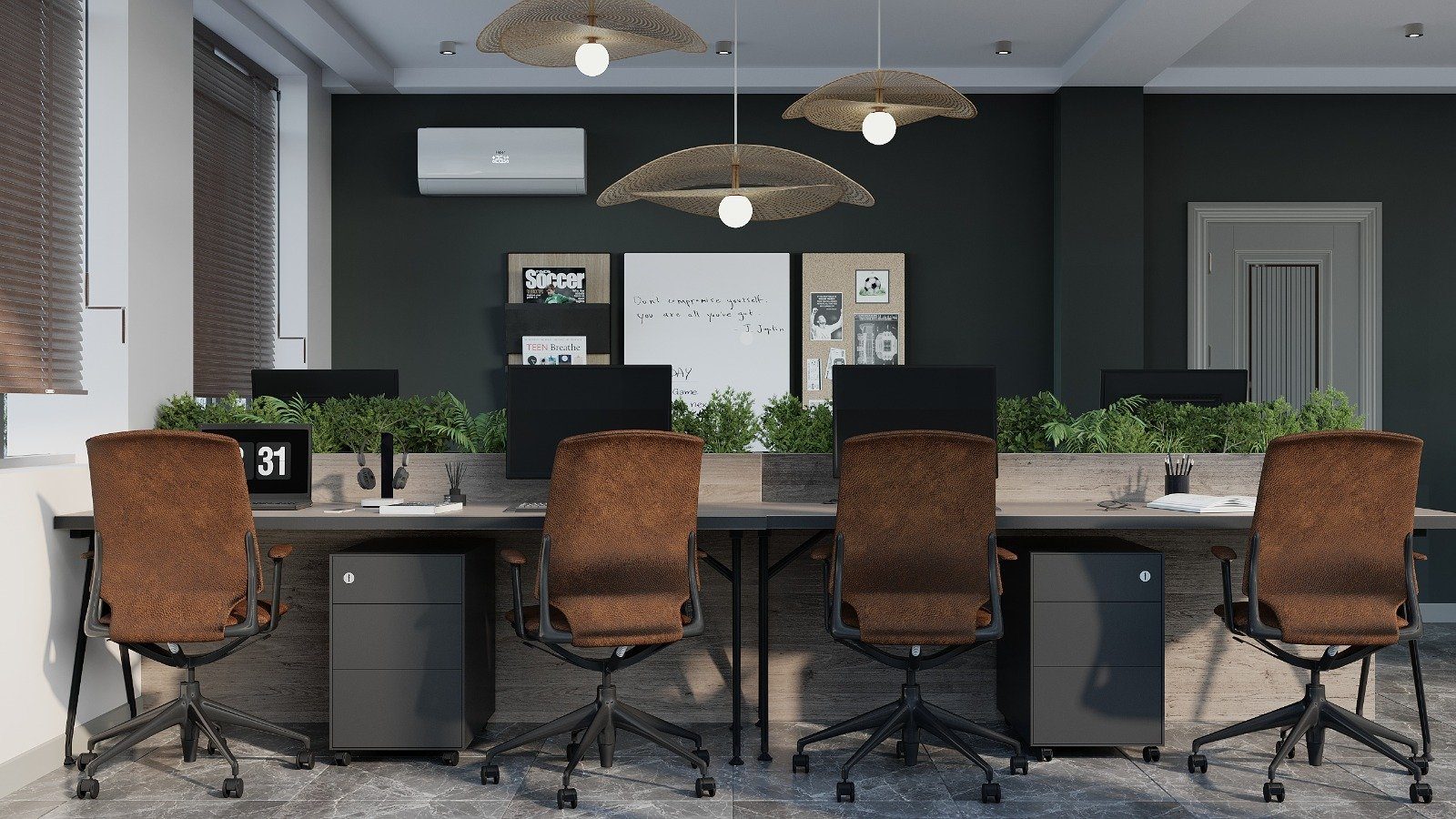
The long shared table is the core of a coworking space. For it to work, each user needs a personal area with enough width and depth for a laptop, a monitor and papers at the same time. A low screen between people sitting opposite each other gives visual privacy and stops monitors facing one another.
Power is part of the furniture plan. Without socket units mounted on or under the desktop, cable trays and vertical cable risers from floor to desk, users run extension leads across walkways. That is both a safety and an appearance problem. Socket positions should be designed together with the desk dimensions.
Chair choice should also reflect shared use. Because people of different heights and builds sit in the same chair every day, models with easily adjustable height and back are more suitable. Chairs with complicated adjustment controls are often never changed by users, whereas a simple, obvious mechanism genuinely improves comfort.
Storage: cupboards or lockers
At a shared desk nobody can leave their things on the table overnight, so coworking needs personal storage. The most practical answer is lockable lockers, giving each user a compartment for a laptop, bag and documents. At fixed desks, a mobile pedestal stays under the desk.
Locker blocks can go in a corridor or near the entrance, and sometimes they act as a partition between two zones. That saves space, because a single element serves as both storage and divider.
Flexibility: castors, folding and modules
Coworking spaces often host events, presentations and workshops, and on those days the hall has to be rearranged. If the furniture is to allow this, there are several approaches:
- desks on castors with brakes, so they do not roll while people work;
- folding and stackable tables and chairs, so they take little room in storage;
- modular seating that can be set out in rows or in a circle;
- whiteboards and screen stands on wheels.
Flexibility carries a risk: furniture that is moved often loosens at the joints sooner. That makes hardware and frame strength more important for mobile pieces than in an ordinary office.
Sound and privacy
In an open space, noise is the most common complaint. Furniture can solve part of it. Fabric-covered screens, booths with upholstered seats, high-backed sofas and books on shelves absorb sound and reduce echo. A phone booth is a separate matter: its walls, door and ventilation have to be designed together.
Durability and care
Coworking furniture is used by dozens of people every day. When choosing surface materials, allow for scratches, coffee stains and frequent disinfection. Laminated boards with well-sealed edge banding, wipeable fabrics and replaceable seat covers keep a tidy look for a long time.
For a coworking space, the sensible starting point with Zaferoglu Mebel is the floor plan: zones, power points and how desks will be cleared for events are all settled first.