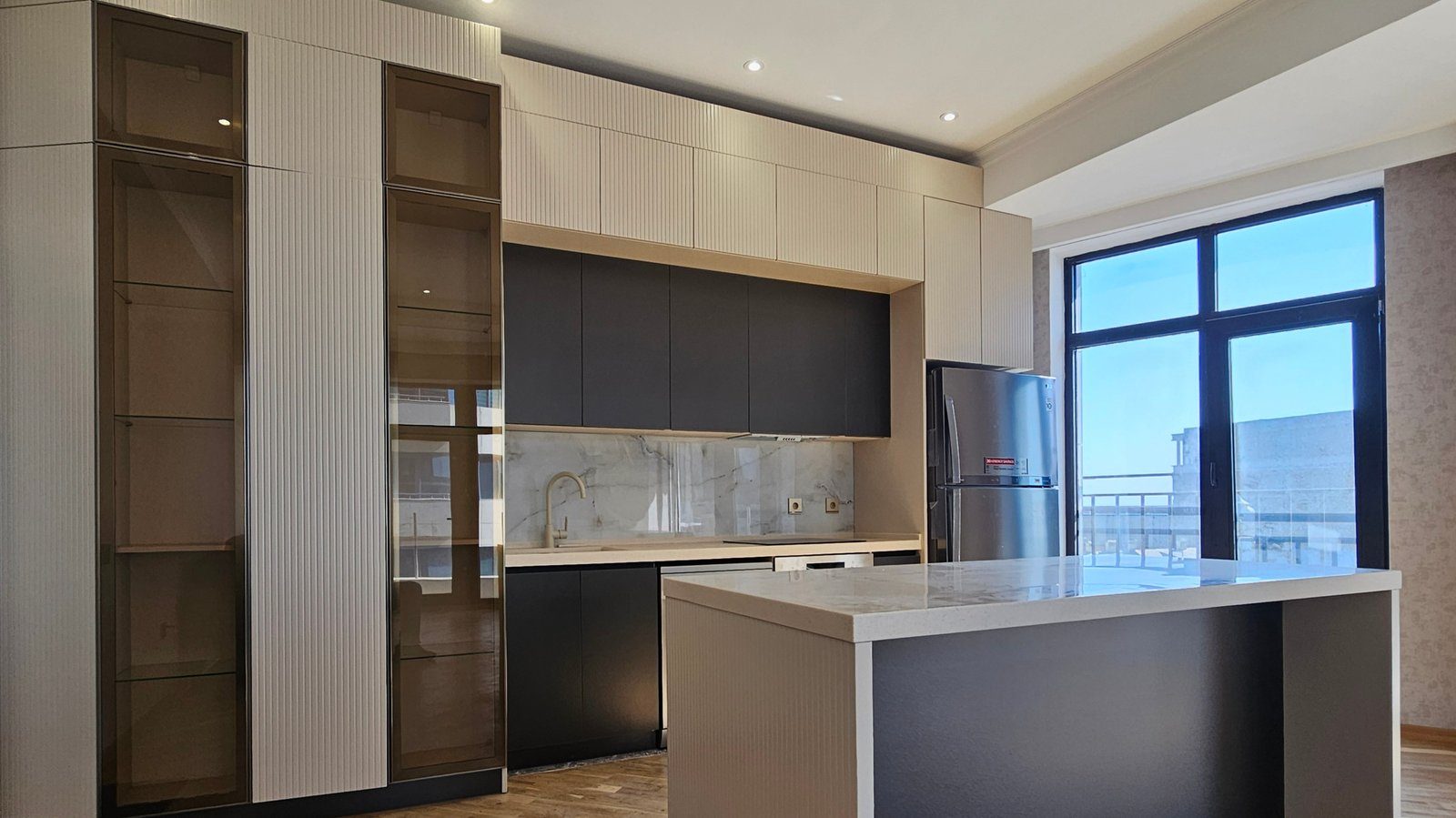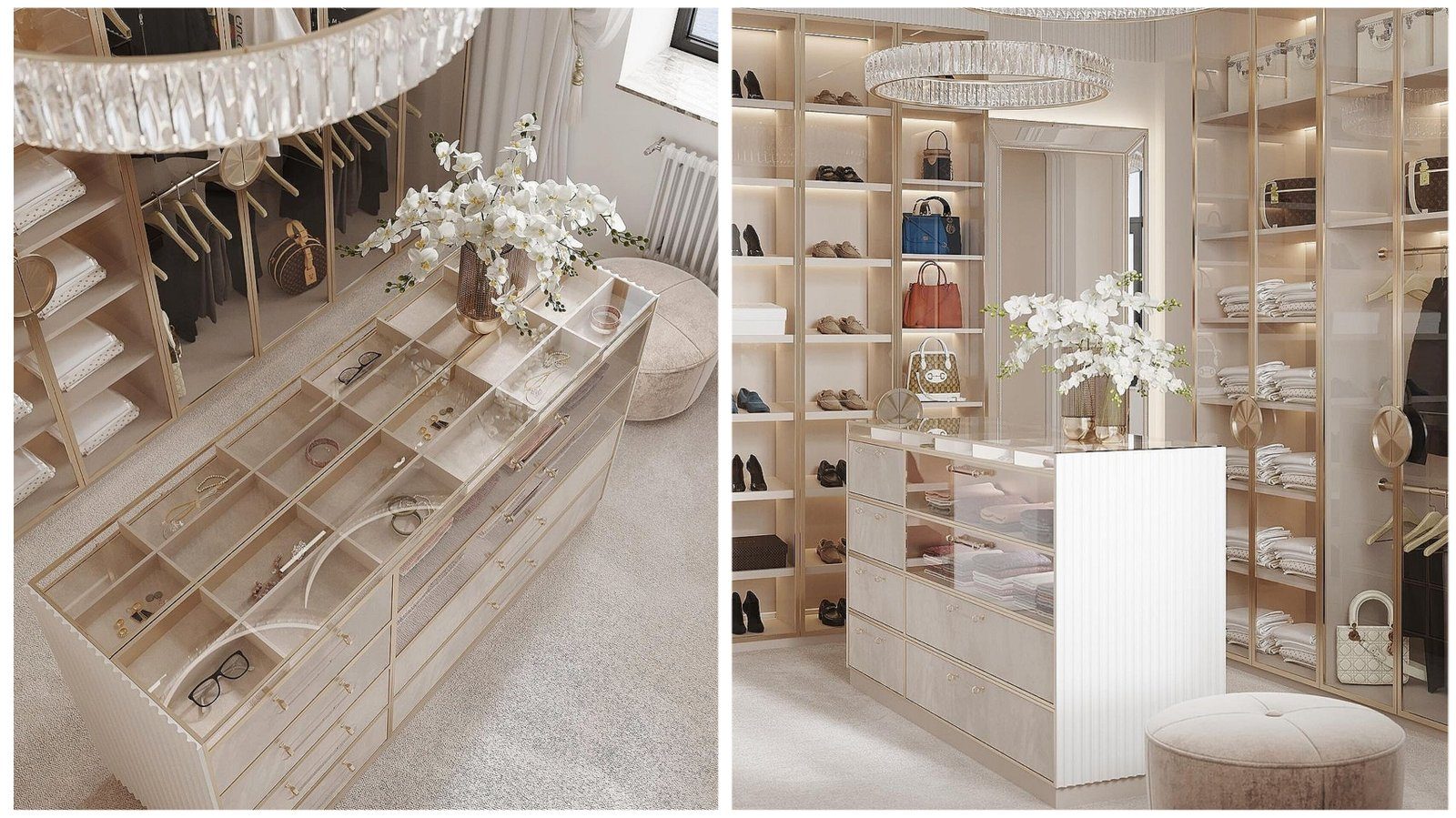

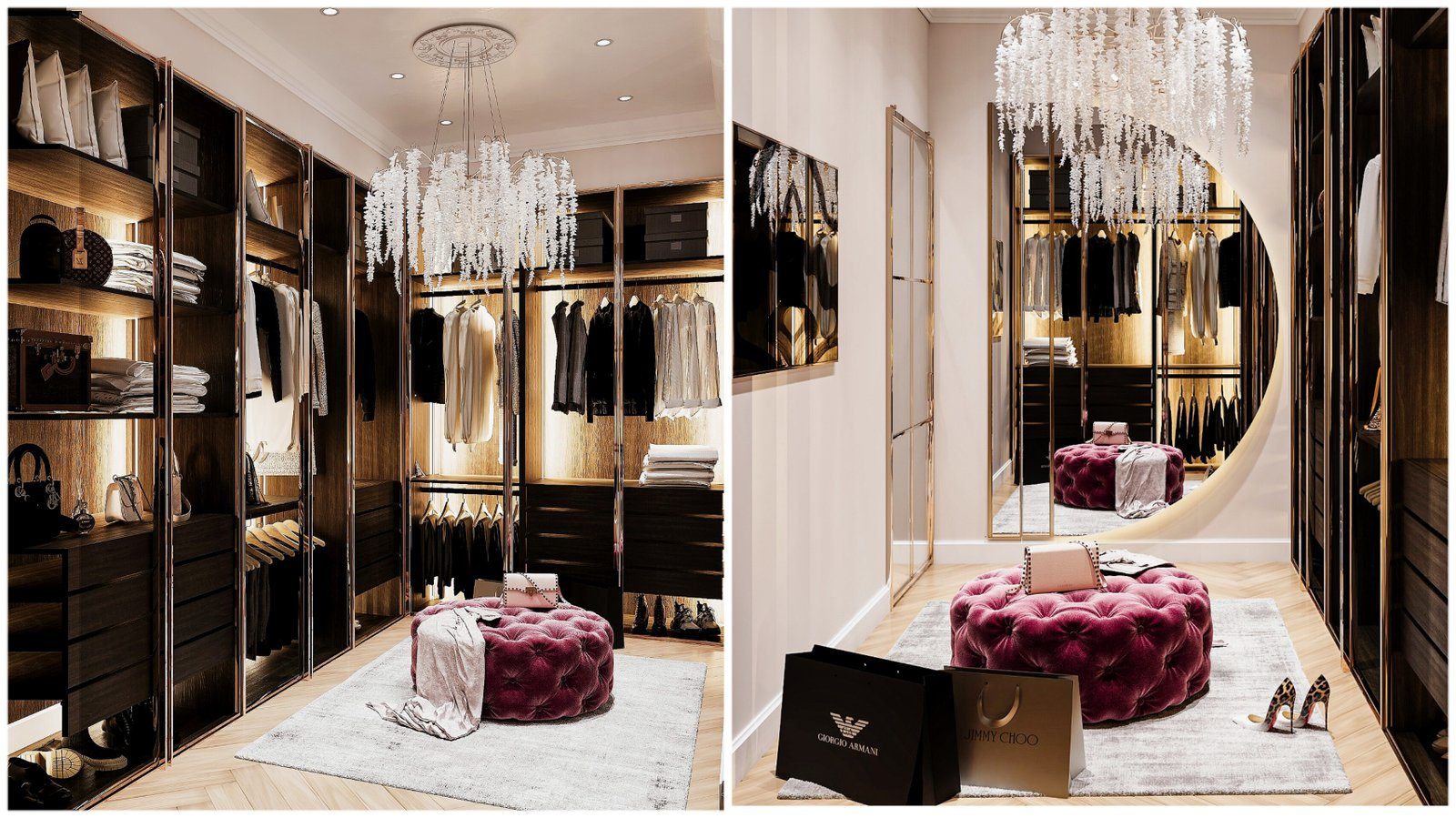
Floor-to-ceiling cabinet doors give an interior a clean, uninterrupted look. But some time after installation, a familiar picture can appear: the door is closed, yet its top or bottom corner stands a few millimetres away from the carcass. This is usually not a faulty hinge but a slight bow in the door panel itself. There are ways to reduce that risk on tall doors in advance, and one of them is a door straightener.
Why tall doors bow
Board material is not perfectly uniform. The two faces of a door live in different conditions: the outer face is exposed to the room's air and light, the inner face to the air inside a closed cabinet. When humidity and temperature are not the same on both sides, the material moves very slightly towards one side. On a short door this is invisible because the edges are close together. As height increases, the same tiny movement turns into a noticeable gap at the corners.
Several other factors play a part:
- different finishes on the two faces, for example paint outside and another material inside;
- thin door material;
- a door next to a radiator, air conditioner or sunny window;
- too few hinges for the height of the door.
How a door straightener works
A straightener is a metal profile set into a groove routed along the back of the door, usually running its full height. Inside is an adjustment mechanism. Turning the screw pulls the panel one way or the other, so a door that has bowed can be brought back into line.
The advantage is that you do not need to replace the door when the problem appears. If the door moves again when the seasons change, the adjustment can simply be repeated. The profile stays hidden on the back of the door and cannot be seen from outside.
When a straightener makes sense
Not every door needs one. It is most useful in these situations:
- floor-to-ceiling or very tall doors, especially handleless designs, where a corner gap is more visible;
- painted or high-gloss fronts finished differently on each face;
- rooms with changeable conditions: a sunny wall, near a radiator, an unheated room;
- narrow, tall doors opening into a walk-in closet.
Sliding wardrobe doors are a different case. Their panels are usually set in an aluminium frame, and the frame itself provides stiffness.
What else keeps a door flat
A straightener is not the only answer, and good design combines several measures. The number of hinges is matched to the door height so that the panel is held at several points. Both faces of the door are finished with the same or similar material wherever possible. Splitting a very tall surface into two doors — for example with a separate top box door — reduces both the risk of warping and the weight of each door.
Hinges from makers such as Blum adjust in three directions: height, depth and side. After installation this adjustment is used to make the gaps between doors even. However, hinge adjustment does not correct a bow in the panel itself, and it is important to understand the difference.
Mirrors, handleless systems and renovation damp
Gluing a mirror to a tall door adds considerable weight. The number of hinges then has to be recalculated, and the mirror should be fixed with an adhesive or fixings suitable for furniture mirrors. Because a mirror covers one face of the door, the question of the two faces being different applies here too.
In a handleless push-to-open system, a tall door is usually fitted with two push latches rather than one so that it opens evenly along its height. A vertical aluminium handle profile fitted along the door edge can also add a degree of stiffness to the panel.
Timing of installation matters as well. A room with fresh plaster, filler or a new floor screed stays humid for a long time. Tall doors fitted in that environment and then left in dry air are more likely to move. That is why floor-to-ceiling cabinets are best installed once the "wet" stages of renovation are over and the room has dried out.
What the owner can check
If one corner of a door has lifted, first check whether the hinge screws have loosened. If the hinges are firm and the door does not sit against the carcass along its full length, the cause may be a bowed panel. Forcing the door shut or over-adjusting the hinges in that case can make matters worse.
Zaferoglu Mebel uses Blum hardware on tall cabinet and wardrobe doors. Depending on the door height and the conditions in the room, options such as a straightener or splitting the door can be discussed at the design stage.