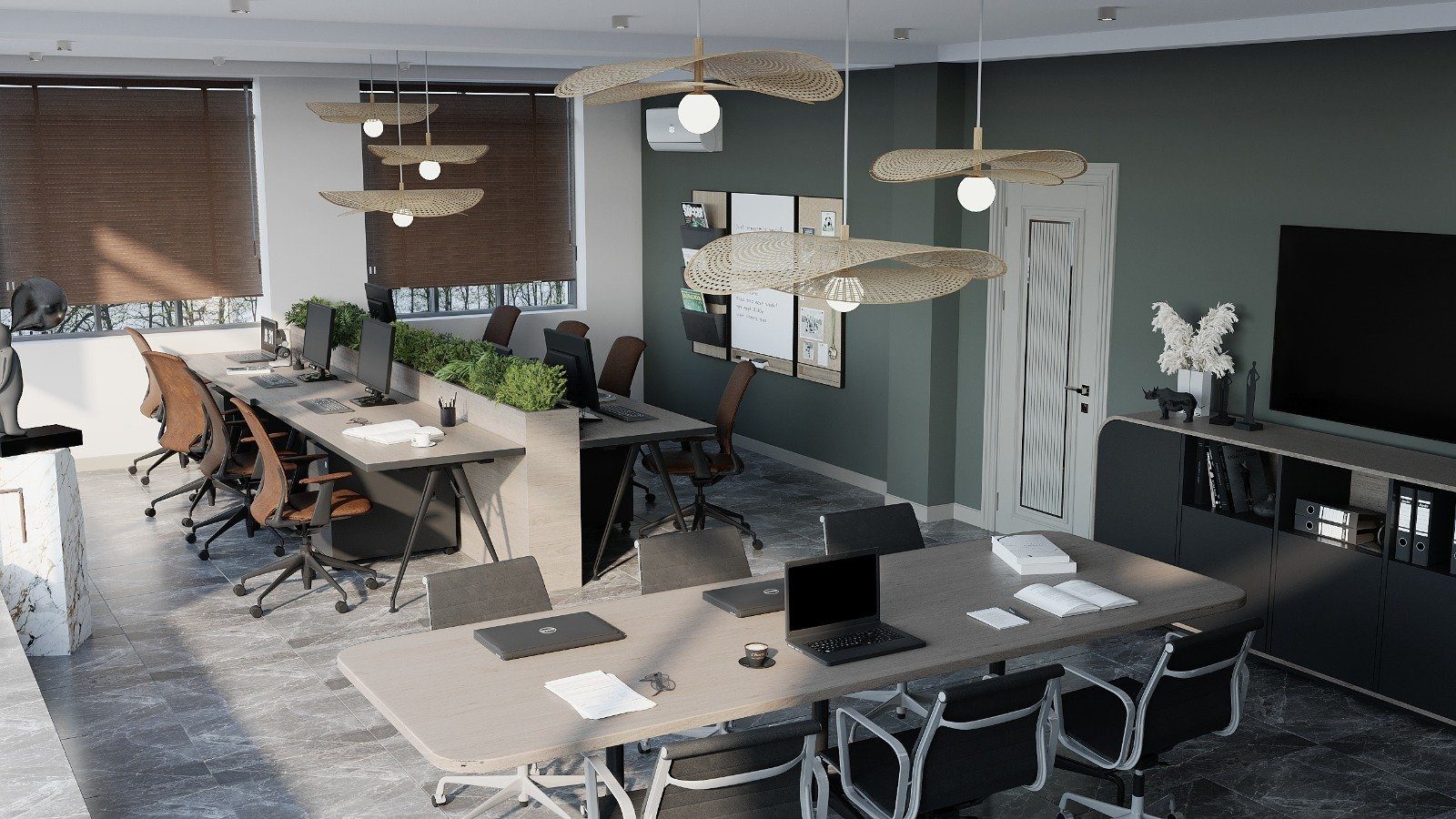


At eight in the morning, when the queue builds, a coffee shop counter is put to the test. The barista takes an order, grinds, steams milk, hands over a cup, and repeats this several times a minute. If the grinder is at one end, the milk fridge at the other and the cups on a shelf behind, every order gains unnecessary steps. A counter's looks get noticed on opening day, but its real value is measured in those steps.
Lining up the workflow
Start planning from the path of a single cup, not from a drawing. The classic sequence is: order and payment, grinding and espresso, milk preparation, finishing and lids, hand-off. When these zones follow one another in a single direction, the barista never has to double back, and two baristas do not get in each other's way.
- The till sits closest to the entrance so the queue does not spread into the seating area.
- The espresso machine and grinder sit side by side, with space for a knock box between or beneath them.
- The under-counter milk fridge goes directly below or next to the espresso machine.
- The pick-up point is separate from the till, so people ordering and people waiting are not crowded into the same spot.
A carcass built for equipment: weight, water and heat
A commercial espresso machine is heavy and vibrates all day. The section beneath it needs a reinforced carcass and extra support under the worktop. The machine requires a water supply and drain; the grinder, fridges and payment terminal need their own sockets. Openings and service hatches for these services should be marked on the drawings before production. Drilling the carcass afterwards looks untidy and exposes raw edges to moisture.
Under-counter fridges release heat. If the ventilation gaps specified by the manufacturer are not kept, the unit struggles and the surrounding cabinet warms up. Fridge recesses should therefore be sized from the appliance's technical sheet, and door swings chosen to suit the barista's line of movement.
Two heights: the work surface and the customer side
The barista works at a comfortable hand height, similar to a kitchen worktop. The customer-facing side is often raised a step higher. That upstand does two jobs: it hides used cups and tools from the room, and it gives customers a ledge for placing a cup or tapping a phone to pay. It should not be too deep, or the barista has to stretch to pass drinks across.
Materials: coffee, water and constant wiping
In a coffee shop the surfaces are wiped with a damp cloth many times a day and take spills of grounds, milk and hot water. Moisture- and stain-resistant materials such as high-pressure laminate, compact laminate or quartz are a practical choice for the worktop. The lower part of the front gets kicked and knocked by mops; well-bonded edge banding or a metal plinth extends its life. Decorative timber panels with exposed edges can look good on the customer side, but they are risky next to a sink.
The display case: selling without getting in the way
The pastry and sandwich display should be where customers see it before they reach the till, because choices are made while queuing. A refrigerated display is a piece of equipment in its own right; the furniture frames it, leaves an air path for the compressor and lets the barista reach in comfortably from behind. The space behind the display is a good place for shelves or drawers holding packaging.
Before approving the layout, run a paper test: follow one latte order from start to finish and count how many times the barista turns back. Every unnecessary turn becomes a delay at peak hours.
Space for washing and stock
The hidden side of the counter affects the work too. The cup sink or dishwasher should not be far from the espresso machine, because clean cups have to come back every time. A moisture-resistant open rack beside the sink for draining, with a separate closed compartment underneath for cleaning products, is the hygienic arrangement. Stock such as beans, milk cartons, lids and napkins needs a place that is within reach at peak times but out of sight from the room. Drawers are more practical than open shelves here: the contents stay dust-free and the barista finds things without bending down. Deciding in advance what each drawer is for prevents a muddle later.
Zaferoğlu Mebel's services are used by catering venues too. For a coffee counter, sending the equipment list with dimensions early on means the cabinetry can be drawn around the machines.