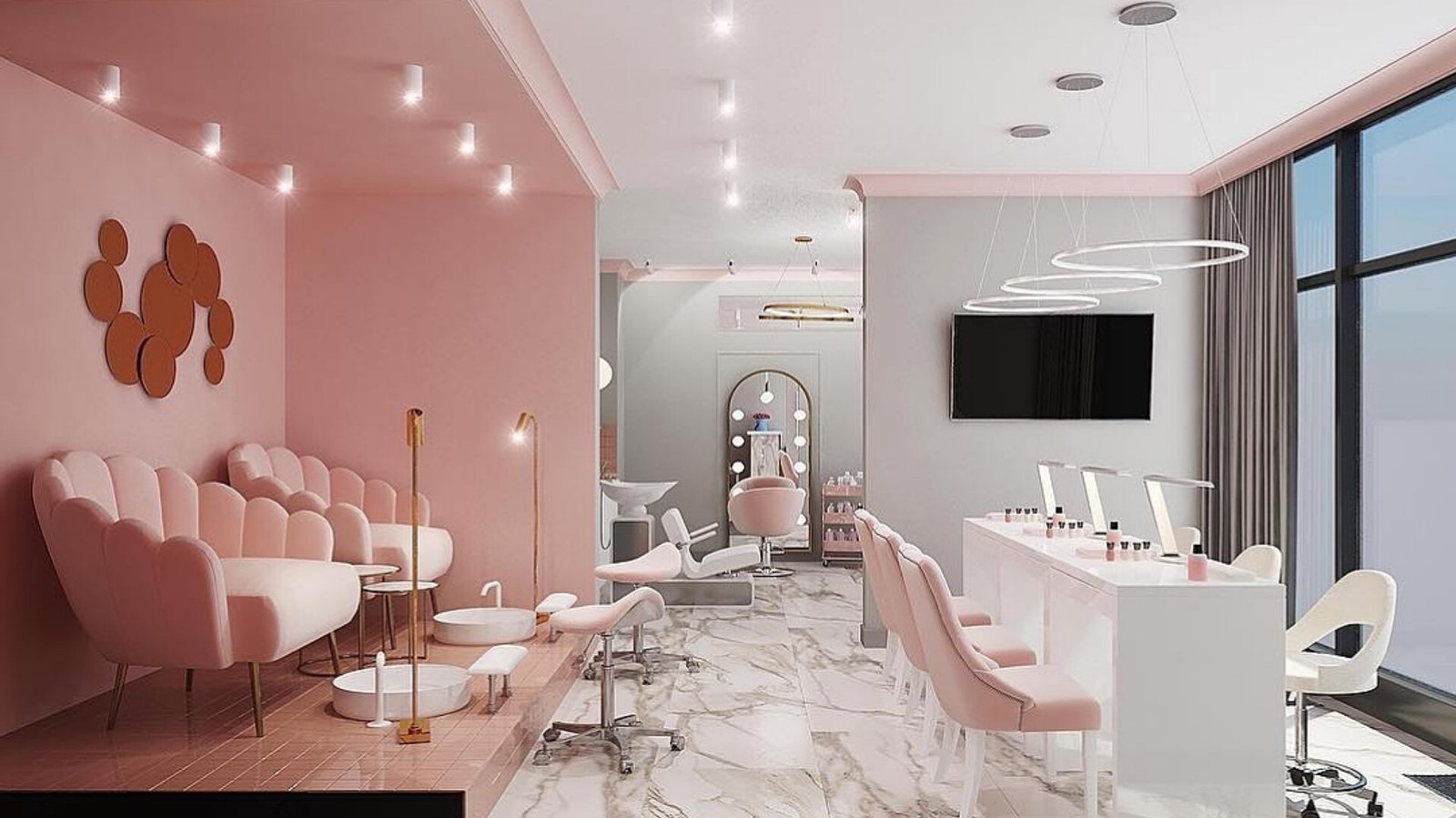

In a beauty salon, furniture is both a working tool and a shop window. Clients judge how clean and orderly the place is from the furniture at first glance, while staff spend hours every day at the same table or console. Unlike furniture at home, the surfaces here are in constant contact with acetone, dyes, disinfectants and water, and the choices have to reflect that.
The manicure station
A manicure table may look small, but it is the piece of salon furniture that needs the most detail:
- The top must resist chemicals. Acetone and polish remover can spoil ordinary laminate and painted finishes; HPL, compact laminate or a glass top are better suited.
- A built-in dust extractor captures the dust created during filing. Its position, air outlet and service hatch are planned in advance.
- A mounting point for the lamp and a cable route through the table keep the surface tidy.
- Shallow drawers for polish and tools, and a small shelf or hook on the client's side for a bag and phone, add convenience.
The table's width should let the technician's and client's elbows rest comfortably, and its depth should let their hands meet in the middle. There must be free legroom under the table for the technician: a drawer unit that cramps the legs makes for a tiring working day.
The pedicure area
The pedicure area is the wettest part of the salon. The client chair, foot bath, the technician's low stool and a tool trolley all work together here. When planning the furniture:
- Every carcass near water is made from moisture-resistant board or plastic, with all cut edges fully sealed.
- On a platform-style pedicure station the step must be safe and non-slip, with a service hatch in the platform for storage or plumbing access.
- The technician's seat should be level with the client's foot so the back does not have to bend.
- Separating the pedicure area with a partition or a translucent panel gives clients privacy.
The styling station
A hairdresser's station consists of a mirror, a console and a chair. The console needs a surface that tolerates hot tools, or hanging holders for the dryer, straightener and clippers, plus slots for cables. Sockets sit at console height, where water will not splash them.
Mirror lighting should light the face without shadows; ceiling light alone makes it hard to judge hair colour and shape. The stylist needs free space to move all the way round the chair, so the distance between stations is checked on the plan in advance.
Storage, reception and retail shelving
A salon holds a lot of supplies: towels, disposables, dyes and care products. Closed cabinets and a separate back room keep them out of clients' sight but close to staff. Sterilisation equipment needs its own ventilated spot with water-resistant surfaces.
The reception desk greets clients and handles bookings and payment. Beside it or in the waiting area, a lit shelf of care products for sale works as a display.
Comfort for staff through the day
A salon professional repeats the same movements hundreds of times a day. A small inconvenience in the furniture turns into back, shoulder and neck fatigue by the evening, so it is worth asking the staff for their input during planning:
- Tools should be within arm's reach, where they can be picked up without bending or twisting.
- Height-adjustable seating allows technicians of different heights to work at the same station.
- Frequently used drawers get soft-close, full-extension runners so items at the back are easy to reach.
- A lockable cupboard outside the client area is provided for staff clothing and personal belongings.
Clients never see these details, yet they have a direct effect on the quality of the service.
Hygiene and choice of materials
Salon furniture should have as few seams, recesses and hard-to-clean carved details as possible. Edge banding must stand up to chemical wiping, and upholstered elements should use faux leather that tolerates disinfectants. Light gloss surfaces look clean but show every mark; matt, fingerprint-resistant finishes are more practical for daily work.
It helps to begin the planning with the salon's flow: the client enters, waits, moves to a station and pays. The furniture should make that route short and easy.
Beauty salons are among Zaferoglu Mebel's clients. Once the floor area and the number of manicure, pedicure and styling stations are known, the furniture plan can be built around those figures.