
The ottoman is the least noticed and most frequently moved piece in a living room. In the evening it is a footrest; when guests arrive it becomes an extra seat; with a tray on top it is a small table; and if it opens, throws and toys disappear inside. This versatility only works when the ottoman is chosen well: a soft, low ottoman cannot serve as a table, and a hard, tall one is uncomfortable under your feet.
Decide on its main role
Before buying, answer honestly what the ottoman is mainly for. Each role has its own requirements:
- Footrest: height close to or slightly below the sofa seat, with a top that is soft but does not sag.
- Extra seat: a firm enough top and a frame rated for an adult's weight; a very soft filling collapses during longer sitting.
- Table: a flat, stable top that does not dip when a tray is placed on it — achieved with a rigid top panel or a separate decorative tray.
- Storage: a lidded ottoman, where the lid lifts easily and does not trap fingers when open.
One ottoman can do two roles well, not all four equally. So either choose according to the main function, or use two smaller ottomans for different roles.
Shape and size
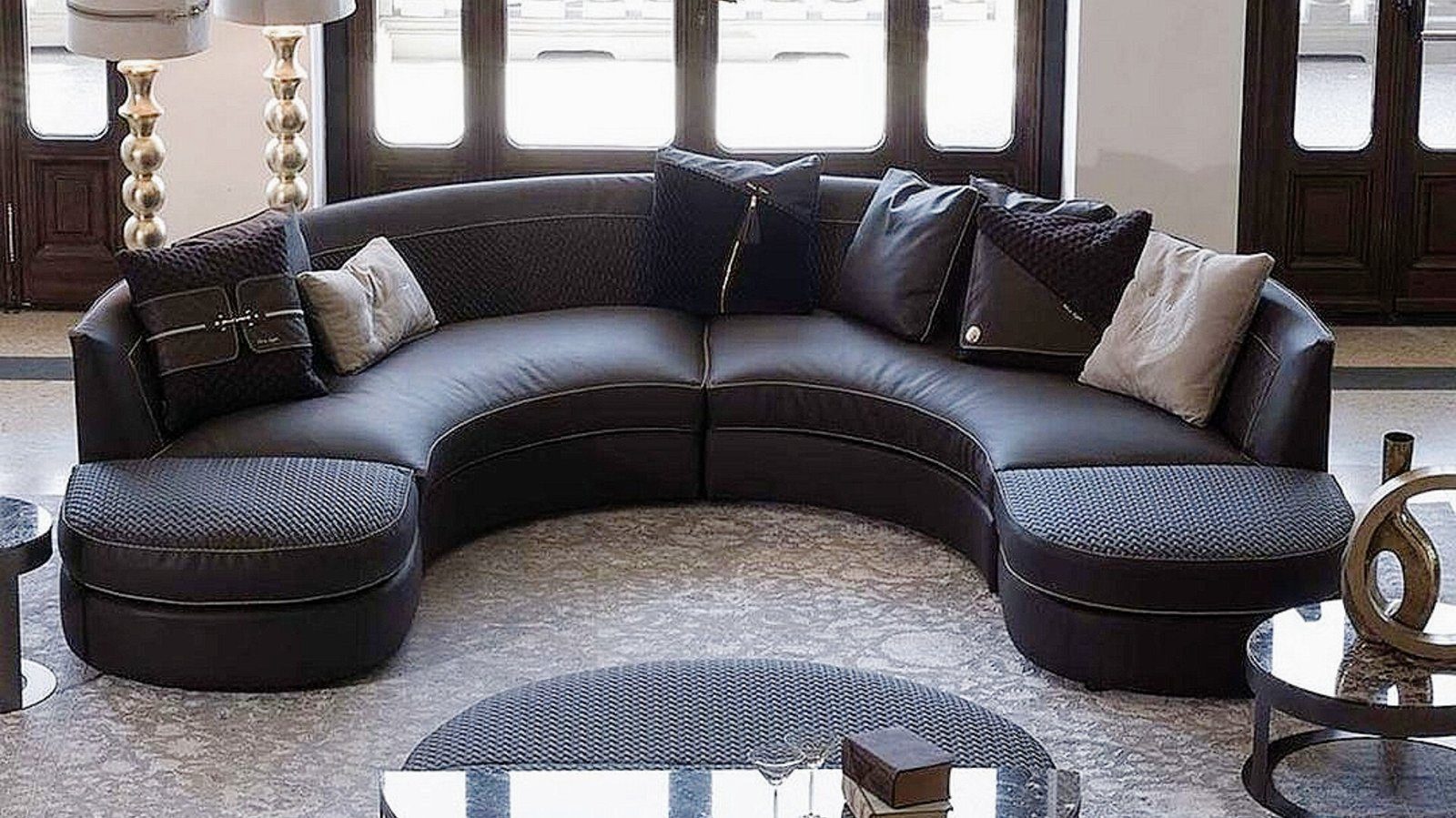
A round ottoman creates no corners in a walkway and softens movement around the room, which makes it especially convenient for small rooms and homes with children. Square and rectangular ottomans line up more precisely with a sofa and are better suited to replacing a coffee table. A long rectangular bench ottoman also works at the foot of a bed or in front of a window.
If the ottoman will stand in front of the sofa as a table, its distance from the sofa must leave room for knees. A very large ottoman is comfortable as a footrest, but it can fill the middle of the room and block circulation.
If the ottoman will be moved often, weight and legs matter as well. A hollow ottoman on a light frame can be carried with one hand, but it may wobble when someone sitting on it leans towards the edge. A heavy, solid one is stable but leaves marks when dragged across the floor. Felt pads under the legs protect parquet and laminate from scratches, while small castors make it easier to move across a rug. On castor models, at least two locking wheels stop the ottoman from rolling away when it is used as a seat.
Built-in storage: what to look for
A storage ottoman may have a hinged or fully removable lid. A hinged lid with a soft-lowering mechanism is safer for children's fingers. Some models have a reversible removable lid that turns into a tray — soft on one side, hard on the other.
If the inside is lined with laminated board, items do not catch on fabric and the interior is easy to clean. If heavy things will be stored inside, check the strength of the base and whether the ottoman stands on legs: one whose base sits directly on the floor can scratch it when dragged.
Upholstery that stands up to daily contact
An ottoman comes into direct contact with shoes, bags, trays and children's games, so abrasion resistance of the fabric matters as much as it does on a sofa. Tightly woven fabrics, wipe-clean faux leather or removable washable covers are practical. Light-coloured velvet looks beautiful but soils quickly if used as a footrest.
The ottoman can share the sofa's fabric, but it does not have to. A different texture in the same colour family adds life to the room and lightens the visual weight of the sofa.
Quick checklist
- What is the ottoman's main role: footrest, seat, table or storage?
- Does its height match the sofa seat?
- Is the top firm enough to use as a table?
- Does the storage lid close safely?
- Will the fabric withstand daily wear and stains?
Zaferoglu Mebel makes upholstery to order, so an ottoman can come as part of the sofa and armchair set in matching or complementary fabric. Deciding its size and role against the room layout beforehand helps it find a natural spot.