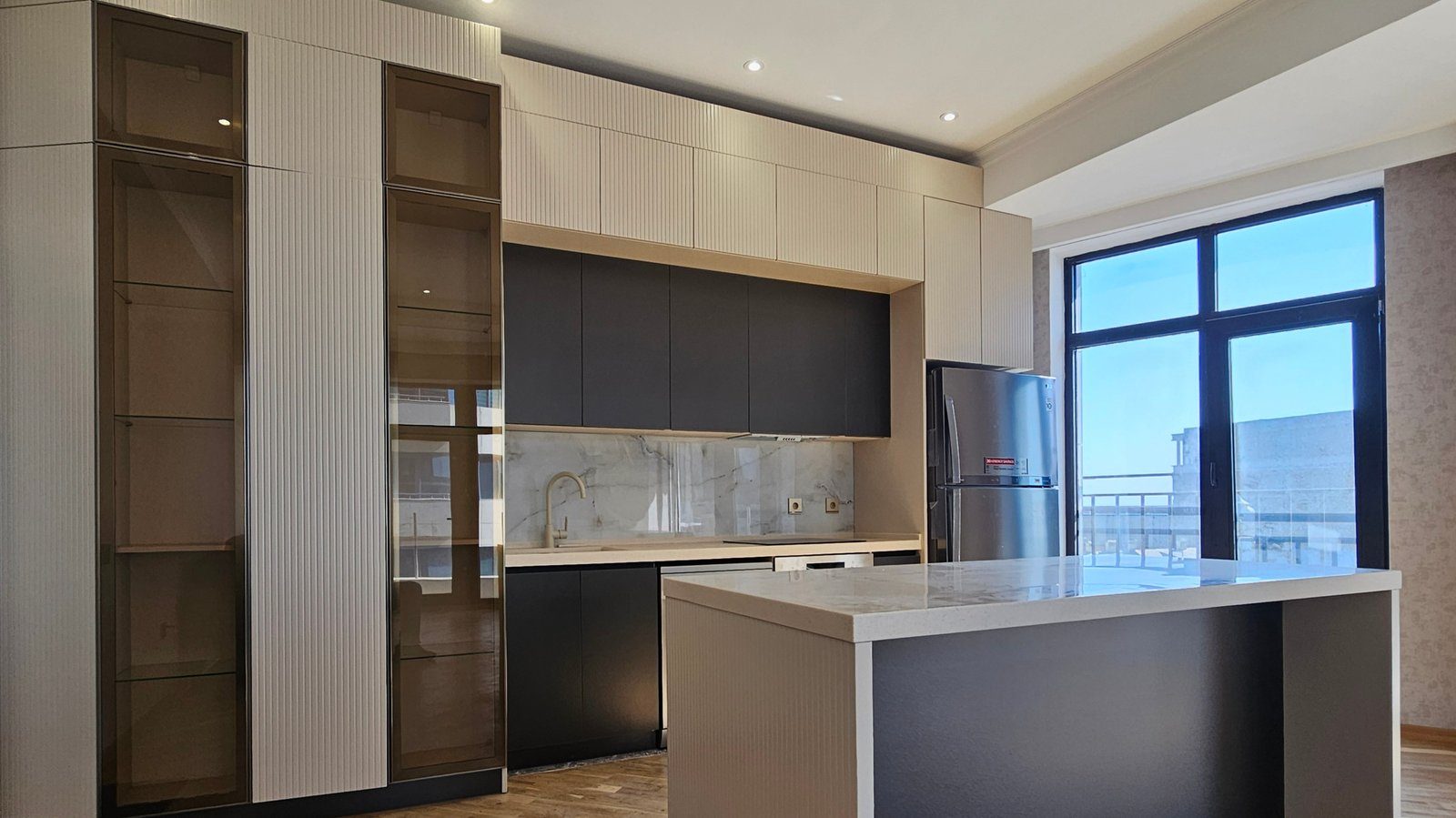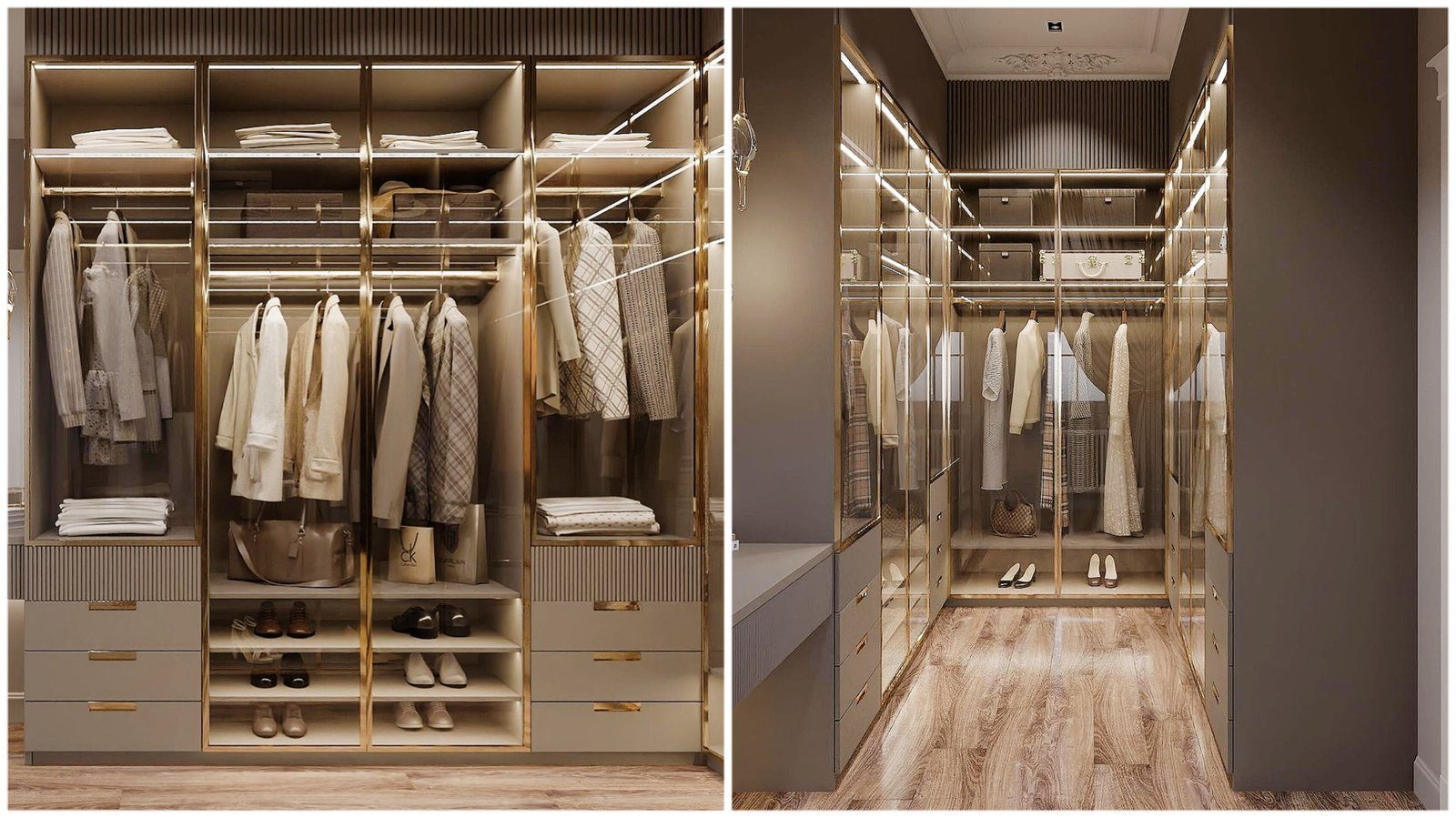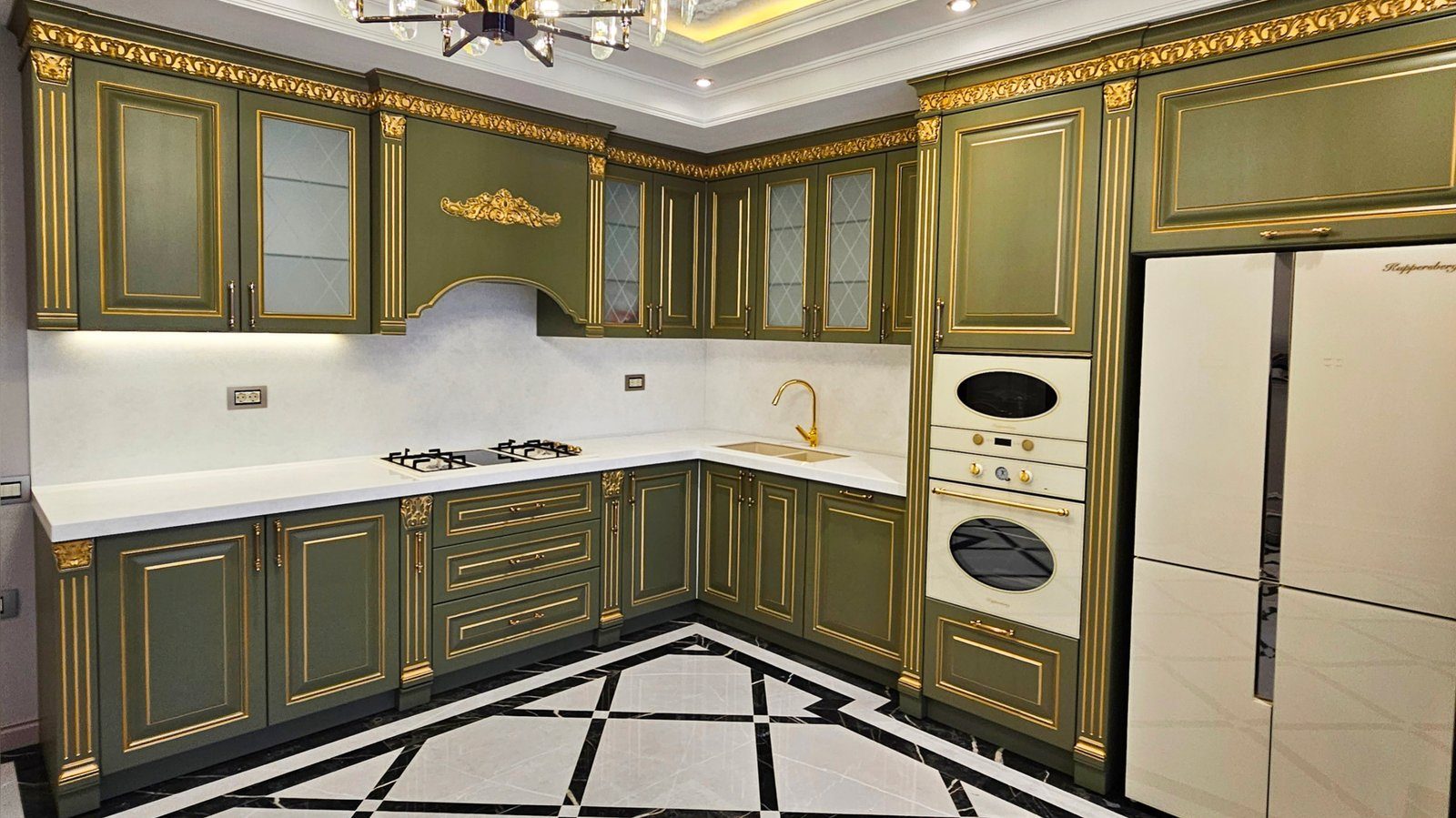

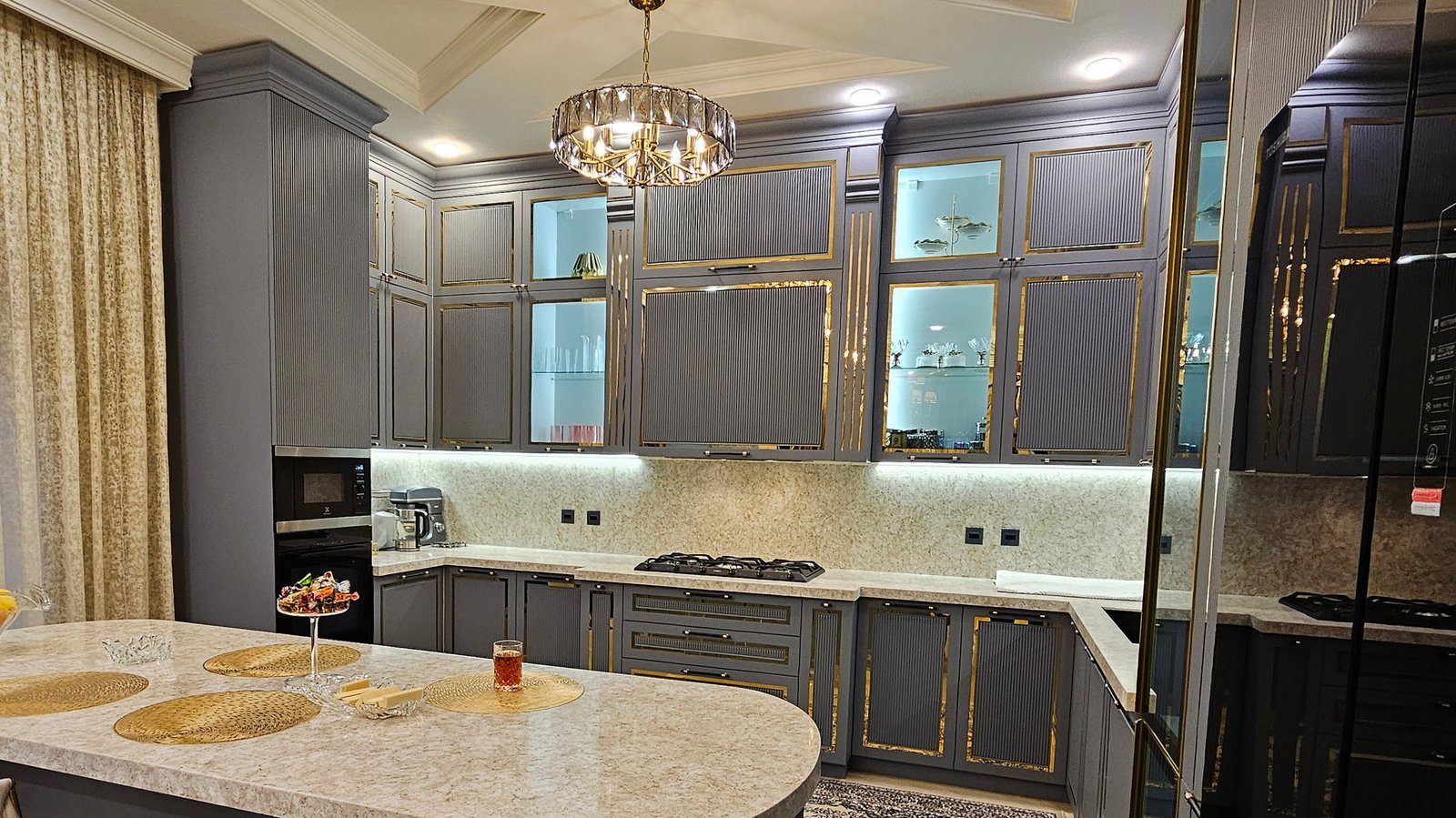
Handleless kitchen and wardrobe fronts create a calm, simple look: nothing protrudes and lines are unbroken. There are several ways to achieve it: a routed finger grip along the edge of the front, a profile handle, or no grip at all with a system that opens when pressed. That last approach is called push-to-open. It seems simple on paper, but how it performs every day depends on the mechanism chosen and on careful installation.
The principle
At the heart of a push-to-open system is a pusher behind the front. Pressing the front lightly compresses the mechanism, which then releases and pushes the door or drawer out a few centimetres. From there you can take hold of the front and open it fully. When you close it, the front presses against the pusher again and latches.
For doors, the pusher is usually fixed to the side panel or inside the carcass while the hinges stay in place. On such doors the hinges should have no soft-close function, or it should be switched off, because a damper gently pulling the door shut works against the pusher.
Drawers: mechanical and combined systems
For drawers, the pushing mechanism works together with the runners. The key question here is soft closing. A basic mechanical push-to-open system opens the drawer but does not slow it down when closing. Some manufacturers offer systems that combine both: Blum's TIP-ON BLUMOTION, for example, lets a drawer open with a push and still close softly and quietly.
On heavy, wide drawers, such as those holding crockery or pans, the mechanism may not be strong enough to open a fully loaded drawer with a single push. In these cases an electric opening system is more reliable.
Electrically assisted opening
With electric systems, touching or lightly pulling the front activates a small motor and the drawer opens by itself. Blum's SERVO-DRIVE is an example of this type. Its advantage is that heavy drawers also open with a light touch, which is especially handy for a dishwasher or waste bin unit when your hands are full.
This system needs a power supply, so space for a socket or power unit must be planned at the kitchen design stage. Adding it to finished furniture later is much harder.
What to expect in daily use
Push-to-open fronts look clean, but a few characteristics are worth knowing in advance:
- Leaning on a front or nudging it with a foot can open it, especially on base units and in homes with small children.
- Fingerprints show up faster where the front is pressed, particularly on dark and glossy finishes.
- The gaps between fronts must be set precisely for the mechanism to work; if they are too tight, neighbouring fronts knock into each other.
- On large, tall doors one pusher can make the door flex, so sometimes two pushers or a magnetic catch are needed.
- The adjustment needs checking over time: if a front does not close fully or opens by itself, the pusher depth is corrected.
Which units it suits
Push-to-open works best on wall cabinets, wardrobe doors, TV units and light drawers. For heavy kitchen base drawers, a combined soft-close system, electric assistance or a routed grip along the top edge of the front may be more practical. Mixing these solutions in one kitchen is normal, as long as the overall look stays consistent.
Installation and adjustment accuracy
Small errors are felt immediately in a handleless system. A door with a handle still opens if it hangs a few millimetres out of line; a push-to-open front that does not meet the pusher squarely either fails to open or springs back after closing. After installation, each front should be opened and closed several times and the gaps checked for evenness.
Once the furniture has settled against the floor and walls, it is normal for fronts to shift slightly in the first weeks. A simple adjustment of the hinge and pusher is usually enough, and the mechanism does not need replacing.
Before confirming the order, it helps to answer these questions:
- Is the mechanism for a door or a drawer?
- Is soft closing needed, and does the chosen system support it?
- How heavy will the load in the unit be?
- Has a power point been planned for an electric system?
- Are there small children at home who could open fronts accidentally?
Zaferoglu Mebel uses Blum products for hardware. If you want handleless fronts, deciding at the design stage which opening system each unit will use avoids having to change fronts later.